
AP Environmental Unit 7 Air Pollution Vocabulary
Authored by Lisa Thompson
Science
12th Grade
NGSS covered


AI Actions
Add similar questions
Adjust reading levels
Convert to real-world scenario
Translate activity
More...
Content View
Student View
15 questions
Show all answers
1.
MULTIPLE CHOICE QUESTION
1 min • 1 pt
Which of the following best describes how a scientist could accurately study the effects of soil buffering on plant growth in a region that is affected by acid deposition downwind of a coal-burning power plant?
Measure changes in plant height over a year in a two different groups of trees; one group is 5km from the power plant and one group is 10km from the power plant.
Measure the changes in plant height over a year in two different groups of trees the same distance from the power plant; one group is in topsoil and one group is in topsoil with limestone added.
Measure changes in plant biomass over a year in two different groups of trees the same distance from the power plant; one group is not manipulated and one group is watered daily to dilute the deposition's acidity.
Measure changes in plant biomass over a year in two different groups of trees; one group is 5km from the power plant over limestone bedrock and one group is 10km from the power plant that has nitrogen and phosphorus added to the topsoil.
Tags
NGSS.MS-LS1-5
NGSS.MS-LS2-4
NGSS.MS-LS2-1
2.
MULTIPLE CHOICE QUESTION
1 min • 1 pt

An experiment to evaluate the efficiency of wet and dry scrubber networks that filter particulate gas at different flow rates was conducted under different flow rate conditions. The results are shown below. Based on the data in the graph, which of the following methods would be most effective at removing the greatest amount of particulate matter from coal-burning power plant emissions?
Dry scrubbers using a flow rate of 200 L/min are best suited to remove small particles.
Dry scrubbers using a flow rate of 450 L/min are best suited to remove large particles.
Wet scrubbers using a flow rate of 300 L/min are best suited to remove small particles.
Wet scrubbers using a flow rate of 450 L/min are best suited to remove large particles.
Tags
NGSS.MS-ETS1-1
NGSS.MS-ETS1-2
NGSS.MS-ETS1-3
3.
MULTIPLE CHOICE QUESTION
1 min • 1 pt
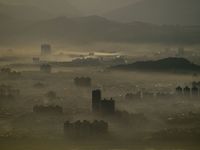
Smog or ground ozone forms in the troposphere. Which pollutants are most responsible for smog or ground ozone?
sulfur and particulate matter
volatile organic compounds and nitrogen oxides
carbon monoxide and carbon dioxide
none of these answers are correct
4.
MULTIPLE CHOICE QUESTION
1 min • 1 pt
Which of these problems can be caused by air pollution?
Respiratory problems
Reduced food sources for humans
Increased disease for humans
Decrease in global temperatures
Tags
NGSS.MS-LS1-5
NGSS.MS-LS2-4
5.
MULTIPLE SELECT QUESTION
1 min • 1 pt

Which of the following are examples of VOC's ? (Select 3)
paint and paint thinners
gasoline
water vapor
formaldehyde
smog
Tags
NGSS.MS-PS1-2
6.
MULTIPLE CHOICE QUESTION
1 min • 1 pt
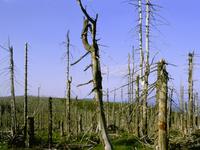
What are the pollutants known to cause acid rain?
nitrogen oxides and sulfur dioxide (sulfur compounds)
Low pH and Acid
Lemon Juice and Battery Acid
Particulate Matter and Carbon Dioxide
7.
MULTIPLE CHOICE QUESTION
1 min • 1 pt
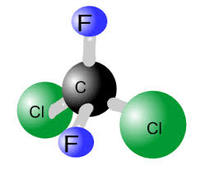
CFC's cause harm to our
Troposphere
Inversion Layer
Ozone Layer
Carbon Dioxide
Tags
NGSS.MS-PS1-3

Access all questions and much more by creating a free account
Create resources
Host any resource
Get auto-graded reports

Continue with Google

Continue with Email

Continue with Classlink

Continue with Clever
or continue with

Microsoft
%20(1).png)
Apple

Others
Already have an account?



