
Electoral College
Authored by John Robinson
Social Studies
9th Grade


AI Actions
Add similar questions
Adjust reading levels
Convert to real-world scenario
Translate activity
More...
Content View
Student View
15 questions
Show all answers
1.
MULTIPLE CHOICE QUESTION
1 min • 1 pt
The number of votes a state has in the electoral college is based on...
which party won the popular vote
the state's Congressional representation
how many people voted.
the age of its eldest elector minus the age of its youngest elector
Answer explanation
The number of votes a state has in the electoral college is based on its Congressional representation. This includes both the number of Representatives and Senators a state has in Congress. It is not based on the party that won the popular vote, the number of people who voted, or the age difference between the eldest and youngest elector.
2.
MULTIPLE CHOICE QUESTION
1 min • 1 pt

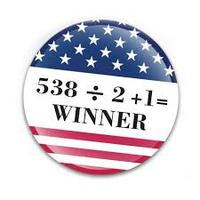
Which word in the statement above describes this process the BEST?
primary election
party platform
general election
winner-take-all
Answer explanation
The question asks for the term that best describes a certain process. The correct answer is 'winner-take-all'. This term is often used in politics to describe a system where the candidate with the most votes wins, regardless of whether they have a majority. The other options, 'primary election', 'party platform', and 'general election', do not accurately describe this process.
3.
MULTIPLE CHOICE QUESTION
1 min • 1 pt
How many electoral votes are needed to win a presidential election?
269
NONE
270
538
Answer explanation
The question asks about the number of electoral votes required to win a presidential election. The correct answer is 270. This is because the total number of electoral votes is 538, and to win, a candidate must secure more than half, which is at least 270 votes.
4.
MULTIPLE CHOICE QUESTION
1 min • 1 pt
Why is campaigning a small states like Delaware and Rhode Island necessary?
Campaign rules require it
The governors invite the candidates.
In close elections, their votes make a difference.
Party platforms require it.
Answer explanation
The question asks why campaigning in small states like Delaware and Rhode Island is necessary. The correct answer is that in close elections, their votes make a difference. This means that even though these states have a smaller population, their electoral votes can be crucial in determining the outcome of a close election. Therefore, candidates campaign in these states to secure these important votes.
5.
MULTIPLE CHOICE QUESTION
1 min • 1 pt
How many electoral college votes is needed in order to win the Presidency?
100
270
435
538
Answer explanation
The correct answer is 270. In the United States, a candidate needs a majority of the electoral college votes to win the Presidency. The total number of electoral college votes is 538, so a candidate needs more than half of these, which is at least 270, to win.
6.
MULTIPLE CHOICE QUESTION
1 min • 1 pt
Why does California have more electoral votes than Texas?
California has a higher population than Texas
California had more influence in Congress than Texas
California has a lower population than Texas
California's land area is more than Texas
Answer explanation
California has more electoral votes than Texas because it has a higher population. The number of electoral votes a state receives is based on its population, as it determines the number of representatives in the House of Representatives. Since California has a larger population than Texas, it has more electoral votes.
7.
MULTIPLE CHOICE QUESTION
1 min • 1 pt
President and Vice President are elected through the process of the electoral college. Which amendment is this?
12th
10th
14th
16th
Answer explanation
The 12th Amendment to the United States Constitution outlines the process for electing the President and Vice President through the electoral college. It was ratified in 1804 and replaced the original procedure established by Article II, Section 1, Clause 3 of the Constitution. The amendment was proposed to address issues that arose during the elections of 1796 and 1800, ensuring a more organized and efficient electoral process.
Access all questions and much more by creating a free account
Create resources
Host any resource
Get auto-graded reports

Continue with Google

Continue with Email

Continue with Classlink

Continue with Clever
or continue with

Microsoft
%20(1).png)
Apple

Others
Already have an account?
Similar Resources on Wayground

11 questions
Law of Agency

Quiz
•
University
20 questions
Canadian Taxes
Quiz
•
9th - 10th Grade
15 questions
Family and Physiographic Division of Karnataka
Quiz
•
9th - 10th Grade
16 questions
Society and Culture 2010-2011
Quiz
•
12th Grade
20 questions
Democracia Novenos
Quiz
•
9th Grade
20 questions
Summative 2 Quarter 2
Quiz
•
10th Grade
15 questions
Q4 Modyul 2 UDHR
Quiz
•
10th Grade
13 questions
GCSE Sociology 9-1 Marxism or Functionalism??
Quiz
•
10th Grade
Popular Resources on Wayground
15 questions
Fractions on a Number Line
Quiz
•
3rd Grade
20 questions
Equivalent Fractions
Quiz
•
3rd Grade
25 questions
Multiplication Facts
Quiz
•
5th Grade
29 questions
Alg. 1 Section 5.1 Coordinate Plane
Quiz
•
9th Grade
22 questions
fractions
Quiz
•
3rd Grade
11 questions
FOREST Effective communication

Lesson
•
KG
20 questions
Main Idea and Details
Quiz
•
5th Grade
20 questions
Context Clues
Quiz
•
6th Grade
Discover more resources for Social Studies
17 questions
World War 2 (World History 25-26)
Quiz
•
9th Grade
15 questions
SBAC Practice HSS26_Vasquez
Quiz
•
9th - 12th Grade
24 questions
Unit 3: Bill of Rights, Civil Rights, & Civil Liberties
Quiz
•
9th Grade
16 questions
SBAC Practice HSS26
Quiz
•
9th - 12th Grade
10 questions
Antebellum Reform Movements Edpuzzle

Interactive video
•
9th Grade
21 questions
1914 (WW I) Europe Geography
Quiz
•
9th Grade
30 questions
WH OC 6 Economic Exchanges & Networks 2026
Quiz
•
9th Grade
7 questions
Japanese Imperialism
Lesson
•
9th - 12th Grade