
Unit 7 Quiz 1
Authored by David Burdrick
Science
8th Grade
FL covered
Used 9+ times


AI Actions
Add similar questions
Adjust reading levels
Convert to real-world scenario
Translate activity
More...
Content View
Student View
20 questions
Show all answers
1.
MULTIPLE CHOICE QUESTION
1 min • 1 pt
What would most likely happen to the motion of the planets without the force of gravity from the Sun?
The planets would drift away from the Sun into outer space.
The planets would slow down, eventually stopping all motion.
The planets would continue to move in large circles or ellipses.
The planets would gradually make smaller and smaller circles or ellipses.
Tags
NGSS.MS-PS2-4
NGSS.MS-ESS1-2
2.
MULTIPLE CHOICE QUESTION
1 min • 1 pt
Among the bodies in our solar system are asteroids, moons, planets and a Sun.
Which statement least supports the theory that gravity helped form our solar system?
The Sun consists primarily of gases.
Many objects in space are spherical in shape.
Planets revolve around an object of greater mass.
Protoplanets form by small masses combining to form larger masses.
Tags
FL.SC.8.E.5.4
3.
MULTIPLE SELECT QUESTION
1 min • 3 pts
What type of force is gravity (select all that apply)?
a non-contact force
an repulsive force
a weak force
an attractive force
a strong force
Tags
NGSS.MS-PS2-4
4.
MULTIPLE CHOICE QUESTION
2 mins • 1 pt

Why do all of the planets orbit the sun rather than Earth?
the sun has more mass
the sun is a star
the Earth is heavier
the sun is in the middle of the milky way
Tags
NGSS.MS-PS2-4
NGSS.MS-ESS1-2
5.
MULTIPLE CHOICE QUESTION
1 min • 1 pt
An astronaut drops a hammer on the Moon, and a scientist drops an identical hammer on Earth. Both hammers are dropped from the same height. The hammer dropped on Earth falls to the ground faster than the hammer dropped on the Moon.
Why does the hammer on Earth fall faster than the hammer on the Moon?
Earth has a stronger magnetic field than the Moon because Earth orbits the Sun.
Earth has a stronger magnetic field than the Moon because Earth has an iron core.
Gravitational attraction is stronger on Earth than on the Moon because Earth rotates on its axis.
Gravitational attraction is stronger on Earth than on the Moon because Earth has a larger mass.
Tags
NGSS.MS-PS2-4
6.
MULTIPLE CHOICE QUESTION
1 min • 1 pt
According to current scientific theory, the solar system formed primarily from which materials?
Colliding asteroids and comets
Chunks of rock and heavy gases
Electromagnetic radiation
Space dust and light gases
Tags
FL.SC.8.E.5.4
7.
MULTIPLE CHOICE QUESTION
1 min • 12 pts

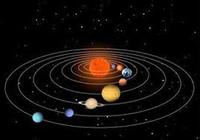
Without gravity we would________.
Tags
NGSS.5-PS2-1
Access all questions and much more by creating a free account
Create resources
Host any resource
Get auto-graded reports

Continue with Google

Continue with Email

Continue with Classlink

Continue with Clever
or continue with

Microsoft
%20(1).png)
Apple

Others
Already have an account?
Similar Resources on Wayground

20 questions
End of term exam - Mega Quizizz!

Quiz
•
6th - 9th Grade
16 questions
Islamic Golden Age
Quiz
•
7th - 8th Grade
20 questions
1st Year Assessment 1
Quiz
•
6th - 8th Grade
18 questions
Glacier Basics
Quiz
•
8th Grade
20 questions
Static electricity
Quiz
•
7th - 9th Grade
15 questions
Heat Transfer and Specific Heat Quiz
Quiz
•
8th Grade
16 questions
The Universe
Quiz
•
8th Grade
16 questions
Teeth (S1A)
Quiz
•
7th - 8th Grade
Popular Resources on Wayground
15 questions
Fractions on a Number Line
Quiz
•
3rd Grade
20 questions
Equivalent Fractions
Quiz
•
3rd Grade
25 questions
Multiplication Facts
Quiz
•
5th Grade
29 questions
Alg. 1 Section 5.1 Coordinate Plane
Quiz
•
9th Grade
22 questions
fractions
Quiz
•
3rd Grade
11 questions
FOREST Effective communication

Lesson
•
KG
20 questions
Main Idea and Details
Quiz
•
5th Grade
20 questions
Context Clues
Quiz
•
6th Grade
Discover more resources for Science
22 questions
Phases of the moon
Quiz
•
8th Grade
10 questions
Exploring the Rock Cycle

Interactive video
•
6th - 8th Grade
20 questions
Waves and Wave Properties
Quiz
•
6th - 8th Grade
10 questions
Understand Ecosystem Roles and Energy Flow
Interactive video
•
6th - 8th Grade
8 questions
Amoeba Sister Asexual vs Sexual Reproduction
Interactive video
•
8th Grade
10 questions
Exploring the Rock Cycle: Types and Formation
Interactive video
•
6th - 8th Grade
20 questions
Heredity Punnett square review
Quiz
•
8th Grade
10 questions
Exploring Weathering, Erosion, and Deposition Processes
Interactive video
•
6th - 10th Grade