
Unit 10 Review History of the Earth
Authored by Amber Mutchler
Science
7th Grade
NGSS covered
Used 4+ times


AI Actions
Add similar questions
Adjust reading levels
Convert to real-world scenario
Translate activity
More...
Content View
Student View
82 questions
Show all answers
1.
MULTIPLE CHOICE QUESTION
1 min • 1 pt

Which of these choices is the best definition of absolute dating?
determining the age of a rock layer by studying the fossils present
finding the age of an object compared to other objects
measuring the age of an object in years using any method
determining the amount of a radioactive isotope in an object
2.
MULTIPLE CHOICE QUESTION
1 min • 1 pt
What is the method of measuring age that gives the most precise results?
radioactive dating, when scientists measure the levels of an isotopic element inside of an object
rate of sedimentation, which dates layers of Earth based on their thickness
law of superposition, which dates layers of Earth based on their order
relative dating, when scientists fill an object with carbon and measure how much will fit
3.
MULTIPLE CHOICE QUESTION
1 min • 1 pt
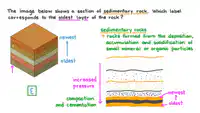
Which method determines the relative age of Earth's sedimentary layers based on their organization?
rate of sedimentation
law of superposition
radioactive dating
Fossil Comparison
Tags
NGSS.MS-ESS1-4
4.
MULTIPLE CHOICE QUESTION
1 min • 1 pt

Which of these choices is an example of the way a geologist would use
relative dating (The Law of Superposition)?
determining the minerals that make
up rocks
determining the ages of rock by comparing the order of the layers
classifying rocks as igneous,
sedimentary, or metamorphic
using radioactive isotopes to
determine the exact age of rock samples
Tags
NGSS.MS-ESS1-4
5.
MULTIPLE CHOICE QUESTION
1 min • 1 pt
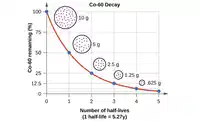
Which of these statements describes what happens during radioactive decay?
A Stable isotope interacts with an unstable isotope
A stable isotope breaks down and becomes unstable
An unstable isotope breaks down into a more stable isotope.
An unstable isotope interacts with another unstable isotope.
Tags
NGSS.HS-PS1-8
6.
MULTIPLE CHOICE QUESTION
30 sec • 1 pt
_______ is the amount of time it takes for 50% of the remaining radioactive material to decay into a stable material.
Radioactive decay
relative dating
law of superposition
7.
MULTIPLE CHOICE QUESTION
30 sec • 5 pts
What type of rock contains clues to the earth's past history?
Metamorphic Rock
Sedimentary Rock
Igneous Rock
Limestone Rock
Access all questions and much more by creating a free account
Create resources
Host any resource
Get auto-graded reports

Continue with Google

Continue with Email

Continue with Classlink

Continue with Clever
or continue with

Microsoft
%20(1).png)
Apple

Others
Already have an account?


