
Quiz on Lewis Structures of Ionic Compounds
10th Grade
•20 Qs

Similar activities
Solutions
10th - 11th Grade
•25 Qs
ĐỀ 17
9th - 12th Grade
•15 Qs
On tap cuoi ki 2 - hoa 10
10th Grade
•21 Qs
Ch.3 chem Q=mcT review worksheet
10th - 12th Grade
•15 Qs
PERIODIC TABLE: GROUP 18 AND 1
9th - 12th Grade
•16 Qs
7C Particles - ECAM
7th - 10th Grade
•20 Qs
Trò Chơi Hóa Học
10th Grade
•15 Qs
Narayana eTechno school JEE revision
10th Grade
•15 Qs

Quiz on Lewis Structures of Ionic Compounds

Quiz
•
Chemistry
•
10th Grade
•
Practice Problem
•
Medium
+1
Standards-aligned

Judith Dano
Used 94+ times
FREE Resource
About this resource
Looking at this comprehensive quiz, I can see it covers ionic bonding and compound formation, which is fundamental chemistry content typically taught in 10th grade high school chemistry courses. The questions systematically build understanding from basic electron transfer concepts to complex formula writing and nomenclature. Students need to master several interconnected concepts to succeed: understanding that metals lose electrons to form cations while nonmetals gain electrons to form anions, recognizing that ionic bonds form through electrostatic attraction between oppositely charged ions, applying the crisscross method to balance charges when writing formulas, and mastering both traditional and Stock system nomenclature for naming compounds. The quiz also requires students to distinguish between simple ionic compounds and those containing polyatomic ions, work with transition metals that can have multiple oxidation states, and understand that only valence electrons are represented in Lewis structures for ionic compounds. Created by Judith Dano, a Chemistry teacher in the US who teaches grade 10. This well-structured assessment serves multiple instructional purposes in the chemistry classroom, working effectively as a formative assessment tool to gauge student understanding before moving to more complex bonding topics, a comprehensive review before unit exams, or targeted practice for students struggling with ionic compound concepts. The quiz can be deployed as a warm-up activity to activate prior knowledge, assigned as homework to reinforce classroom learning, or used during guided practice sessions where students work through problems with teacher support. The content directly aligns with NGSS HS-PS1-1 (using the periodic table to predict properties and interactions of elements) and Common Core mathematical practices as students apply mathematical thinking to balance chemical formulas, making this an excellent tool for building the foundational knowledge students need before tackling more advanced topics like molecular geometry and chemical reactions.
See more

Enhance your content in a minute
20 questions
Show all answers
1.
MULTIPLE CHOICE QUESTION
45 sec • 1 pt
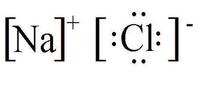
Nonmetals tend to
gain electrons
lose electrons
Tags
NGSS.HS-PS1-1
NGSS.HS-PS1-2
2.
MULTIPLE CHOICE QUESTION
45 sec • 1 pt
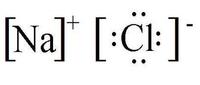
Metals tend to
gain electrons
lose electrons
Tags
NGSS.HS-PS1-1
NGSS.HS-PS1-2
3.
MULTIPLE CHOICE QUESTION
45 sec • 1 pt
How do the following two elements bond together?
Na1+ F1-
Tags
NGSS.HS-PS1-2
4.
MULTIPLE CHOICE QUESTION
45 sec • 1 pt
How do the following two elements bond together?
Cr3+ O2-
5.
MULTIPLE CHOICE QUESTION
45 sec • 1 pt
How do the following two elements bond together?
K1+ S2-
Tags
NGSS.HS-PS1-1
NGSS.HS-PS1-2
6.
MULTIPLE CHOICE QUESTION
45 sec • 1 pt
Which of the following BEST describes ionic bonds?
Tags
NGSS.HS-PS1-3
7.
MULTIPLE CHOICE QUESTION
45 sec • 1 pt
Nonmetals form ____ by ____ electrons.
Tags
NGSS.HS-PS1-1
NGSS.HS-PS1-2
Access all questions and much more by creating a free account
Create resources
Host any resource
Get auto-graded reports

Continue with Google

Continue with Email

Continue with Classlink

Continue with Clever
or continue with

Microsoft
%20(1).png)
Apple

Others
Already have an account?
Similar Resources on Wayground
25 questions
Chemical Bonding
Quiz
•
6th - 12th Grade
15 questions
ĐỀ 17
Quiz
•
9th - 12th Grade
20 questions
CARBONYL COMPOUNDS
Quiz
•
10th Grade - University
21 questions
On tap cuoi ki 2 - hoa 10
Quiz
•
10th Grade
16 questions
Número de oxidación en un compuesto
Quiz
•
10th - 12th Grade
15 questions
Ch.3 chem Q=mcT review worksheet
Quiz
•
10th - 12th Grade
15 questions
elektrolisis
Quiz
•
10th - 11th Grade
20 questions
Acids,Bases and Salts grade 10
Quiz
•
8th - 10th Grade
Popular Resources on Wayground
15 questions
Fractions on a Number Line
Quiz
•
3rd Grade
20 questions
Equivalent Fractions
Quiz
•
3rd Grade
25 questions
Multiplication Facts
Quiz
•
5th Grade
54 questions
Analyzing Line Graphs & Tables
Quiz
•
4th Grade
22 questions
fractions
Quiz
•
3rd Grade
20 questions
Main Idea and Details
Quiz
•
5th Grade
20 questions
Context Clues
Quiz
•
6th Grade
15 questions
Equivalent Fractions
Quiz
•
4th Grade
Discover more resources for Chemistry
20 questions
Types of Chemical Reactions
Quiz
•
9th - 12th Grade
10 questions
Exploring Stoichiometry Concepts

Interactive video
•
6th - 10th Grade
20 questions
Naming & Writing Chemical Formulas
Quiz
•
10th Grade
20 questions
Practice: E-Con, Orbital Notation, Noble Gas Notation
Quiz
•
10th Grade
20 questions
Covalent Bonding
Quiz
•
10th Grade
10 questions
Periodic Table Families and Groups
Quiz
•
10th Grade
20 questions
electron configurations and orbital notation
Quiz
•
9th - 12th Grade
22 questions
Solubility Curve Practice
Quiz
•
10th Grade