
CBA #3 Science
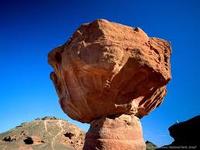
Authored by Melissa V
Science
4th Grade
NGSS covered
Used 2+ times


AI Actions
Add similar questions
Adjust reading levels
Convert to real-world scenario
Translate activity
More...
Content View
Student View
38 questions
Show all answers
1.
MULTIPLE CHOICE QUESTION
30 sec • 1 pt

How could a large rock be broken apart? Select the words that complete the explanation.
cook, evaporates
weather, freezes
erode, warms
weather, evaporates
Answer explanation
A large rock can be broken apart through weathering, which involves the rock freezing and thawing. This process causes cracks to form and eventually leads to the rock breaking into smaller pieces.
Tags
NGSS.MS-ESS2-2
2.
MULTIPLE CHOICE QUESTION
30 sec • 1 pt
When rain soaks into the ground, the water may collect in an aquifer. Why are the rocks in an aquifer able to hold water?
The rocks are impermeable, so water is able to seep into them.
The rocks are porous and permeable, and water seeps inside them.
The rocks are hollow, and water fills them like balloons.
The rocks are melted, and water mixes thoroughly with them.
Answer explanation
The correct choice is that the rocks in an aquifer are porous and permeable, allowing water to seep inside them. This property enables them to store and transmit water effectively.
Tags
NGSS.MS-ESS2-4
NGSS.MS-ESS3-1
3.
MULTIPLE CHOICE QUESTION
30 sec • 1 pt
The daily newspaper has a page entitled “Weather.” Which of these newspaper features actually describes climate?
a map that shows today’s temperatures and precipitation across the country
a forecast for the temperature and precipitation for the next three days
a chart that lists average weather conditions for this time of year
advice for managing a severe storm when it arrives
Answer explanation
The correct choice is a chart that lists average weather conditions for this time of year, as it reflects long-term patterns typical of climate, unlike the other options which focus on short-term weather.
Tags
NGSS.MS-ESS2-6
4.
MULTIPLE CHOICE QUESTION
30 sec • 1 pt

Waves have formed on the surface of a lake. A cork is floating in the lake. How do the motions of the cork and the waves compare? Select cork, wave, or both cork and wave for each description.
Cork
Wave
Both cork and wave
Neither
Answer explanation
Both the cork and the waves exhibit motion. The cork floats and moves up and down with the waves, while the waves propagate across the surface of the lake. Thus, both are in motion.
Tags
NGSS.MS-PS4-2
NGSS.MS-PS4-1
5.
MULTIPLE CHOICE QUESTION
30 sec • 1 pt

Moves across the lake.
Cork
Wave
Both cork and wave
Neither
Answer explanation
Waves move across the lake due to wind and other forces, while cork floats but does not create movement across the water. Therefore, the correct answer is 'Wave'.
Tags
NGSS.3-PS2-1
NGSS.3-PS2-2
6.
MULTIPLE CHOICE QUESTION
30 sec • 1 pt

Moves faster when the wind blows stronger.
Cork
Wave
Both cork and wave
Neither
Answer explanation
Waves move faster with stronger winds, as wind energy increases wave height and speed. Cork, however, does not move faster in wind; it floats but is not propelled by it. Therefore, the correct answer is 'Wave'.
Tags
NGSS.MS-PS2-2
7.
MULTIPLE CHOICE QUESTION
30 sec • 1 pt
Look at the list of energy sources: Wood, Coal, Oil, Natural gas, Petroleum, Wind. Which of the resources listed in the table is nonrenewable and what is a disadvantage for using this resource?
Wind; It is not always available.
Wood; It can lead to deforestation.
Coal; It causes pollution.
Natural gas; It is expensive.
Answer explanation
Coal is a nonrenewable resource, and its use leads to significant pollution, impacting air quality and contributing to climate change.

Access all questions and much more by creating a free account
Create resources
Host any resource
Get auto-graded reports

Continue with Google

Continue with Email

Continue with Microsoft
or continue with

%20(1).png)
Apple

Others
By signing up, you agree to our Terms of Service & Privacy Policy
Already have an account?


