
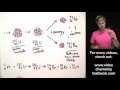
Nuclear Fission Concepts and Reactions

Interactive Video
•
Physics
•
9th - 10th Grade
•
Practice Problem
•
Hard

Lucas Foster
FREE Resource
Read more
10 questions
Show all answers
1.
MULTIPLE CHOICE QUESTION
30 sec • 1 pt
What is the primary result of nuclear fission?
Release of a small amount of energy
Formation of a single larger atom
Absorption of energy by the atom
Splitting of an atom into smaller parts
2.
MULTIPLE CHOICE QUESTION
30 sec • 1 pt
Which element is commonly used in nuclear fission reactions?
Helium
Hydrogen
Carbon
Uranium-235
3.
MULTIPLE CHOICE QUESTION
30 sec • 1 pt
What happens when a neutron is added to uranium-235?
It becomes uranium-236 and splits immediately
It becomes uranium-238 and remains stable
It becomes uranium-236 and remains stable
It becomes uranium-234 and splits
4.
MULTIPLE CHOICE QUESTION
30 sec • 1 pt
Which of the following is NOT a possible product of uranium-236 fission?
Rubidium
Krypton
Oxygen
Barium
5.
MULTIPLE CHOICE QUESTION
30 sec • 1 pt
What is a characteristic of fissionable materials?
They are stable and do not split easily
They have atomic numbers between 1 and 10
They can be provoked to split by adding neutrons
They are only found in nature
6.
MULTIPLE CHOICE QUESTION
30 sec • 1 pt
What is a chain reaction in the context of nuclear fission?
A single atom splitting repeatedly
A series of atoms splitting, each causing more splits
Atoms combining to form a larger atom
Neutrons being absorbed without causing splits
7.
MULTIPLE CHOICE QUESTION
30 sec • 1 pt
How does a chain reaction lead to a large energy release?
By forming new, larger atoms
By splitting a single atom multiple times
By causing a large number of atoms to split in a short time
By absorbing energy from the environment
Access all questions and much more by creating a free account
Create resources
Host any resource
Get auto-graded reports

Continue with Google

Continue with Email

Continue with Classlink

Continue with Clever
or continue with

Microsoft
%20(1).png)
Apple

Others
Already have an account?


