
Force and motion
10th Grade
•15 Qs

Similar activities
1/14 Periodic Table Review
10th - 12th Grade
•20 Qs
Mole
10th - 11th Grade
•12 Qs
Elektriciteit, vermogen en energie
8th - 10th Grade
•11 Qs
FOOD SPOILAGE YR 6
1st - 10th Grade
•10 Qs
PRETEST
10th Grade
•10 Qs
Chapter 5 Practice
9th - 12th Grade
•17 Qs
Form 1 Chapter 7.1 Electrostatic charges
10th Grade
•18 Qs
PS Chapter 2 Vocabulary Science Skills
10th Grade
•13 Qs
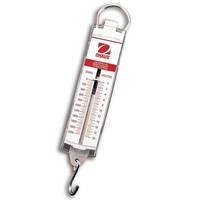
Force and motion

Quiz
•
Physics, Science
•
10th Grade
•
Medium

Wayground Content
Used 20+ times
FREE Resource
15 questions
Show all answers
1.
MULTIPLE CHOICE QUESTION
3 mins • 1 pt
What is the unit of force in the International System of Units (SI)?
Joule (J)
Newton (N)
Pascal (Pa)
Watt (W)
2.
MULTIPLE CHOICE QUESTION
3 mins • 1 pt
What is momentum?
Momentum is the product of an object's mass and its velocity.
Momentum is the force applied to an object over time.
Momentum is the energy stored in an object due to its position.
Momentum is the rate of change of an object's acceleration.
3.
MULTIPLE CHOICE QUESTION
3 mins • 1 pt
What is the difference between speed and velocity?
Speed is a scalar quantity that refers to how fast an object is moving, while velocity is a vector quantity that includes both speed and direction.
Speed and velocity are the same; both refer to how fast an object is moving.
Velocity is a scalar quantity that refers to how fast an object is moving, while speed is a vector quantity that includes both speed and direction.
Speed is a measure of distance traveled over time, while velocity is a measure of time taken to travel a distance.
4.
MULTIPLE CHOICE QUESTION
3 mins • 1 pt
What is the difference between balanced and unbalanced forces?
Balanced forces cause an object to accelerate, while unbalanced forces do not change the motion of an object.
Balanced forces do not change the motion of an object, while unbalanced forces cause an object to accelerate.
Balanced forces are stronger than unbalanced forces, leading to motion.
Unbalanced forces always act in pairs, while balanced forces do not.
5.
MULTIPLE CHOICE QUESTION
3 mins • 1 pt
How does a speed boat respond when it hits a large wave while traveling at a constant rate?
It would go backward a bit.
It would speed up significantly.
It would remain unaffected.
It would capsize immediately.
6.
MULTIPLE CHOICE QUESTION
3 mins • 1 pt
What is the effect of gravity on objects in motion?
Gravity has no effect on objects in motion.
Gravity pulls objects toward the center of the Earth, affecting their motion and acceleration.
Gravity only affects objects at rest, not in motion.
Gravity causes objects to move faster as they ascend.
7.
MULTIPLE CHOICE QUESTION
3 mins • 1 pt
What is a vector quantity?
A physical quantity that has only magnitude.
A physical quantity that has both magnitude and direction.
A physical quantity that has only direction.
A physical quantity that is always constant.
Create a free account and access millions of resources
Create resources
Host any resource
Get auto-graded reports

Continue with Google

Continue with Email

Continue with Classlink

Continue with Clever
or continue with

Microsoft
%20(1).png)
Apple

Others
By signing up, you agree to our Terms of Service & Privacy Policy
Already have an account?
Similar Resources on Wayground
15 questions
Weather, Climate and Adaptions of Animals to Climate
Quiz
•
7th Grade - Professio...
10 questions
Trees
Quiz
•
9th - 12th Grade
15 questions
Chapter 6 - ENERGY AND INFORMATION IN THE CELL
Quiz
•
10th Grade
18 questions
GCSE Biology OCR Gateway - B1 Cell Level Systems
Quiz
•
8th - 10th Grade
12 questions
H7.P1&P2.Nova2.Geluid.mhv
Quiz
•
4th - 10th Grade
20 questions
Momentum, Impuls, dan Tumbukan
Quiz
•
10th Grade
12 questions
EARTH ENERGY: Ocean currents
Quiz
•
8th - 12th Grade
10 questions
DNA TO PROTEIN
Quiz
•
10th Grade
Popular Resources on Wayground
10 questions
Ice Breaker Trivia: Food from Around the World
Quiz
•
3rd - 12th Grade
20 questions
MINERS Core Values Quiz
Quiz
•
8th Grade
10 questions
Boomer ⚡ Zoomer - Holiday Movies
Quiz
•
KG - University
25 questions
Multiplication Facts
Quiz
•
5th Grade
22 questions
Adding Integers
Quiz
•
6th Grade
20 questions
Multiplying and Dividing Integers
Quiz
•
7th Grade
10 questions
How to Email your Teacher
Quiz
•
Professional Development
15 questions
Order of Operations
Quiz
•
5th Grade
Discover more resources for Physics
11 questions
Speed - Velocity Comparison

Interactive video
•
9th - 12th Grade
14 questions
Bill Nye Waves
Interactive video
•
9th - 12th Grade
21 questions
Free Body Diagrams
Quiz
•
9th - 12th Grade
20 questions
Distance/Time Graphs & Speed!
Quiz
•
9th - 10th Grade
10 questions
Types of Chemical Reactions
Quiz
•
10th Grade
20 questions
Waves
Quiz
•
9th - 12th Grade
20 questions
Forces - Free Body Diagram
Quiz
•
10th - 12th Grade
7 questions
GCSE Physics - Intro to Waves - Longitudinal and Transverse Waves #61
Interactive video
•
9th - 10th Grade