
Chemical Sterilization Quiz
Authored by Stefan Cilamanoff
Other
University
Used 2+ times


AI Actions
Add similar questions
Adjust reading levels
Convert to real-world scenario
Translate activity
More...
Content View
Student View
30 questions
Show all answers
1.
MULTIPLE CHOICE QUESTION
30 sec • 1 pt
Which of the following is an example of a gas used in chemical sterilization?
Formaldehyde
Sodium hypochlorite
Isopropyl alcohol
Benzalkonium chloride
2.
MULTIPLE CHOICE QUESTION
30 sec • 1 pt

Why is chemical sterilization by gases and cold sterilization suitable for heat-sensitive medical plastics?
It uses high temperatures
It avoids heat damage
It requires UV light
It involves boiling water
3.
MULTIPLE CHOICE QUESTION
30 sec • 1 pt
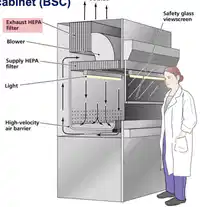
How does the high-velocity air barrier contribute to safety in a biological safety cabinet?
It provides additional lighting
It maintains a sterile environment by preventing contamination
It cools down the equipment inside the cabinet
It enhances the visibility of the workspace
4.
MULTIPLE CHOICE QUESTION
30 sec • 1 pt
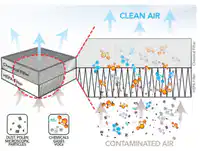
What is the primary function of a HEPA filter in air purification systems?
Removes large particles and room odors
Capable of removing 0.3 µm particles with 99.97% efficiency
Removes volatile organic compounds and chemical substances
Increases air humidity
5.
MULTIPLE CHOICE QUESTION
30 sec • 1 pt
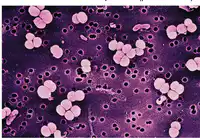
What is the pore size required to filter out bacteria using membrane filtration?
0.45μm or less
1.0μm or less
0.75μm or less
0.5μm or less
6.
MULTIPLE CHOICE QUESTION
30 sec • 1 pt

Which type of filters does membrane filtration not apply to?
Nominal filters (i.e. jug/cartridge)
Under sink water filters
Industrial filters
HEPA filters
7.
MULTIPLE CHOICE QUESTION
30 sec • 1 pt
What is the primary function of bacteriostatic compounds?
They kill microorganisms.
They enhance the effect of other compounds.
They inhibit the growth of microorganisms.
They act against each other to reduce effect.
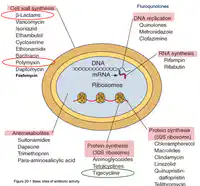
Access all questions and much more by creating a free account
Create resources
Host any resource
Get auto-graded reports

Continue with Google

Continue with Email

Continue with Classlink

Continue with Clever
or continue with

Microsoft
%20(1).png)
Apple

Others
Already have an account?


