
Evidence of Common Ancestry
Authored by ALLISON BAXTER
Science
9th Grade
112 covered


AI Actions
Add similar questions
Adjust reading levels
Convert to real-world scenario
Translate activity
More...
Content View
Student View
26 questions
Show all answers
1.
MULTIPLE CHOICE QUESTION
45 sec • 1 pt
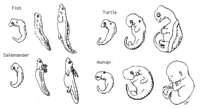
Study of embryos of various organisms to show a common ancestor because of similarities in development
2.
MULTIPLE CHOICE QUESTION
45 sec • 1 pt
How do fossils provide evidence that evolution has happened on Earth?
3.
MULTIPLE CHOICE QUESTION
45 sec • 1 pt
Humans, birds, whales, and lizards all have similar arm bones. What is the reason for this?
4.
MULTIPLE CHOICE QUESTION
45 sec • 1 pt

Vestigial structures
structures that perform a similar function but are not similar in origin
remnants of once-important structures that have slowly lost all or most of their function
features found in different organisms that share structural similarities but may have very different functions
preserved remains of an organism
5.
MULTIPLE CHOICE QUESTION
45 sec • 1 pt

Which layer is the youngest
6.
MULTIPLE CHOICE QUESTION
45 sec • 1 pt

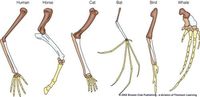
The picture shows a/an ___________
homologous structure
vestigial structure
7.
MULTIPLE CHOICE QUESTION
45 sec • 1 pt
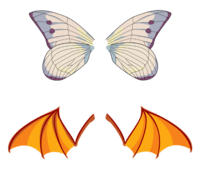
What is this an example of?
Homologous structure
Analogous structure
Vestigial organs
Functional adaption


Access all questions and much more by creating a free account
Create resources
Host any resource
Get auto-graded reports

Continue with Google

Continue with Email

Continue with Classlink

Continue with Clever
or continue with

Microsoft
%20(1).png)
Apple

Others
Already have an account?



