
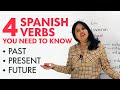
Mastering Essential Spanish Verbs in Three Tenses

Interactive Video
•
World Languages
•
6th - 10th Grade
•
Practice Problem
•
Hard

Lucas Foster
FREE Resource
Read more
10 questions
Show all answers
1.
MULTIPLE CHOICE QUESTION
30 sec • 1 pt
¿Cuántos verbos clave se mencionan en la lección?
Tres
Cinco
Cuatro
Seis
2.
MULTIPLE CHOICE QUESTION
30 sec • 1 pt
¿Cuál es la forma correcta del verbo 'ir' en presente para 'nosotros'?
Vais
Van
Voy
Vamos
3.
MULTIPLE CHOICE QUESTION
30 sec • 1 pt
¿Cómo se dice 'yo fui' en inglés?
I go
I went
I will go
I am going
4.
MULTIPLE CHOICE QUESTION
30 sec • 1 pt
¿Cuál es la forma correcta del verbo 'ser' en presente para 'él/ella/usted'?
Está
Era
Es
Fue
5.
MULTIPLE CHOICE QUESTION
30 sec • 1 pt
¿Qué verbo se usa para describir características permanentes?
Estar
Tener
Ser
Ir
6.
MULTIPLE CHOICE QUESTION
30 sec • 1 pt
¿Cuál es la forma correcta del verbo 'tener' en presente para 'yo'?
Tienen
Tiene
Tienes
Tengo
7.
MULTIPLE CHOICE QUESTION
30 sec • 1 pt
¿Cómo se dice 'nosotros tuvimos' en inglés?
We are having
We had
We have
We will have
Access all questions and much more by creating a free account
Create resources
Host any resource
Get auto-graded reports

Continue with Google

Continue with Email

Continue with Microsoft
or continue with

%20(1).png)
Apple

Others
Already have an account?

