
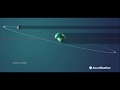
Exploring Solar and Lunar Eclipses

Interactive Video
•
Science
•
6th - 10th Grade
•
Practice Problem
•
Medium
Standards-aligned

Ethan Morris
Used 21+ times
FREE Resource
Standards-aligned
Read more
10 questions
Show all answers
1.
MULTIPLE CHOICE QUESTION
30 sec • 1 pt
What is the direction of the Moon's orbit around Earth?
Upward
Counterclockwise
Clockwise
Downward
2.
MULTIPLE CHOICE QUESTION
30 sec • 1 pt
During which moon phases can eclipses occur?
Full moon and new moon
Waxing crescent and waning crescent
First quarter and third quarter
Waxing gibbous and waning gibbous
Tags
NGSS.MS-ESS1-1
3.
MULTIPLE CHOICE QUESTION
30 sec • 1 pt
Why are eclipses so rare?
The Moon's orbit is flat
The Sun, Earth, and Moon are always aligned
The Earth orbits the Sun at an angle
The Moon orbits Earth at an angle
Tags
NGSS.MS-ESS1-1
4.
MULTIPLE CHOICE QUESTION
30 sec • 1 pt
What must be true for a solar eclipse to occur?
The Moon must be between the Earth and the Sun
The Moon must be behind the Earth
The Earth must be between the Moon and the Sun
The Sun must be between the Earth and the Moon
Tags
NGSS.MS-ESS1-1
5.
MULTIPLE CHOICE QUESTION
30 sec • 1 pt
When do solar eclipses happen?
During a waning gibbous
During a waxing crescent
During a new moon
During a full moon
Tags
NGSS.MS-ESS1-1
6.
MULTIPLE CHOICE QUESTION
30 sec • 1 pt
What happens during a solar eclipse?
The Earth blocks the Sun
The Earth blocks the Moon
The Moon blocks the Sun
The Sun blocks the Earth
Tags
NGSS.MS-ESS1-1
7.
MULTIPLE CHOICE QUESTION
30 sec • 1 pt
What is a unique feature of a lunar eclipse?
The Moon turns blue
The Moon turns blood-red
The Sun turns red
The Earth turns blue
Tags
NGSS.MS-ESS1-1
Access all questions and much more by creating a free account
Create resources
Host any resource
Get auto-graded reports

Continue with Google

Continue with Email

Continue with Microsoft
or continue with

%20(1).png)
Apple

Others
By signing up, you agree to our Terms of Service & Privacy Policy
Already have an account?

