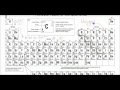
Periodic Table and Classification of Matter Insights

Interactive Video
•
Science
•
6th - 10th Grade
•
Practice Problem
•
Hard

Lucas Foster
Used 1+ times
FREE Resource
Read more
10 questions
Show all answers
1.
MULTIPLE CHOICE QUESTION
30 sec • 1 pt
Who is credited with the first comprehensive classification of the periodic table?
John Dalton
Dmitri Mendeleev
Marie Curie
Niels Bohr
2.
MULTIPLE CHOICE QUESTION
30 sec • 1 pt
What is the modern periodic table based on?
Chemical reactivity
Valence electrons
Atomic number
Atomic mass
3.
MULTIPLE CHOICE QUESTION
30 sec • 1 pt
Which property measures the attraction of an atom for electrons?
Atomic mass
Electronegativity
Atomic radii
Ionization energy
4.
MULTIPLE CHOICE QUESTION
30 sec • 1 pt
What happens to the atomic radius as you move across a period in the periodic table?
It decreases
It increases
It fluctuates
It remains the same
5.
MULTIPLE CHOICE QUESTION
30 sec • 1 pt
Which elements are known for having properties of both metals and nonmetals?
Alkali metals
Halogens
Metalloids
Noble gases
6.
MULTIPLE CHOICE QUESTION
30 sec • 1 pt
What is the term for a mixture where the components are evenly distributed?
Element
Compound
Homogeneous mixture
Heterogeneous mixture
7.
MULTIPLE CHOICE QUESTION
30 sec • 1 pt
Which method is used to separate mixtures based on boiling points?
Distillation
Chromatography
Filtration
Evaporation
Access all questions and much more by creating a free account
Create resources
Host any resource
Get auto-graded reports

Continue with Google

Continue with Email

Continue with Classlink

Continue with Clever
or continue with

Microsoft
%20(1).png)
Apple

Others
Already have an account?
Popular Resources on Wayground

15 questions
Fractions on a Number Line

Quiz
•
3rd Grade
20 questions
Equivalent Fractions
Quiz
•
3rd Grade
25 questions
Multiplication Facts
Quiz
•
5th Grade
22 questions
fractions
Quiz
•
3rd Grade
20 questions
Main Idea and Details
Quiz
•
5th Grade
20 questions
Context Clues
Quiz
•
6th Grade
15 questions
Equivalent Fractions
Quiz
•
4th Grade
20 questions
Figurative Language Review
Quiz
•
6th Grade
Discover more resources for Science
33 questions
Grade 6 Quarter 3 PMA 5 Review
Quiz
•
6th - 8th Grade
85 questions
Midpoint D1 Review
Quiz
•
8th Grade
20 questions
Rocks and The Rock Cycle
Quiz
•
6th Grade
12 questions
Ecological Succession
Quiz
•
7th Grade
12 questions
Newton's Laws of Motion

Lesson
•
6th - 8th Grade
10 questions
Exploring the Rock Cycle: Types and Formation
Interactive video
•
6th - 8th Grade
10 questions
Exploring the Layers of the Earth
Interactive video
•
6th - 10th Grade
20 questions
Pure Substances & Mixtures
Quiz
•
8th Grade