
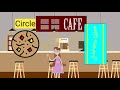
Exploring Fractions: Halves, Fourths, and Eighths

Interactive Video
•
Mathematics
•
6th - 10th Grade
•
Practice Problem
•
Hard
Standards-aligned

Jackson Turner
FREE Resource
Standards-aligned
Read more
10 questions
Show all answers
1.
MULTIPLE CHOICE QUESTION
30 sec • 1 pt
What does partitioning a shape mean?
Increasing the size of the shape
Changing the shape's position
Dividing the shape into parts
Coloring the shape
Tags
CCSS.1.G.A.3
2.
MULTIPLE CHOICE QUESTION
30 sec • 1 pt
If a shape is partitioned into parts of the same size, what are these parts called?
Equal parts
Halves
Quarters
Non-equal parts
Tags
CCSS.1.G.A.3
3.
MULTIPLE CHOICE QUESTION
30 sec • 1 pt
What does it mean if parts of a shape are non-equal?
They are the same size
They are different sizes
They cover the same area
They cannot be divided further
Tags
CCSS.1.G.A.3
4.
MULTIPLE CHOICE QUESTION
30 sec • 1 pt
What are the two types of parts a whole shape can be partitioned into?
Top and bottom halves
Equal and non-equal parts
Left and right sides
Circles and squares
Tags
CCSS.1.G.A.3
5.
MULTIPLE CHOICE QUESTION
30 sec • 1 pt
What key concept did the video aim to teach?
Partitioning shapes into parts
Baking cookies and cakes
Measuring shapes
Drawing shapes
Tags
CCSS.1.G.A.3
6.
MULTIPLE CHOICE QUESTION
30 sec • 1 pt
What shape is the cookie mentioned in the video?
Square
Rectangle
Triangle
Circle
Tags
CCSS.1.G.A.1
CCSS.2.G.A.1
7.
MULTIPLE CHOICE QUESTION
30 sec • 1 pt
What did the narrator use to demonstrate partitioning in the video?
A computer and a mouse
A book and a pen
A cup and a plate
A cookie and a piece of cake
Tags
CCSS.1.G.A.3
Access all questions and much more by creating a free account
Create resources
Host any resource
Get auto-graded reports

Continue with Google

Continue with Email

Continue with Classlink

Continue with Clever
or continue with

Microsoft
%20(1).png)
Apple

Others
Already have an account?

