
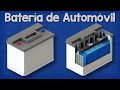
Automobile Electrical Systems Concepts

Interactive Video
•
Physics, Chemistry, Science
•
9th - 12th Grade
•
Practice Problem
•
Hard

Aiden Montgomery
FREE Resource
Read more
10 questions
Show all answers
1.
MULTIPLE CHOICE QUESTION
30 sec • 1 pt
Why is a 12-volt battery called a lead-acid battery?
Because it contains lead plates and sulfuric acid
Because it is made of lead and zinc
Because it uses lead and alkaline
Because it contains lead and water
2.
MULTIPLE CHOICE QUESTION
30 sec • 1 pt
What is the primary function of an automobile battery?
To store thermal energy
To generate mechanical energy
To store chemical energy
To store electricity
3.
MULTIPLE CHOICE QUESTION
30 sec • 1 pt
What role does the alternator play in a car's electrical system?
It starts the engine
It provides power to the headlights
It recharges the battery while the engine is running
It controls the car's speed
4.
MULTIPLE CHOICE QUESTION
30 sec • 1 pt
What happens when the demand for electricity in the car exceeds what the alternator can provide?
The alternator increases its output
The car stops running
The car's lights dim
The battery provides the additional energy
5.
MULTIPLE CHOICE QUESTION
30 sec • 1 pt
What is the flow of electrons in a circuit called?
Current
Capacitance
Voltage
Resistance
6.
MULTIPLE CHOICE QUESTION
30 sec • 1 pt
What is the difference between direct current (DC) and alternating current (AC)?
DC flows in one direction, AC flows back and forth
DC is used in homes, AC is used in batteries
DC is safer than AC
DC is more powerful than AC
7.
MULTIPLE CHOICE QUESTION
30 sec • 1 pt
What is an ion?
A molecule with no charge
A type of electron
An atom with equal numbers of protons and electrons
An atom with an unequal number of protons and electrons
Access all questions and much more by creating a free account
Create resources
Host any resource
Get auto-graded reports

Continue with Google

Continue with Email

Continue with Microsoft
or continue with

%20(1).png)
Apple

Others
By signing up, you agree to our Terms of Service & Privacy Policy
Already have an account?

