
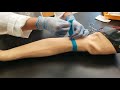
Venipuncture Techniques and Best Practices

Interactive Video
•
Life Skills, Health, Science
•
9th - 12th Grade
•
Practice Problem
•
Medium

Aiden Montgomery
Used 1+ times
FREE Resource
Read more
10 questions
Show all answers
1.
MULTIPLE CHOICE QUESTION
30 sec • 1 pt
Which vein is typically used for venipuncture in the context of tourniquet application?
Cephalic vein
Basilic vein
Median cubital vein
Radial vein
2.
MULTIPLE CHOICE QUESTION
30 sec • 1 pt
How far above the draw site should the tourniquet be applied?
7-8 inches
5-6 inches
3-4 inches
1-2 inches
3.
MULTIPLE CHOICE QUESTION
30 sec • 1 pt
Why should the tails of the tourniquet face upwards?
To prevent contamination of the draw site
To make it easier to remove
To increase blood flow
To reduce patient discomfort
4.
MULTIPLE CHOICE QUESTION
30 sec • 1 pt
What is the risk of leaving a tourniquet on for more than a minute?
Increased blood pressure
Hemolysis and hemo concentration
Decreased blood flow
Increased heart rate
5.
MULTIPLE CHOICE QUESTION
30 sec • 1 pt
What is the consequence of falsely elevated protein concentration in blood analysis?
Accurate diagnosis
Misleading test results
Decreased blood pressure
Improved patient health
6.
MULTIPLE CHOICE QUESTION
30 sec • 1 pt
What is a personal tip mentioned for applying the tourniquet?
Use a different knot
Apply the tourniquet loosely
Lengthen the right side more than the left
Lengthen the left side more than the right
7.
MULTIPLE CHOICE QUESTION
30 sec • 1 pt
What should you do if the tourniquet application looks incorrect?
Ignore it
Remove and reapply it
Leave it as is
Ask for assistance
Access all questions and much more by creating a free account
Create resources
Host any resource
Get auto-graded reports

Continue with Google

Continue with Email

Continue with Microsoft
or continue with

%20(1).png)
Apple

Others
Already have an account?


