
Examining the Rate-Determining Step Chemical Barrier

Interactive Video
•
Chemistry, Science, Physics
•
10th Grade - University
•
Practice Problem
•
Hard

Wayground Content
FREE Resource
Read more
5 questions
Show all answers
1.
MULTIPLE CHOICE QUESTION
30 sec • 1 pt
What is the role of the rate determining step in a reaction mechanism?
It dictates the overall rate of the reaction.
It has no effect on the reaction rate.
It is the fastest step in the mechanism.
It speeds up the reaction.
2.
MULTIPLE CHOICE QUESTION
30 sec • 1 pt
In the decomposition of hydrogen peroxide, what is the role of the iodide ion?
It acts as a catalyst.
It slows down the reaction.
It is consumed and not regenerated.
It is an intermediate.
3.
MULTIPLE CHOICE QUESTION
30 sec • 1 pt
What is an intermediate in a chemical reaction?
A substance that remains unchanged.
A substance formed and consumed during the reaction.
A substance that appears in the overall reaction.
A substance that speeds up the reaction.
4.
MULTIPLE CHOICE QUESTION
30 sec • 1 pt
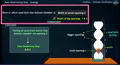
How does the hourglass analogy help explain the rate determining step?
It shows that all steps are equally important.
It illustrates that the slowest step controls the overall rate.
It suggests that the fastest step is the most important.
It indicates that the rate is independent of the slowest step.
5.
MULTIPLE CHOICE QUESTION
30 sec • 1 pt
What does the narrow opening in the hourglass represent in a reaction mechanism?
The step that does not affect the reaction rate.
The step with the highest energy requirement.
The fastest step in the reaction.
The rate determining step.
Access all questions and much more by creating a free account
Create resources
Host any resource
Get auto-graded reports

Continue with Google

Continue with Email

Continue with Classlink

Continue with Clever
or continue with

Microsoft
%20(1).png)
Apple

Others
Already have an account?

