
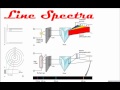
Electromagnetic Radiation and Electron Energy Levels Explained

Interactive Video
•
Physics, Chemistry, Science
•
9th - 10th Grade
•
Practice Problem
•
Hard

Patricia Brown
FREE Resource
Read more
10 questions
Show all answers
1.
MULTIPLE CHOICE QUESTION
30 sec • 1 pt
What happens when white light passes through a prism?
It gets absorbed completely.
It separates into different colors.
It becomes invisible.
It turns into a single color.
2.
MULTIPLE CHOICE QUESTION
30 sec • 1 pt
What is observed when a gas is excited and its light is passed through a prism?
A continuous spectrum.
A single color.
No light at all.
Discrete lines or bands.
3.
MULTIPLE CHOICE QUESTION
30 sec • 1 pt
How can electrons be excited?
By placing them in a vacuum.
By applying an electric current or heat.
By mixing them with water.
By cooling them down.
4.
MULTIPLE CHOICE QUESTION
30 sec • 1 pt
What is the process called when an electron releases energy and returns to its ground state?
Refraction
Absorption
Reflection
Emission
5.
MULTIPLE CHOICE QUESTION
30 sec • 1 pt
What did Niels Bohr propose about the electron in a hydrogen atom?
It does not exist in hydrogen.
It moves randomly around the nucleus.
It can only occupy certain energy states.
It can occupy any energy state.
6.
MULTIPLE CHOICE QUESTION
30 sec • 1 pt
According to Bohr, what happens to the energy levels as they move away from the nucleus?
They become more negative.
They disappear.
They become more positive.
They remain constant.
7.
MULTIPLE CHOICE QUESTION
30 sec • 1 pt
What is the significance of Bohr's formula in calculating energy changes?
It is irrelevant in modern chemistry.
It is used to calculate mass.
It only works for hydrogen.
It applies to all elements.
Access all questions and much more by creating a free account
Create resources
Host any resource
Get auto-graded reports

Continue with Google

Continue with Email

Continue with Classlink

Continue with Clever
or continue with

Microsoft
%20(1).png)
Apple

Others
Already have an account?


