
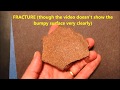
Mineral Identification Through Cleavage and Fracture Analysis

Interactive Video
•
Science, Chemistry, Other
•
6th - 8th Grade
•
Practice Problem
•
Hard

Patricia Brown
FREE Resource
Read more
10 questions
Show all answers
1.
MULTIPLE CHOICE QUESTION
30 sec • 1 pt
What characteristic indicates that a mineral has cleavage?
Bumpy surfaces
Random breakage
Flat sides or geometric shapes
Glassy appearance
2.
MULTIPLE CHOICE QUESTION
30 sec • 1 pt
Which of the following is a sign of fracture in a mineral?
Random breakage
Flat sides
Reflective surfaces
Clean angles
3.
MULTIPLE CHOICE QUESTION
30 sec • 1 pt
What is a common mistake when identifying cleavage in minerals?
Checking for random breakage
Expecting a glassy look
Looking for bumpy surfaces
Assuming all sides must be flat
4.
MULTIPLE CHOICE QUESTION
30 sec • 1 pt
How can light help in identifying cleavage in minerals?
By highlighting flat surfaces and angles
By creating a glassy appearance
By making the surface appear bumpy
By showing random breakage
5.
MULTIPLE CHOICE QUESTION
30 sec • 1 pt
What is the purpose of the hardness test on minerals?
To identify the mineral's color
To measure the mineral's weight
To test the mineral's ability to scratch glass
To determine if the mineral has cleavage
6.
MULTIPLE CHOICE QUESTION
30 sec • 1 pt
Why is it recommended to keep your eyes closed during the hardness test?
To prevent light reflection
To concentrate on the feel of the mineral
To avoid breaking the glass
To focus on the sound
7.
MULTIPLE CHOICE QUESTION
30 sec • 1 pt
What should you do if you can't tell if a mineral is scratching the glass?
Try different sides or edges of the mineral
Use a different glass plate
Try a different mineral
Look for a glassy appearance
Access all questions and much more by creating a free account
Create resources
Host any resource
Get auto-graded reports

Continue with Google

Continue with Email

Continue with Microsoft
or continue with

%20(1).png)
Apple

Others
By signing up, you agree to our Terms of Service & Privacy Policy
Already have an account?

