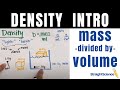
Mastering Density Through Engaging Scenarios and Real-Life Examples

Interactive Video
•
Physics, Science, Chemistry
•
6th - 8th Grade
•
Practice Problem
•
Hard

Patricia Brown
FREE Resource
Read more
10 questions
Show all answers
1.
MULTIPLE CHOICE QUESTION
30 sec • 1 pt
What is the formula for calculating density?
Volume minus mass
Mass times volume
Mass divided by volume
Volume divided by mass
2.
MULTIPLE CHOICE QUESTION
30 sec • 1 pt
Which of the following is a common unit for measuring density?
Liter per gram
Kilogram per meter
Gram per milliliter
Gram per liter
3.
MULTIPLE CHOICE QUESTION
30 sec • 1 pt
What does it mean when we say an object is 'lighter' in terms of density?
It is more dense
It is less dense
It occupies more space
It has less mass
4.
MULTIPLE CHOICE QUESTION
30 sec • 1 pt
Why does a hot air balloon rise in the air?
It has more mass than air
It is more dense than air
It is less dense than air
It is heavier than air
5.
MULTIPLE CHOICE QUESTION
30 sec • 1 pt
Why does a block of wood float on water?
It has the same density as water
It is more dense than water
It is heavier than water
It is less dense than water
6.
MULTIPLE CHOICE QUESTION
30 sec • 1 pt
What happens to a nail when placed in water and why?
It floats because it is less dense
It sinks because it is less dense
It sinks because it is more dense
It floats because it is more dense
7.
MULTIPLE CHOICE QUESTION
30 sec • 1 pt
If two samples have the same mass but different volumes, what can be said about their densities?
The one with smaller volume is more dense
Density cannot be determined
They have the same density
The one with larger volume is more dense
Access all questions and much more by creating a free account
Create resources
Host any resource
Get auto-graded reports

Continue with Google

Continue with Email

Continue with Classlink

Continue with Clever
or continue with

Microsoft
%20(1).png)
Apple

Others
Already have an account?
Popular Resources on Wayground

15 questions
Fractions on a Number Line

Quiz
•
3rd Grade
20 questions
Equivalent Fractions
Quiz
•
3rd Grade
25 questions
Multiplication Facts
Quiz
•
5th Grade
22 questions
fractions
Quiz
•
3rd Grade
20 questions
Main Idea and Details
Quiz
•
5th Grade
20 questions
Context Clues
Quiz
•
6th Grade
15 questions
Equivalent Fractions
Quiz
•
4th Grade
20 questions
Figurative Language Review
Quiz
•
6th Grade
Discover more resources for Physics
20 questions
Thermal Energy
Quiz
•
5th - 8th Grade
20 questions
Force and Motion
Quiz
•
6th Grade
13 questions
Potential and Kinetic Energy Review
Quiz
•
6th Grade
20 questions
8th grade Newton's Law Assessment
Quiz
•
8th Grade
30 questions
Free Body Diagrams
Quiz
•
8th Grade
24 questions
Reflection, Refraction & Diffraction
Quiz
•
6th - 12th Grade
20 questions
Electromagnetic Spectrum Review
Quiz
•
8th Grade
24 questions
Waves, Parts of Waves and Wave Properties
Quiz
•
5th - 7th Grade