
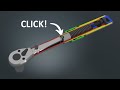
Understanding Torque Wrench Mechanisms

Interactive Video
•
Physics, Science, Other
•
9th - 10th Grade
•
Practice Problem
•
Hard

Patricia Brown
FREE Resource
Read more
10 questions
Show all answers
1.
MULTIPLE CHOICE QUESTION
30 sec • 1 pt
What is the primary purpose of a torque wrench?
To measure the length of a fastener
To loosen fasteners
To cut fasteners
To apply a specific torque to fasteners
2.
MULTIPLE CHOICE QUESTION
30 sec • 1 pt
Why is it important not to use a torque wrench to loosen fasteners?
It can make the wrench longer
It can damage the fastener
It can damage the wrench and affect its accuracy
It can make the wrench heavier
3.
MULTIPLE CHOICE QUESTION
30 sec • 1 pt
What is the function of the locking ring on a torque wrench?
To increase the length of the wrench
To change the direction of the wrench
To secure the set torque value
To measure the torque
4.
MULTIPLE CHOICE QUESTION
30 sec • 1 pt
How can you adjust the torque setting on a torque wrench?
By pressing a button
By turning the handle clockwise or counterclockwise
By shaking the wrench
By changing the socket
5.
MULTIPLE CHOICE QUESTION
30 sec • 1 pt
What does the ratchet head mechanism allow you to do?
Measure the temperature
Turn the fastener in one direction without repositioning
Increase the torque automatically
Change the size of the fastener
6.
MULTIPLE CHOICE QUESTION
30 sec • 1 pt
What creates the clicking sound in a torque wrench?
The locking ring engaging
The ratchet head moving
The spring releasing energy
The handle hitting the wrench body
7.
MULTIPLE CHOICE QUESTION
30 sec • 1 pt
What happens when the preset torque amount is reached?
The handle locks automatically
The wrench stops working
The wrench changes direction
The click mechanism is activated
Access all questions and much more by creating a free account
Create resources
Host any resource
Get auto-graded reports

Continue with Google

Continue with Email

Continue with Classlink

Continue with Clever
or continue with

Microsoft
%20(1).png)
Apple

Others
Already have an account?


