
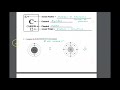
Covalent and Ionic Bonding Concepts

Interactive Video
•
Science, Chemistry, Biology
•
9th - 10th Grade
•
Practice Problem
•
Hard

Patricia Brown
FREE Resource
Read more
10 questions
Show all answers
1.
MULTIPLE CHOICE QUESTION
30 sec • 1 pt
Which particles are found in the nucleus of an atom?
Electrons only
Neutrons and electrons
Protons and neutrons
Electrons and protons
2.
MULTIPLE CHOICE QUESTION
30 sec • 1 pt
What are the particles in the outermost shell of an atom called?
Nuclear electrons
Core electrons
Free electrons
Valence electrons
3.
MULTIPLE CHOICE QUESTION
30 sec • 1 pt
How many electrons can the first three shells of an atom hold?
2, 4, 4
2, 8, 8
8, 2, 8
8, 8, 2
4.
MULTIPLE CHOICE QUESTION
30 sec • 1 pt
Which group in the periodic table is more reactive and why?
Group 1, because it has a full shell
Group 18, because it lacks a full shell
Group 18, because it has a full shell
Group 1, because it lacks a full shell
5.
MULTIPLE CHOICE QUESTION
30 sec • 1 pt
What does the group number in the periodic table indicate?
Number of protons
Number of electron shells
Number of neutrons
Number of valence electrons
6.
MULTIPLE CHOICE QUESTION
30 sec • 1 pt
What is the atomic number of an element?
Number of electrons
Number of neutrons
Sum of protons and neutrons
Number of protons
7.
MULTIPLE CHOICE QUESTION
30 sec • 1 pt
What does the atomic weight of an element represent?
Sum of protons and neutrons
Number of neutrons
Number of electrons
Number of protons
Access all questions and much more by creating a free account
Create resources
Host any resource
Get auto-graded reports

Continue with Google

Continue with Email

Continue with Classlink

Continue with Clever
or continue with

Microsoft
%20(1).png)
Apple

Others
Already have an account?
Similar Resources on Wayground
Popular Resources on Wayground

8 questions
Spartan Way - Classroom Responsible

Quiz
•
9th - 12th Grade
15 questions
Fractions on a Number Line
Quiz
•
3rd Grade
14 questions
Boundaries & Healthy Relationships

Lesson
•
6th - 8th Grade
20 questions
Equivalent Fractions
Quiz
•
3rd Grade
3 questions
Integrity and Your Health
Lesson
•
6th - 8th Grade
25 questions
Multiplication Facts
Quiz
•
5th Grade
9 questions
FOREST Perception
Lesson
•
KG
20 questions
Main Idea and Details
Quiz
•
5th Grade
Discover more resources for Science
25 questions
Naming Ionic and Covalent Compounds
Quiz
•
9th Grade
10 questions
Exploring the Evolution of the Peppered Moth
Interactive video
•
6th - 10th Grade
35 questions
DNA Structure and Replication
Quiz
•
10th Grade
10 questions
Exploring Trophic Levels and Food Pyramids
Interactive video
•
6th - 10th Grade
28 questions
Spring DPM Review
Quiz
•
9th Grade
10 questions
Symbiotic Relationships
Lesson
•
9th - 12th Grade
13 questions
DNA Mutations
Quiz
•
9th Grade
20 questions
Balancing Chemical Equations
Quiz
•
9th Grade