
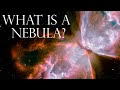
Nebulae and Their Characteristics

Interactive Video
•
Science, Physics, Chemistry
•
9th - 10th Grade
•
Practice Problem
•
Hard

Patricia Brown
FREE Resource
Read more
10 questions
Show all answers
1.
MULTIPLE CHOICE QUESTION
30 sec • 1 pt
What are nebulae primarily composed of?
Oxygen and nitrogen
Hydrogen and helium
Carbon and iron
Silicon and magnesium
2.
MULTIPLE CHOICE QUESTION
30 sec • 1 pt
Which nebula is known as the most active star-forming region in our galaxy?
Helix Nebula
Butterfly Nebula
Orion Nebula
Cat's Eye Nebula
3.
MULTIPLE CHOICE QUESTION
30 sec • 1 pt
What is the primary reason planetary nebulae glow?
Collision with other nebulae
Reflection of nearby starlight
Emission from the hot core of a dying star
Absorption of cosmic rays
4.
MULTIPLE CHOICE QUESTION
30 sec • 1 pt
Which nebula is often referred to as the 'Eye of God'?
Horsehead Nebula
Orion Nebula
Helix Nebula
Crab Nebula
5.
MULTIPLE CHOICE QUESTION
30 sec • 1 pt
What is the approximate speed of gas movement in the Butterfly Nebula?
600,000 miles per hour
900,000 miles per hour
100,000 miles per hour
300,000 miles per hour
6.
MULTIPLE CHOICE QUESTION
30 sec • 1 pt
What event leads to the formation of supernova remnants?
Absorption of a black hole
Explosion of a star
Collision of two stars
Gradual cooling of a star
7.
MULTIPLE CHOICE QUESTION
30 sec • 1 pt
Which nebula is a remnant of a supernova observed by Chinese astronomers nearly a thousand years ago?
Veil Nebula
Crab Nebula
Tycho's Nova
Horsehead Nebula
Access all questions and much more by creating a free account
Create resources
Host any resource
Get auto-graded reports

Continue with Google

Continue with Email

Continue with Classlink

Continue with Clever
or continue with

Microsoft
%20(1).png)
Apple

Others
Already have an account?

