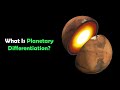
Planetary Differentiation Concepts

Interactive Video
•
Physics, Science, Geography
•
9th - 10th Grade
•
Practice Problem
•
Hard

Patricia Brown
FREE Resource
Read more
10 questions
Show all answers
1.
MULTIPLE CHOICE QUESTION
30 sec • 1 pt
What is the typical environment where planets form?
In a comet's tail
In a black hole
In a circumstellar disk
In a gaseous cloud
2.
MULTIPLE CHOICE QUESTION
30 sec • 1 pt
Which of the following is NOT a source of heat during planet formation?
Accretion
Radioactive decay
Gravitational collapse
Solar wind
3.
MULTIPLE CHOICE QUESTION
30 sec • 1 pt
What is the primary cause of internal heating in forming planets?
Gravitational collapse
Tidal forces
Solar radiation
Magnetic interactions
4.
MULTIPLE CHOICE QUESTION
30 sec • 1 pt
What happens during planetary differentiation?
Planets become gaseous
Planets lose their atmosphere
Heavier elements sink to the center
Planets form rings
5.
MULTIPLE CHOICE QUESTION
30 sec • 1 pt
Which of the following is NOT a result of planetary differentiation?
Sinking of lighter elements
Formation of a solid core
Creation of a magnetic field
Layering of materials
6.
MULTIPLE CHOICE QUESTION
30 sec • 1 pt
Which celestial body is an example of differentiation despite not being a planet?
The Moon
A comet
An asteroid belt
The Sun
7.
MULTIPLE CHOICE QUESTION
30 sec • 1 pt
What is a key requirement for a celestial body to undergo differentiation?
Presence of water
Sufficient internal heat
A magnetic field
A thick atmosphere
Access all questions and much more by creating a free account
Create resources
Host any resource
Get auto-graded reports

Continue with Google

Continue with Email

Continue with Classlink

Continue with Clever
or continue with

Microsoft
%20(1).png)
Apple

Others
Already have an account?
Similar Resources on Wayground

6 questions
Mission to Mars: Operating on the Surface
Interactive video
•
9th - 10th Grade
6 questions
The 8 Planets Of the Solar System! | The Solar System Song | KLT
Interactive video
•
KG - 9th Grade
11 questions
Mars: Facts and Survival Challenges
Interactive video
•
9th - 10th Grade
11 questions
Origins and Evolution of the Universe
Interactive video
•
9th - 10th Grade
11 questions
Asteroid Impact and Earth's History
Interactive video
•
9th - 10th Grade
6 questions
Understanding the Hertzsprung-Russell Diagram
Interactive video
•
9th - 10th Grade
6 questions
Rocket Launch Problem Quiz
Interactive video
•
9th - 10th Grade
6 questions
Saturn's Mysterious Hexagon Quiz
Interactive video
•
9th - 10th Grade
Popular Resources on Wayground
15 questions
Fractions on a Number Line

Quiz
•
3rd Grade
20 questions
Equivalent Fractions
Quiz
•
3rd Grade
25 questions
Multiplication Facts
Quiz
•
5th Grade
54 questions
Analyzing Line Graphs & Tables
Quiz
•
4th Grade
22 questions
fractions
Quiz
•
3rd Grade
20 questions
Main Idea and Details
Quiz
•
5th Grade
20 questions
Context Clues
Quiz
•
6th Grade
15 questions
Equivalent Fractions
Quiz
•
4th Grade
Discover more resources for Physics
27 questions
Simple Machines and Mechanical Advantage Quiz
Quiz
•
9th Grade
10 questions
Understanding Heat, Thermal Energy, and Temperature
Interactive video
•
9th - 10th Grade
10 questions
Newton's Laws of Motion
Quiz
•
10th Grade
10 questions
unit 10 -- electric forces and fields

Lesson
•
9th - 12th Grade
21 questions
Diffraction, Reflection, Refraction
Quiz
•
9th - 12th Grade
15 questions
Position vs. Time and Velocity vs. Time Graphs
Quiz
•
10th - 12th Grade
10 questions
Types of Chemical Reactions
Quiz
•
10th Grade
11 questions
Conservation of Momentum: Physics in Motion Video
Interactive video
•
10th Grade