
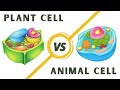
Cell Functions and Structures in Biology

Interactive Video
•
Biology, Science, Other
•
9th - 10th Grade
•
Practice Problem
•
Hard

Patricia Brown
Used 2+ times
FREE Resource
Read more
10 questions
Show all answers
1.
MULTIPLE CHOICE QUESTION
30 sec • 1 pt
What is the primary role of cells in multicellular organisms?
To act as the basic unit of life
To provide energy to the organism
To transport nutrients
To protect the organism from diseases
2.
MULTIPLE CHOICE QUESTION
30 sec • 1 pt
What is the main difference between the outermost layers of plant and animal cells?
Animal cells have a cell wall, while plant cells have a cell membrane
Both have cell walls
Both have cell membranes
Plant cells have a cell wall, while animal cells have a cell membrane
3.
MULTIPLE CHOICE QUESTION
30 sec • 1 pt
Why are plant cells capable of photosynthesis?
They have mitochondria
They contain chlorophyll
They have a cell wall
They contain lysosomes
4.
MULTIPLE CHOICE QUESTION
30 sec • 1 pt
What is the function of vacuoles in plant cells?
To store food and waste products
To produce energy
To aid in cell division
To transport nutrients
5.
MULTIPLE CHOICE QUESTION
30 sec • 1 pt
Which organelle is responsible for photosynthesis in plant cells?
Nucleus
Mitochondria
Chloroplast
Lysosome
6.
MULTIPLE CHOICE QUESTION
30 sec • 1 pt
What is the role of lysosomes in animal cells?
To provide structural support
To store nutrients
To degrade unwanted materials
To aid in photosynthesis
7.
MULTIPLE CHOICE QUESTION
30 sec • 1 pt
How does cytokinesis occur in plant cells?
By forming a cell plate
By binary fission
Through budding
Through the formation of a cleavage furrow
Access all questions and much more by creating a free account
Create resources
Host any resource
Get auto-graded reports

Continue with Google

Continue with Email

Continue with Classlink

Continue with Clever
or continue with

Microsoft
%20(1).png)
Apple

Others
Already have an account?


