
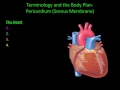
Serous Membranes and Body Cavities

Interactive Video
•
Biology, Science, Other
•
9th - 10th Grade
•
Practice Problem
•
Hard

Patricia Brown
FREE Resource
Read more
10 questions
Show all answers
1.
MULTIPLE CHOICE QUESTION
30 sec • 1 pt
What are the two major body cavities in the human body?
Cranial and Vertebral
Thoracic and Abdominal
Posterior and Anterior
Pelvic and Abdominal
2.
MULTIPLE CHOICE QUESTION
30 sec • 1 pt
Which cavity is NOT a subdivision of the anterior cavity?
Pelvic cavity
Abdominal cavity
Cranial cavity
Thoracic cavity
3.
MULTIPLE CHOICE QUESTION
30 sec • 1 pt
Which cavity contains the heart and respiratory passageways?
Abdominal cavity
Mediastinum
Pericardial cavity
Pleural cavity
4.
MULTIPLE CHOICE QUESTION
30 sec • 1 pt
What is the function of the serous fluid found in serous membranes?
To store energy
To act as a shock absorber and reduce friction
To provide nutrients
To transport oxygen
5.
MULTIPLE CHOICE QUESTION
30 sec • 1 pt
What is the primary role of the visceral serous membrane?
To protect the outer body
To attach to the organ itself
To store serous fluid
To provide structural support
6.
MULTIPLE CHOICE QUESTION
30 sec • 1 pt
Which of the following is NOT a part of the serous membrane?
Visceral membrane
Serous cavity
Mediastinum
Serous fluid
7.
MULTIPLE CHOICE QUESTION
30 sec • 1 pt
Which part of the pericardium directly touches the heart?
Pleural cavity
Pericardial cavity
Visceral pericardium
Parietal pericardium
Access all questions and much more by creating a free account
Create resources
Host any resource
Get auto-graded reports

Continue with Google

Continue with Email

Continue with Microsoft
or continue with

%20(1).png)
Apple

Others
Already have an account?

