
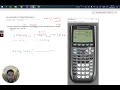
Stoichiometry Concepts and Calculations

Interactive Video
•
Chemistry, Science, Mathematics
•
10th - 12th Grade
•
Practice Problem
•
Hard

Patricia Brown
FREE Resource
Read more
10 questions
Show all answers
1.
MULTIPLE CHOICE QUESTION
30 sec • 1 pt
What is the primary focus of gravimetric stoichiometry?
Pressure measurements
Temperature changes
Mass calculations
Volume calculations
2.
MULTIPLE CHOICE QUESTION
30 sec • 1 pt
Why is it important to have a balanced chemical equation in stoichiometry?
To determine the color of the reactants
To ensure the reaction is safe
To predict the temperature change
To accurately calculate the amounts of reactants and products
3.
MULTIPLE CHOICE QUESTION
30 sec • 1 pt
What is the charge of the permanganate ion used in the problem?
Positive one
Negative two
Negative one
Positive two
4.
MULTIPLE CHOICE QUESTION
30 sec • 1 pt
In the balanced equation, how many moles of potassium permanganate react with one mole of iron(III) hydroxide?
Three moles
Four moles
Two moles
One mole
5.
MULTIPLE CHOICE QUESTION
30 sec • 1 pt
What is the molar mass of iron(III) hydroxide used in the calculations?
158.04 g/mol
100.00 g/mol
200.00 g/mol
106.88 g/mol
6.
MULTIPLE CHOICE QUESTION
30 sec • 1 pt
What is the first step in converting grams of a substance to moles?
Calculate the volume
Measure the temperature
Find the molar mass
Use the balanced equation
7.
MULTIPLE CHOICE QUESTION
30 sec • 1 pt
How many grams of potassium permanganate are needed to react with 36 grams of iron(III) hydroxide?
106.88 grams
200 grams
159.7 grams
100 grams
Access all questions and much more by creating a free account
Create resources
Host any resource
Get auto-graded reports

Continue with Google

Continue with Email

Continue with Classlink

Continue with Clever
or continue with

Microsoft
%20(1).png)
Apple

Others
Already have an account?


