
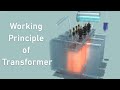
Transformer Functions and Components

Interactive Video
•
Physics, Science, Other
•
9th - 10th Grade
•
Practice Problem
•
Hard

Patricia Brown
FREE Resource
Read more
10 questions
Show all answers
1.
MULTIPLE CHOICE QUESTION
30 sec • 1 pt
What is the primary function of a transformer?
To convert AC to DC
To store electrical energy
To transfer electrical voltage levels
To generate electricity
2.
MULTIPLE CHOICE QUESTION
30 sec • 1 pt
What material is the core of a transformer typically made from?
Iron or silicon steel
Aluminum
Plastic
Copper
3.
MULTIPLE CHOICE QUESTION
30 sec • 1 pt
What is the role of the primary winding in a transformer?
To provide mechanical support
To cool the transformer
To insulate the transformer
To receive electrical power from the source
4.
MULTIPLE CHOICE QUESTION
30 sec • 1 pt
How does a step-up transformer differ from a step-down transformer?
It decreases voltage
It converts AC to DC
It increases voltage
It stores energy
5.
MULTIPLE CHOICE QUESTION
30 sec • 1 pt
What is the purpose of insulation between the primary and secondary windings?
To decrease current
To prevent short circuits
To enhance magnetic flux
To increase voltage
6.
MULTIPLE CHOICE QUESTION
30 sec • 1 pt
What is the function of insulated bushings in a transformer?
To support the core
To prevent energy losses
To receive electric energy
To cool the transformer
7.
MULTIPLE CHOICE QUESTION
30 sec • 1 pt
Which type of loss is NOT typically associated with transformers?
Eddy current losses
Hysteresis losses
Copper losses
Mechanical losses
Access all questions and much more by creating a free account
Create resources
Host any resource
Get auto-graded reports

Continue with Google

Continue with Email

Continue with Classlink

Continue with Clever
or continue with

Microsoft
%20(1).png)
Apple

Others
Already have an account?


