
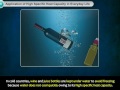
Water's Specific Heat Capacity Effects

Interactive Video
•
Physics, Science, Biology
•
9th - 10th Grade
•
Practice Problem
•
Hard

Patricia Brown
FREE Resource
Read more
10 questions
Show all answers
1.
MULTIPLE CHOICE QUESTION
30 sec • 1 pt
What is the specific heat capacity of water?
3200 Joules per kilogram per degree Celsius
4200 Joules per kilogram per degree Celsius
2200 Joules per kilogram per degree Celsius
5200 Joules per kilogram per degree Celsius
2.
MULTIPLE CHOICE QUESTION
30 sec • 1 pt
How does water's specific heat capacity affect land and sea breezes?
It causes the sea to cool down faster than the land at night.
It causes water to heat up faster than sand during the day.
It causes sand to heat up faster than water during the day.
It prevents any temperature changes between land and sea.
3.
MULTIPLE CHOICE QUESTION
30 sec • 1 pt
What happens to the air above sand during the day compared to water?
It becomes cooler than the air above water.
It becomes hotter and rises up.
It remains at the same temperature.
It becomes denser and sinks.
4.
MULTIPLE CHOICE QUESTION
30 sec • 1 pt
Why is water used in fermentation processes?
Because it heats up quickly.
Because it is a poor conductor of heat.
Because it absorbs and releases large amounts of heat.
Because it has a low specific heat capacity.
5.
MULTIPLE CHOICE QUESTION
30 sec • 1 pt
How does water's specific heat capacity benefit machinery?
By preventing machinery from heating up.
By having no effect on machinery temperature.
By causing machinery to overheat.
By extracting more heat and cooling machinery.
6.
MULTIPLE CHOICE QUESTION
30 sec • 1 pt
How does water help prevent freezing in cold climates?
By cooling down quickly.
By having a low specific heat capacity.
By heating up quickly.
By not cooling quickly due to its high specific heat capacity.
7.
MULTIPLE CHOICE QUESTION
30 sec • 1 pt
What is the effect of water's high specific heat capacity on environmental temperatures?
It causes rapid temperature changes.
It helps maintain stable temperatures.
It increases temperature fluctuations.
It has no effect on environmental temperatures.
Access all questions and much more by creating a free account
Create resources
Host any resource
Get auto-graded reports

Continue with Google

Continue with Email

Continue with Classlink

Continue with Clever
or continue with

Microsoft
%20(1).png)
Apple

Others
Already have an account?
Popular Resources on Wayground

15 questions
Fractions on a Number Line

Quiz
•
3rd Grade
20 questions
Equivalent Fractions
Quiz
•
3rd Grade
25 questions
Multiplication Facts
Quiz
•
5th Grade
29 questions
Alg. 1 Section 5.1 Coordinate Plane
Quiz
•
9th Grade
22 questions
fractions
Quiz
•
3rd Grade
11 questions
FOREST Effective communication

Lesson
•
KG
20 questions
Main Idea and Details
Quiz
•
5th Grade
20 questions
Context Clues
Quiz
•
6th Grade
Discover more resources for Physics
10 questions
Exit Check 4.1 - Destructive Processes
Quiz
•
9th Grade
10 questions
Exit Check 4.2 - Constructive Forces
Quiz
•
9th Grade
10 questions
Exit Check 4.3 - Conservation of Momentum
Quiz
•
9th Grade
10 questions
Exit Check 4.4 - Momentum Calculations
Quiz
•
9th Grade
21 questions
EM Spectrum
Quiz
•
6th - 9th Grade
20 questions
Simple Machines and Mechanical Advantage Quiz
Quiz
•
9th Grade
14 questions
Graphs of Motion, Velocity & Acceleration
Quiz
•
8th - 9th Grade
21 questions
PE & KE Practice
Quiz
•
8th - 11th Grade