
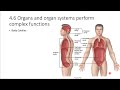
Human Anatomy and Organ Systems

Interactive Video
•
Biology, Science, Other
•
9th - 12th Grade
•
Practice Problem
•
Hard

Patricia Brown
FREE Resource
Read more
10 questions
Show all answers
1.
MULTIPLE CHOICE QUESTION
30 sec • 1 pt
What is an organ in the context of human biology?
A single type of tissue performing a function
A collection of cells with no specific function
A collection of two or more tissue types working together
A group of organs performing different functions
2.
MULTIPLE CHOICE QUESTION
30 sec • 1 pt
Which tissue type is NOT present in the heart?
Muscle tissue
None, all are present
Connective tissue
Epithelial tissue
3.
MULTIPLE CHOICE QUESTION
30 sec • 1 pt
What is the primary function of an organ system?
To contain only one type of tissue
To perform complementary functions with other organs
To work independently from other systems
To perform a single function
4.
MULTIPLE CHOICE QUESTION
30 sec • 1 pt
Which organ system is responsible for hormone production?
Respiratory system
Digestive system
Endocrine system
Nervous system
5.
MULTIPLE CHOICE QUESTION
30 sec • 1 pt
How many major organ systems are there in the human body?
8
9
10
11
6.
MULTIPLE CHOICE QUESTION
30 sec • 1 pt
Which cavity contains the lungs and heart?
Abdominal cavity
Thoracic cavity
Cranial cavity
Pelvic cavity
7.
MULTIPLE CHOICE QUESTION
30 sec • 1 pt
What type of membrane lines joint cavities?
Cutaneous membranes
Synovial membranes
Serous membranes
Mucous membranes
Access all questions and much more by creating a free account
Create resources
Host any resource
Get auto-graded reports

Continue with Google

Continue with Email

Continue with Classlink

Continue with Clever
or continue with

Microsoft
%20(1).png)
Apple

Others
Already have an account?

