
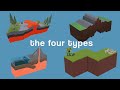
Plate Boundaries and Natural Events

Interactive Video
•
Science, Geography, Physics
•
9th - 10th Grade
•
Practice Problem
•
Hard

Patricia Brown
FREE Resource
Read more
10 questions
Show all answers
1.
MULTIPLE CHOICE QUESTION
30 sec • 1 pt
What is another name for plate boundaries?
Plate zones
Plate lines
Plate margins
Plate edges
2.
MULTIPLE CHOICE QUESTION
30 sec • 1 pt
Where are constructive plate boundaries mostly found?
In mountain ranges
On land
At the bottom of the sea
In deserts
3.
MULTIPLE CHOICE QUESTION
30 sec • 1 pt
What type of natural event is common at constructive boundaries?
Hurricanes
Tsunamis
Powerful earthquakes
Volcanic eruptions
4.
MULTIPLE CHOICE QUESTION
30 sec • 1 pt
What happens during the subduction process at destructive boundaries?
Oceanic plates are forced under continental plates
Oceanic plates slide over continental plates
Continental plates move apart
Continental plates collide head-on
5.
MULTIPLE CHOICE QUESTION
30 sec • 1 pt
What causes powerful earthquakes at destructive boundaries?
Plates moving apart
Plates sliding past each other
Plates getting stuck and then jolting upwards
Volcanic eruptions
6.
MULTIPLE CHOICE QUESTION
30 sec • 1 pt
What is formed at collision boundaries?
Volcanoes
Mountain ranges
Ocean trenches
Rift valleys
7.
MULTIPLE CHOICE QUESTION
30 sec • 1 pt
Why don't volcanic eruptions occur at collision boundaries?
The plates are moving apart
The plates are too dense
There is no magma rising from below
The plates are sliding past each other
Access all questions and much more by creating a free account
Create resources
Host any resource
Get auto-graded reports

Continue with Google

Continue with Email

Continue with Classlink

Continue with Clever
or continue with

Microsoft
%20(1).png)
Apple

Others
Already have an account?


