
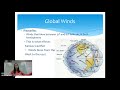
Wind Patterns and Measurement Concepts

Interactive Video
•
Geography
•
6th - 7th Grade
•
Practice Problem
•
Hard

Patricia Brown
FREE Resource
Read more
10 questions
Show all answers
1.
MULTIPLE CHOICE QUESTION
30 sec • 1 pt
What is the primary cause of wind?
Earth's rotation
Ocean currents
Differences in air pressure
Sun's radiation
2.
MULTIPLE CHOICE QUESTION
30 sec • 1 pt
Which instrument is used to measure wind speed?
Hygrometer
Thermometer
Anemometer
Barometer
3.
MULTIPLE CHOICE QUESTION
30 sec • 1 pt
What are the trade winds?
Winds blowing from the poles to the equator
Winds blowing from east to west at the equator
Winds blowing from 30 degrees latitude to the equator
Winds blowing from 60 degrees latitude to the poles
4.
MULTIPLE CHOICE QUESTION
30 sec • 1 pt
Which wind system affects Kansas?
Westerlies
Easterlies
Polar winds
Trade winds
5.
MULTIPLE CHOICE QUESTION
30 sec • 1 pt
What is the direction of the easterlies?
From north to south
From east to west
From west to east
From south to north
6.
MULTIPLE CHOICE QUESTION
30 sec • 1 pt
What primarily influences local winds?
Global wind patterns
Geography of the area
Ocean currents
Earth's magnetic field
7.
MULTIPLE CHOICE QUESTION
30 sec • 1 pt
What happens during a sea breeze?
Warm air from the sea moves to the land
Warm air from the land moves to the sea
Cool air from the land moves to the sea
Cool air from the sea moves to the land
Access all questions and much more by creating a free account
Create resources
Host any resource
Get auto-graded reports

Continue with Google

Continue with Email

Continue with Classlink

Continue with Clever
or continue with

Microsoft
%20(1).png)
Apple

Others
Already have an account?

