
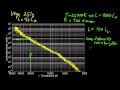
Luminosity and Distance of Stars

Interactive Video
•
Physics
•
11th - 12th Grade
•
Practice Problem
•
Hard

Patricia Brown
FREE Resource
Read more
10 questions
Show all answers
1.
MULTIPLE CHOICE QUESTION
30 sec • 1 pt
What is the relationship between a star's temperature and its luminosity?
Luminosity decreases with temperature
Higher temperature means lower luminosity
Higher temperature means higher luminosity
Temperature and luminosity are unrelated
2.
MULTIPLE CHOICE QUESTION
30 sec • 1 pt
What is the maximum distance for which parallax measurements are effective?
100 light years
600 light years
1000 light years
5000 light years
3.
MULTIPLE CHOICE QUESTION
30 sec • 1 pt
How far is Vega from Earth based on parallax measurements?
50 light years
25 light years
10 light years
75 light years
4.
MULTIPLE CHOICE QUESTION
30 sec • 1 pt
What is the surface temperature of the new star being observed?
25,000 Kelvin
20,000 Kelvin
15,000 Kelvin
10,000 Kelvin
5.
MULTIPLE CHOICE QUESTION
30 sec • 1 pt
How does the brightness of the new star compare to Vega?
Same brightness
50 times dimmer
900 times dimmer
100 times brighter
6.
MULTIPLE CHOICE QUESTION
30 sec • 1 pt
What is the luminosity of the new star in solar luminosities?
1,000 solar luminosities
2,000 solar luminosities
10,000 solar luminosities
4,000 solar luminosities
7.
MULTIPLE CHOICE QUESTION
30 sec • 1 pt
If the new star is 100 times more luminous than Vega, how much further away must it be to appear 900 times dimmer?
100 times further
10 times further
300 times further
30 times further
Access all questions and much more by creating a free account
Create resources
Host any resource
Get auto-graded reports

Continue with Google

Continue with Email

Continue with Microsoft
or continue with

%20(1).png)
Apple

Others
Already have an account?


