
Water Equilibrium and Acid-Base Concepts

Interactive Video
•
Chemistry
•
11th - 12th Grade
•
Practice Problem
•
Hard

Patricia Brown
FREE Resource
Read more
10 questions
Show all answers
1.
MULTIPLE CHOICE QUESTION
30 sec • 1 pt
What happens to water molecules in a sample of pure water?
They remain completely intact.
They evaporate immediately.
They dissociate into H+ and OH- ions.
They form a solid structure.
2.
MULTIPLE CHOICE QUESTION
30 sec • 1 pt
What does the equilibrium system in water involve?
Only H2O molecules
Only OH- ions
H2O, H+ ions, and OH- ions
Only H+ ions
3.
MULTIPLE CHOICE QUESTION
30 sec • 1 pt
Where does the equilibrium position lie in the dissociation of water?
Far to the left
In the middle
It constantly shifts
Far to the right
4.
MULTIPLE CHOICE QUESTION
30 sec • 1 pt
Why is pure water considered neutral?
It has no ions at all.
It has more OH- ions than H+ ions.
It has more H+ ions than OH- ions.
It has equal concentrations of H+ and OH- ions.
5.
MULTIPLE CHOICE QUESTION
30 sec • 1 pt
How can water be considered a weak acid?
It dissociates partially, similar to weak acids.
It forms a strong base.
It has no dissociation.
It dissociates completely.
6.
MULTIPLE CHOICE QUESTION
30 sec • 1 pt
What is the expression for the acid dissociation constant (Ka) of water?
Ka = [H2O] / [H+] * [OH-]
Ka = [OH-] / [H+]
Ka = [H+] * [OH-] / [H2O]
Ka = [H+] / [OH-]
7.
MULTIPLE CHOICE QUESTION
30 sec • 1 pt
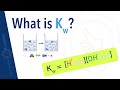
What does the constant Kw represent?
The concentration of water
The equilibrium constant of bases
The ionic product of water
The dissociation constant of acids
Access all questions and much more by creating a free account
Create resources
Host any resource
Get auto-graded reports

Continue with Google

Continue with Email

Continue with Microsoft
or continue with

%20(1).png)
Apple

Others
By signing up, you agree to our Terms of Service & Privacy Policy
Already have an account?

