
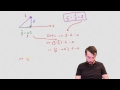
Orthogonal Projection and Vector Relationships

Interactive Video
•
Mathematics
•
11th - 12th Grade
•
Practice Problem
•
Hard

Patricia Brown
FREE Resource
Read more
10 questions
Show all answers
1.
MULTIPLE CHOICE QUESTION
30 sec • 1 pt
What is the key geometric feature of orthogonal projection?
Vectors are perpendicular to the plane
Vectors are identical
Vectors form a 90-degree angle
Vectors are parallel
2.
MULTIPLE CHOICE QUESTION
30 sec • 1 pt
In the orthogonal projection process, what does the vector Y hat represent?
A vector with the same length as U
A vector perpendicular to U
The orthogonal projection of Y onto U
The original vector Y
3.
MULTIPLE CHOICE QUESTION
30 sec • 1 pt
How is the scalar alpha used in the context of orthogonal projections?
It determines the length of vector U
It is used to calculate the dot product
It scales the vector U in the direction of the projection
It is a coefficient for the vector Y
4.
MULTIPLE CHOICE QUESTION
30 sec • 1 pt
What condition must be met for two vectors to be orthogonal?
They are parallel
They have the same magnitude
They lie on the same plane
Their dot product is zero
5.
MULTIPLE CHOICE QUESTION
30 sec • 1 pt
What is the relationship between vector Y, Y hat, and Z in orthogonal projection?
Y = Z + Y hat
Y = Z - Y hat
Y = Y hat - Z
Y = Y hat + Z
6.
MULTIPLE CHOICE QUESTION
30 sec • 1 pt
What is the result of the dot product of two orthogonal vectors?
A negative number
A positive number
Undefined
Zero
7.
MULTIPLE CHOICE QUESTION
30 sec • 1 pt
What does the vector Z represent in the orthogonal projection process?
The original vector Y
The orthogonal projection of Y onto U
The component of Y orthogonal to U
A vector parallel to U
Access all questions and much more by creating a free account
Create resources
Host any resource
Get auto-graded reports

Continue with Google

Continue with Email

Continue with Classlink

Continue with Clever
or continue with

Microsoft
%20(1).png)
Apple

Others
Already have an account?


