
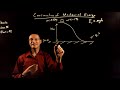
Gravitational Potential Energy in Rollercoasters

Interactive Video
•
Physics
•
9th - 10th Grade
•
Practice Problem
•
Hard

Patricia Brown
FREE Resource
Read more
10 questions
Show all answers
1.
MULTIPLE CHOICE QUESTION
30 sec • 1 pt
Which of the following is NOT considered a form of mechanical energy?
Kinetic energy
Gravitational potential energy
Elastic potential energy
Thermal energy
2.
MULTIPLE CHOICE QUESTION
30 sec • 1 pt
What is the initial velocity of the rollercoaster car at the top of the hill?
10 meters per second
0 meters per second
5 meters per second
1 meter per second
3.
MULTIPLE CHOICE QUESTION
30 sec • 1 pt
What assumption is made about friction in the rollercoaster scenario?
Friction is significant
Friction increases with speed
Friction is negligible
Friction is constant
4.
MULTIPLE CHOICE QUESTION
30 sec • 1 pt
What happens to the gravitational potential energy of the rollercoaster as it descends the hill?
It is converted into thermal energy
It is converted into kinetic energy
It remains constant
It is lost to the surroundings
5.
MULTIPLE CHOICE QUESTION
30 sec • 1 pt
Which equation represents the conservation of mechanical energy in this scenario?
1/2 MV^2 = 1/2 MV^2
MGH = 1/2 MV^2
MGH = MGH + 1/2 MV^2
MGH + 1/2 MV^2 = 1/2 MV^2
6.
MULTIPLE CHOICE QUESTION
30 sec • 1 pt
What is the final velocity of the rollercoaster at the bottom of the hill?
10.3 meters per second
15.7 meters per second
24.3 meters per second
30.5 meters per second
7.
MULTIPLE CHOICE QUESTION
30 sec • 1 pt
How does the presence of friction affect the final speed of the rollercoaster?
It doubles the final speed
It increases the final speed
It decreases the final speed
It has no effect on the final speed
Access all questions and much more by creating a free account
Create resources
Host any resource
Get auto-graded reports

Continue with Google

Continue with Email

Continue with Classlink

Continue with Clever
or continue with

Microsoft
%20(1).png)
Apple

Others
Already have an account?

