
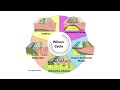
Wilson Cycle and Plate Tectonics

Interactive Video
•
Geography
•
9th - 10th Grade
•
Practice Problem
•
Hard

Patricia Brown
Used 1+ times
FREE Resource
Read more
10 questions
Show all answers
1.
MULTIPLE CHOICE QUESTION
30 sec • 1 pt
Who was the geophysicist that the Wilson Cycle is named after?
J. Tuzo Wilson
Alfred Wegener
Harry Hess
Charles Darwin
2.
MULTIPLE CHOICE QUESTION
30 sec • 1 pt
What is the first stage of the Wilson Cycle?
Continental rifting
Ocean closure
Continental collision
Subduction zone formation
3.
MULTIPLE CHOICE QUESTION
30 sec • 1 pt
Which ocean is an example of the continental rifting stage?
Indian Ocean
Pacific Ocean
Red Sea
Arctic Ocean
4.
MULTIPLE CHOICE QUESTION
30 sec • 1 pt
What geological process occurs when an oceanic plate becomes too dense?
Mountain building
Subduction
Seafloor spreading
Continental rifting
5.
MULTIPLE CHOICE QUESTION
30 sec • 1 pt
What happens to the oceanic plate during the subduction process?
It becomes part of the continental crust
It is progressively subducted
It remains stationary
It rises to form mountains
6.
MULTIPLE CHOICE QUESTION
30 sec • 1 pt
Which mountain range is an example of continental collision?
Alps
Himalayas
Rockies
Andes
7.
MULTIPLE CHOICE QUESTION
30 sec • 1 pt
What ancient ocean basin was closed by the collision of the Indian and Eurasian plates?
Iapetus Ocean
Tethys Ocean
Panthalassa Ocean
Atlantic Ocean
Access all questions and much more by creating a free account
Create resources
Host any resource
Get auto-graded reports

Continue with Google

Continue with Email

Continue with Classlink

Continue with Clever
or continue with

Microsoft
%20(1).png)
Apple

Others
Already have an account?

