
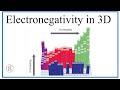
Electronegativity Trends and Concepts

Interactive Video
•
Chemistry
•
9th - 10th Grade
•
Practice Problem
•
Hard

Emma Peterson
FREE Resource
Read more
10 questions
Show all answers
1.
MULTIPLE CHOICE QUESTION
30 sec • 1 pt
Which element is considered the most electronegative on the periodic table?
Fluorine
Oxygen
Nitrogen
Chlorine
2.
MULTIPLE CHOICE QUESTION
30 sec • 1 pt
What happens to electronegativity as you move across a period?
It fluctuates
It increases
It remains constant
It decreases
3.
MULTIPLE CHOICE QUESTION
30 sec • 1 pt
Why are noble gases like helium, neon, and argon not considered in electronegativity discussions?
They are metals
They have high electronegativity
They do not form chemical bonds
They are too reactive
4.
MULTIPLE CHOICE QUESTION
30 sec • 1 pt
In a 3D visualization of electronegativity, which element is highlighted as the most electronegative?
Bromine
Fluorine
Oxygen
Chlorine
5.
MULTIPLE CHOICE QUESTION
30 sec • 1 pt
Why are noble gases excluded from the 3D electronegativity chart?
They are too heavy
They do not form bonds
They are not metals
They are too light
6.
MULTIPLE CHOICE QUESTION
30 sec • 1 pt
What is a noted exception to the general trend of increasing electronegativity?
Noble gases
Halogens
Alkali metals
Transition metals
7.
MULTIPLE CHOICE QUESTION
30 sec • 1 pt
How does hydrogen's electronegativity compare to other group one elements?
It is lower
It is negligible
It is higher
It is the same
Access all questions and much more by creating a free account
Create resources
Host any resource
Get auto-graded reports

Continue with Google

Continue with Email

Continue with Classlink

Continue with Clever
or continue with

Microsoft
%20(1).png)
Apple

Others
Already have an account?


