
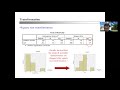
Data Transformation Techniques in Statistics

Interactive Video
•
Biology
•
10th - 12th Grade
•
Practice Problem
•
Hard

Thomas White
FREE Resource
Read more
9 questions
Show all answers
1.
MULTIPLE CHOICE QUESTION
30 sec • 1 pt
What is the primary purpose of data transformation in statistical analysis?
To increase data size
To convert data into a different language
To make data conform to normal distribution
To delete unnecessary data
2.
MULTIPLE CHOICE QUESTION
30 sec • 1 pt
Which of the following is a method of data transformation?
Logarithmic transformation
Data deletion
Data duplication
Data encryption
3.
MULTIPLE CHOICE QUESTION
30 sec • 1 pt
Logarithmic transformation is most effective when the variance is:
Smaller than the mean
Equal to the mean
Larger than the mean
Zero
4.
MULTIPLE CHOICE QUESTION
30 sec • 1 pt
In the example of logarithmic transformation, what was the original data related to?
Bird watching counts
Antibody titers in a poultry farm
Temperature readings
Fatty acid composition
5.
MULTIPLE CHOICE QUESTION
30 sec • 1 pt
Square root transformation is particularly useful for data with:
Large sample sizes
High variance
Zero counts
Negative values
6.
MULTIPLE CHOICE QUESTION
30 sec • 1 pt
In the bird watching example, why was a non-zero value added to the data?
To make calculations faster
To reduce data complexity
To increase the data size
To avoid zero counts
7.
MULTIPLE CHOICE QUESTION
30 sec • 1 pt
Arcsine transformation is typically applied to data that represents:
Proportions
Temperatures
Distances
Time intervals
Access all questions and much more by creating a free account
Create resources
Host any resource
Get auto-graded reports

Continue with Google

Continue with Email

Continue with Classlink

Continue with Clever
or continue with

Microsoft
%20(1).png)
Apple

Others
Already have an account?

