
- Resource Library
- Math
- Geometry
- Angle Conversion In Coordinate Systems
- Understanding Polar Coordinates Concepts
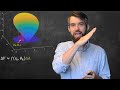
Understanding Polar Coordinates Concepts

Interactive Video
•
Mathematics
•
11th - 12th Grade
•
Practice Problem
•
Hard

Thomas White
FREE Resource
Read more
9 questions
Show all answers
1.
MULTIPLE CHOICE QUESTION
30 sec • 1 pt
What is the primary focus of the video tutorial?
Calculating volume using Cartesian coordinates
Understanding polar coordinates and their applications
Learning about trigonometric functions
Exploring linear algebra concepts
2.
MULTIPLE CHOICE QUESTION
30 sec • 1 pt
In polar coordinates, what do the grid lines represent?
Triangles of constant angles
Circles of constant radius and lines of constant angle
Lines of constant x and y values
Squares of constant area
3.
MULTIPLE CHOICE QUESTION
30 sec • 1 pt
How is the point (1, 1) described in polar coordinates?
(0, 0)
(1, π/4)
(1, 1)
(π/4, 1)
4.
MULTIPLE CHOICE QUESTION
30 sec • 1 pt
What is the formula for converting polar coordinates to Cartesian coordinates?
x = r sin θ, y = r cos θ
x = r cos θ, y = r sin θ
x = r tan θ, y = r cot θ
x = θ cos r, y = θ sin r
5.
MULTIPLE CHOICE QUESTION
30 sec • 1 pt
What kind of curves can be described using polar coordinates?
Only parabolas
Various interesting curves
Only circles
Only straight lines
6.
MULTIPLE CHOICE QUESTION
30 sec • 1 pt
What is the area of a small region in polar coordinates?
r Δθ
r Δr Δθ
Δr Δθ
r² Δθ
7.
MULTIPLE CHOICE QUESTION
30 sec • 1 pt
How is the volume under a surface approximated in polar coordinates?
By ignoring the height of the surface
By using a single large region
By summing up small volumes over small regions
By using only Cartesian coordinates
Access all questions and much more by creating a free account
Create resources
Host any resource
Get auto-graded reports

Continue with Google

Continue with Email

Continue with Microsoft
or continue with

%20(1).png)
Apple

Others
By signing up, you agree to our Terms of Service & Privacy Policy
Already have an account?

