
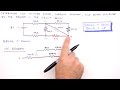
Analyzing Combination Circuits and Resistors

Interactive Video
•
Physics
•
9th - 10th Grade
•
Practice Problem
•
Hard

Thomas White
FREE Resource
Read more
11 questions
Show all answers
1.
MULTIPLE CHOICE QUESTION
30 sec • 1 pt
What is the main focus of the video presented by Jesse Mason?
Introduction to Kirchhoff's Rules
Advanced semiconductor physics
Basics of electrical engineering
Analysis of combination resistive circuits
2.
MULTIPLE CHOICE QUESTION
30 sec • 1 pt
What is the first step recommended when solving a physics problem involving circuits?
Draw a picture or diagram
Calculate the total resistance
Identify the power source
Measure the current
3.
MULTIPLE CHOICE QUESTION
30 sec • 1 pt
What is the purpose of using a dummy resistor in circuit analysis?
To reduce the current flow
To measure the voltage drop
To increase the total resistance
To simplify the analysis for beginners
4.
MULTIPLE CHOICE QUESTION
30 sec • 1 pt
What method is used to analyze combination circuits in the video?
Mesh Analysis
Nodal Analysis
Break it down-Build it up
Kirchhoff's Rules
5.
MULTIPLE CHOICE QUESTION
30 sec • 1 pt
In the first redraw, what is the equivalent resistance of the 50-ohm and 250-ohm resistors in series?
200 ohms
400 ohms
300 ohms
150 ohms
6.
MULTIPLE CHOICE QUESTION
30 sec • 1 pt
How is the equivalent resistance calculated for resistors in parallel?
By adding their resistances
By multiplying their resistances
By taking the reciprocal of the sum of their reciprocals
By subtracting their resistances
7.
MULTIPLE CHOICE QUESTION
30 sec • 1 pt
What is the equivalent resistance of the 300-ohm and 200-ohm resistors in parallel?
120 ohms
100 ohms
150 ohms
250 ohms
Access all questions and much more by creating a free account
Create resources
Host any resource
Get auto-graded reports

Continue with Google

Continue with Email

Continue with Classlink

Continue with Clever
or continue with

Microsoft
%20(1).png)
Apple

Others
Already have an account?
Similar Resources on Wayground

11 questions
James Logan: How we're using dogs to sniff out malaria
Interactive video
•
9th - 12th Grade
6 questions
VOICED : Mexico inaugura pista de Formula 1
Interactive video
•
9th - 10th Grade
2 questions
How a Pandemic Ends – Wisecrack Edition
Interactive video
•
9th - 10th Grade
2 questions
INTERVIEW: Jon Taffer on the methods used to change the thinking of bar owners on 7/24/12 in Los Angeles, CA.
Interactive video
•
9th - 10th Grade
6 questions
Sky News Bizarre Stories
Interactive video
•
9th - 10th Grade
11 questions
Understanding Equivalent Resistance in Parallel Circuits
Interactive video
•
8th - 10th Grade
6 questions
GCSE Biology - Type 1 vs Type 2 Diabetes - What is Diabetes and How to Treat It #57
Interactive video
•
9th - 10th Grade
6 questions
CLEAN : Burundis president files candidacy for third term
Interactive video
•
9th - 10th Grade
Popular Resources on Wayground
8 questions
Spartan Way - Classroom Responsible

Quiz
•
9th - 12th Grade
15 questions
Fractions on a Number Line
Quiz
•
3rd Grade
14 questions
Boundaries & Healthy Relationships

Lesson
•
6th - 8th Grade
20 questions
Equivalent Fractions
Quiz
•
3rd Grade
3 questions
Integrity and Your Health
Lesson
•
6th - 8th Grade
25 questions
Multiplication Facts
Quiz
•
5th Grade
9 questions
FOREST Perception
Lesson
•
KG
20 questions
Main Idea and Details
Quiz
•
5th Grade
Discover more resources for Physics
10 questions
Exit Check 4.5 - Impulse
Quiz
•
9th Grade
20 questions
Simple Machines and Mechanical Advantage Quiz
Quiz
•
9th Grade
20 questions
Electricity/Magnets
Quiz
•
9th Grade
20 questions
Light Vs. Sound Waves
Quiz
•
9th - 12th Grade
14 questions
Bill Nye Waves
Interactive video
•
9th - 12th Grade
37 questions
CIA #3 Study Guide: ACPS
Quiz
•
10th Grade
20 questions
Waves
Quiz
•
9th - 12th Grade
10 questions
Exploring the Properties of Waves
Interactive video
•
9th - 12th Grade