
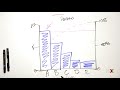
Understanding Pareto Charts and the 80-20 Rule

Interactive Video
•
Business
•
9th - 10th Grade
•
Practice Problem
•
Hard

Jennifer Brown
FREE Resource
5 questions
Show all answers
1.
MULTIPLE CHOICE QUESTION
30 sec • 1 pt
What is the primary concept behind the 80-20 rule?
80% of the problems are caused by 80% of the reasons.
20% of the results come from 80% of the efforts.
20% of the problems are caused by 20% of the reasons.
80% of the results come from 20% of the efforts.
2.
MULTIPLE CHOICE QUESTION
30 sec • 1 pt
Which of the following best describes a Pareto chart?
A histogram with frequency distribution.
A scatter plot with trend lines.
A pie chart with percentages.
A bar chart with a line graph overlay.
3.
MULTIPLE CHOICE QUESTION
30 sec • 1 pt
What does the right-hand y-axis of a Pareto chart represent?
The frequency of issues.
The percentage of occurrence.
The categories of defects.
The total number of defects.
4.
MULTIPLE CHOICE QUESTION
30 sec • 1 pt
How are defects typically ordered on a Pareto chart?
Alphabetically.
From least frequent to most frequent.
From most frequent to least frequent.
Randomly.
5.
MULTIPLE CHOICE QUESTION
30 sec • 1 pt
What is the main purpose of using a Pareto chart in process improvement?
To list all possible defects.
To focus on the most impactful issues first.
To identify the least common issues.
To create a visual representation of all data.
Access all questions and much more by creating a free account
Create resources
Host any resource
Get auto-graded reports

Continue with Google

Continue with Email

Continue with Classlink

Continue with Clever
or continue with

Microsoft
%20(1).png)
Apple

Others
Already have an account?

