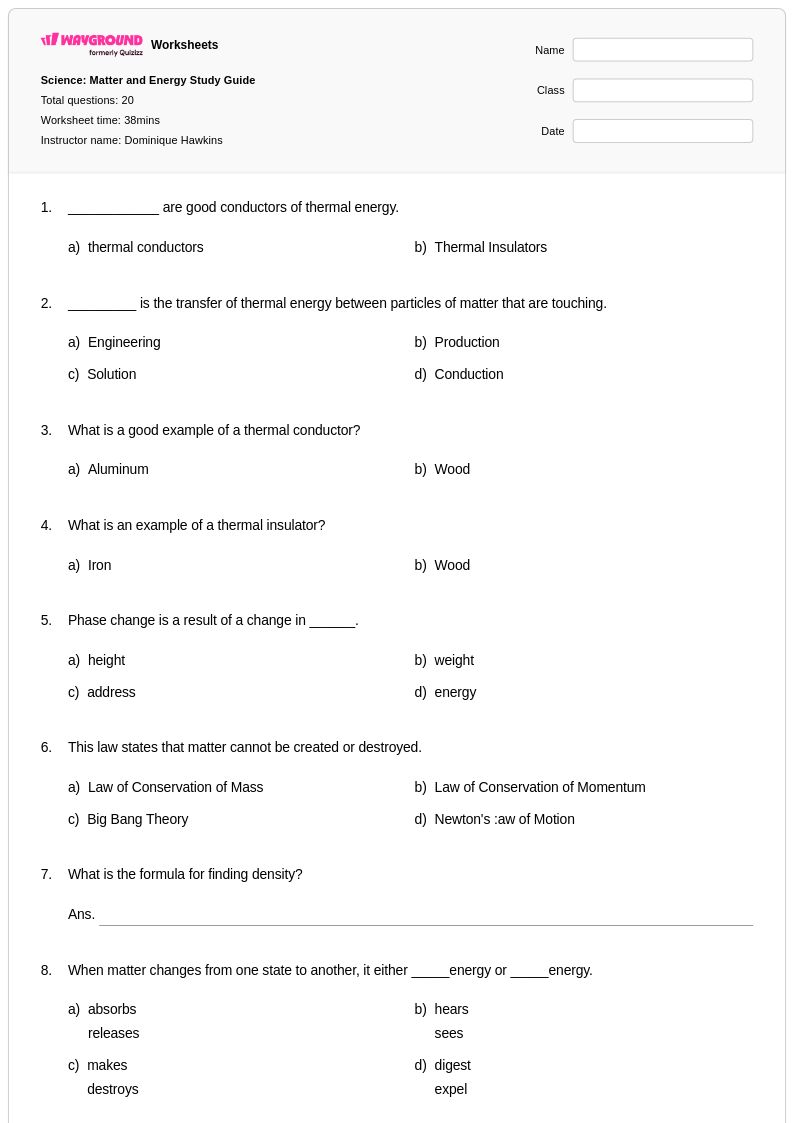
Free Printable Atoms and Elements Worksheets for Year 4
Year 4 atoms and elements worksheets with answer keys help students explore basic atomic structure and chemical elements through engaging printables and free practice problems available as downloadable PDFs.
Explore printable Atoms and Elements worksheets for Year 4
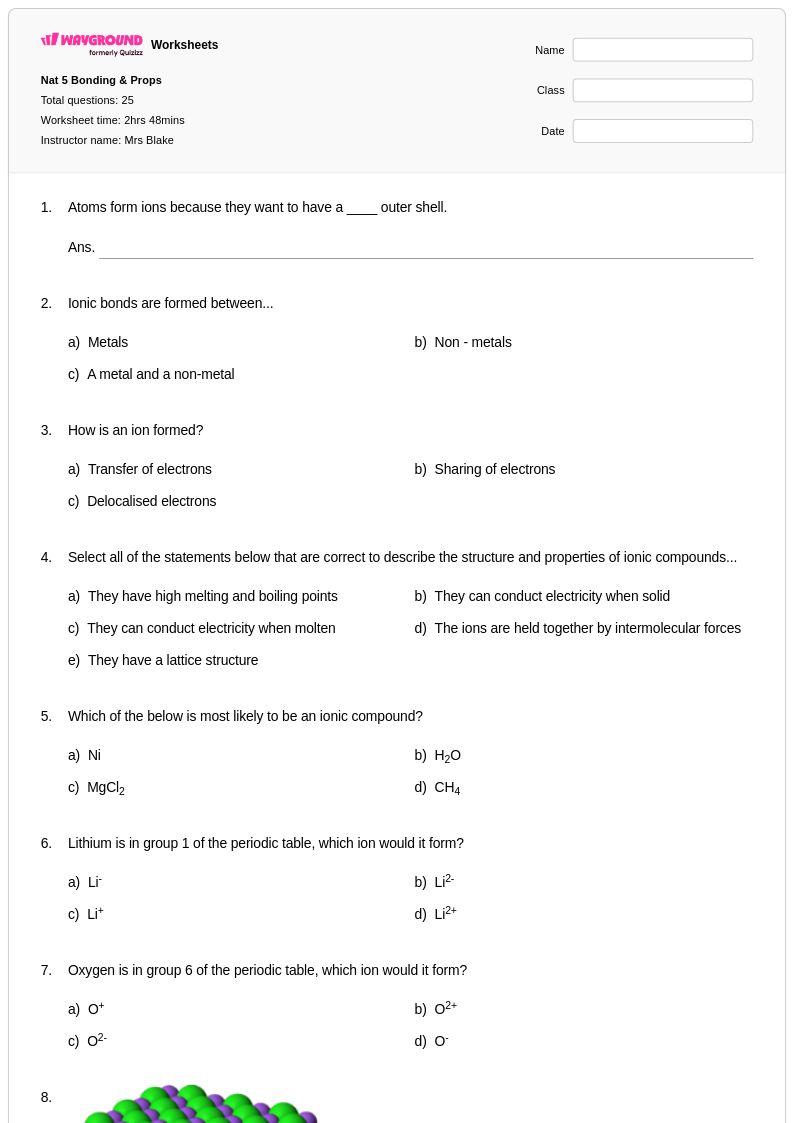
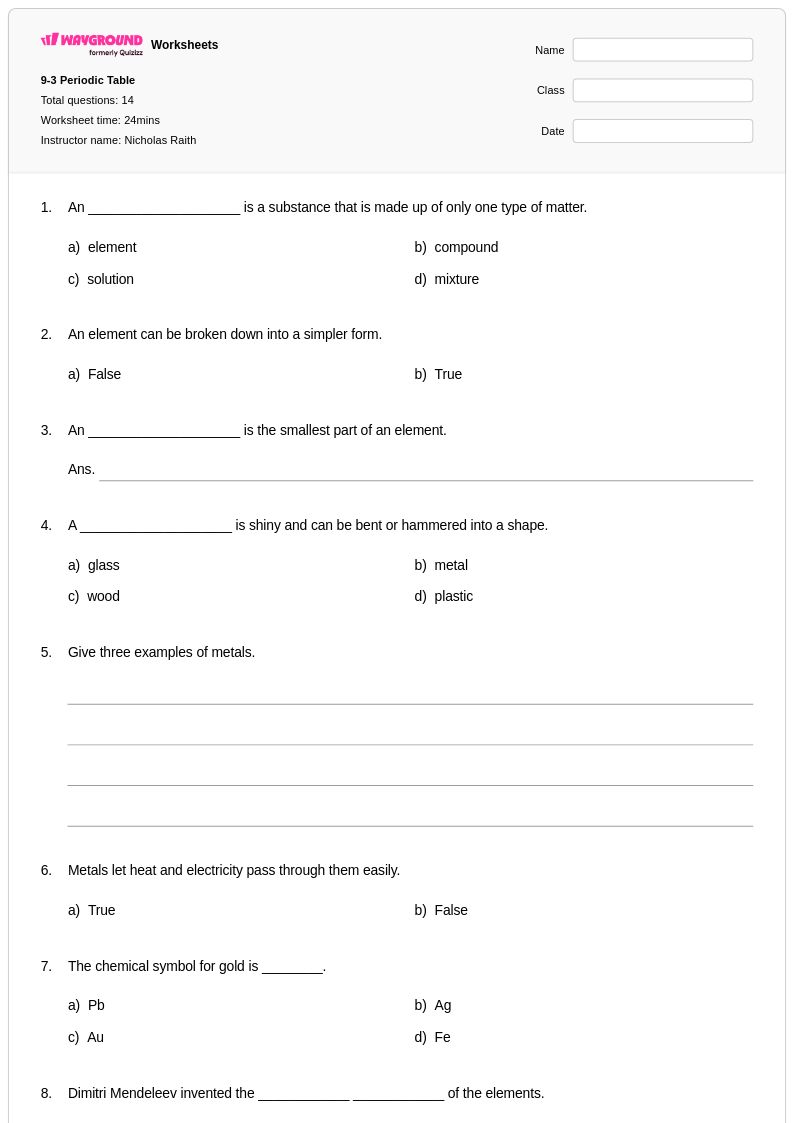
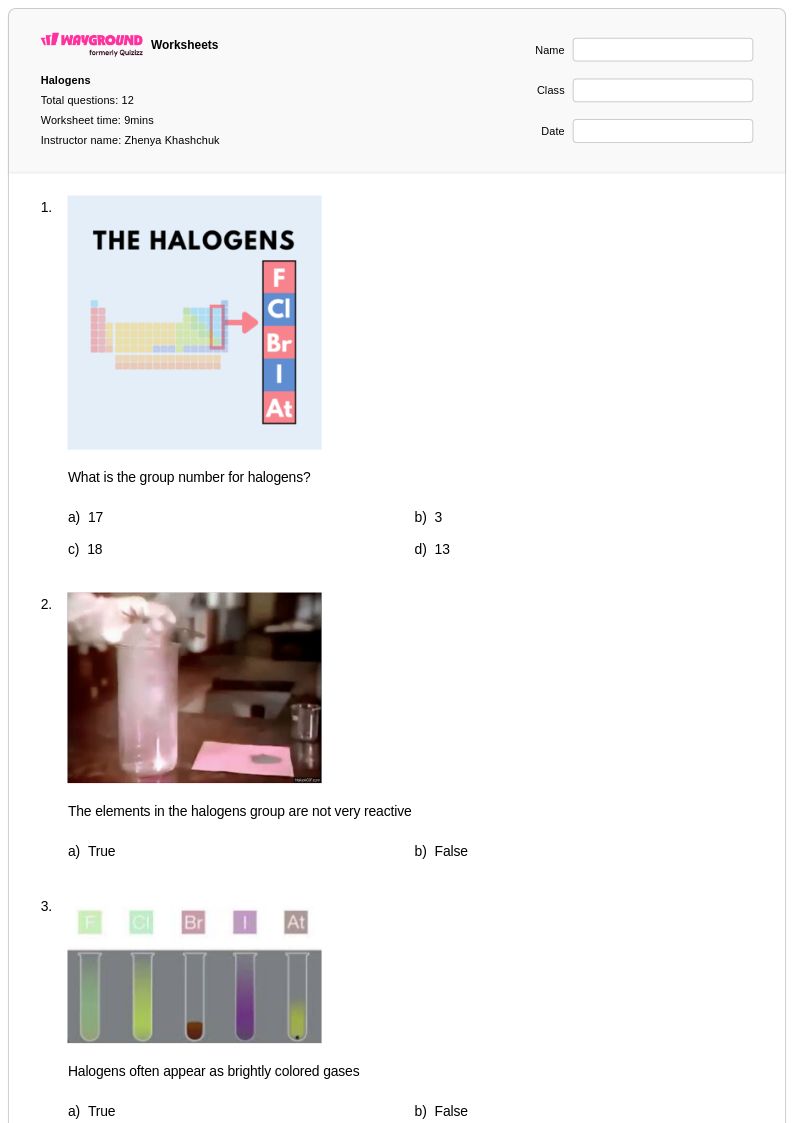
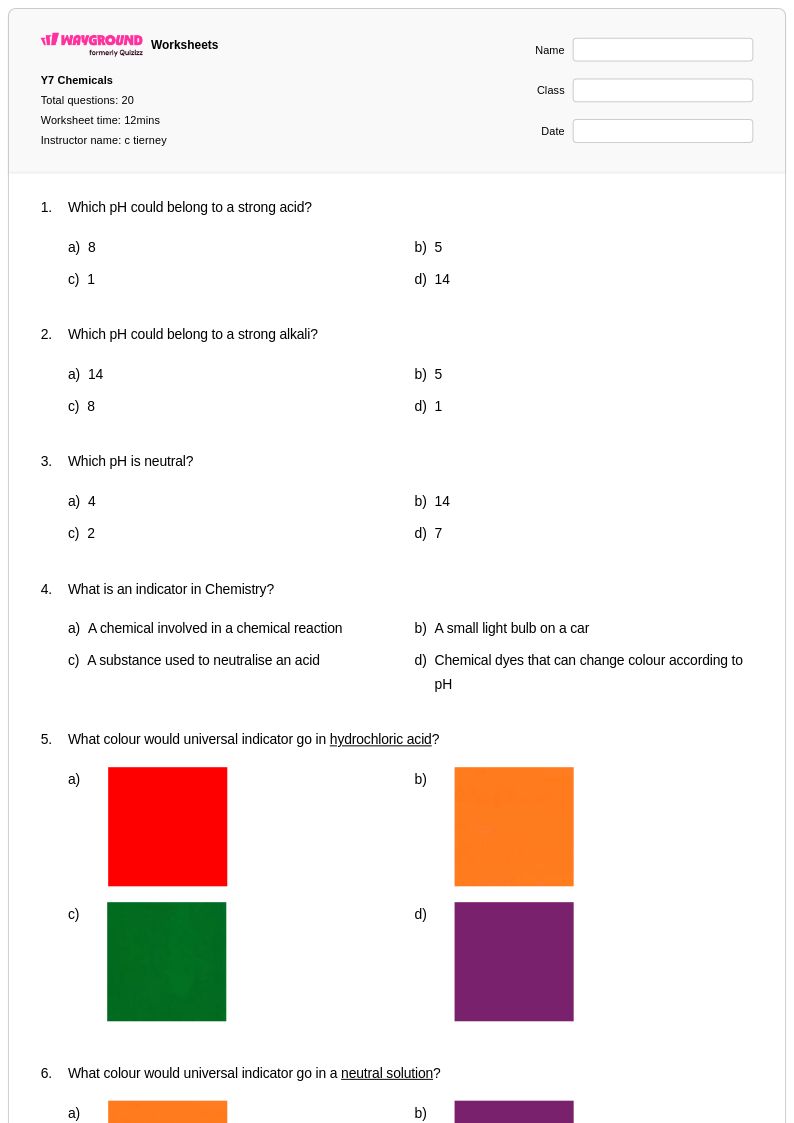
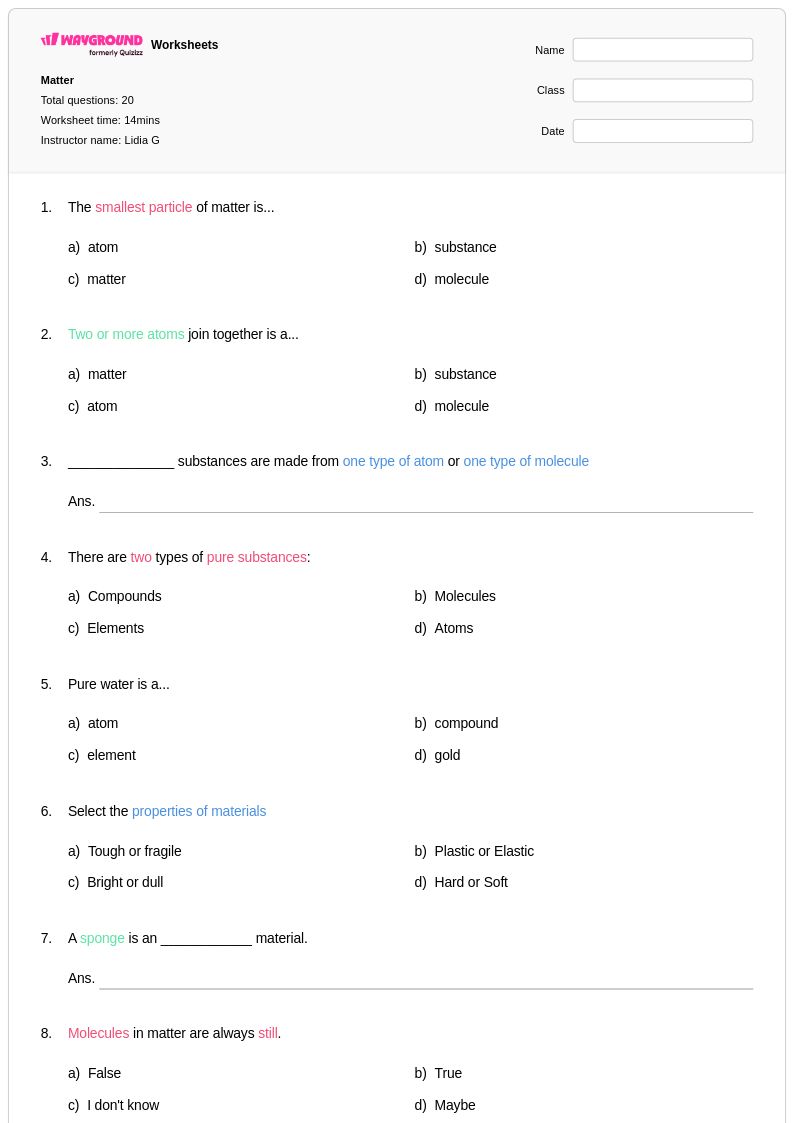
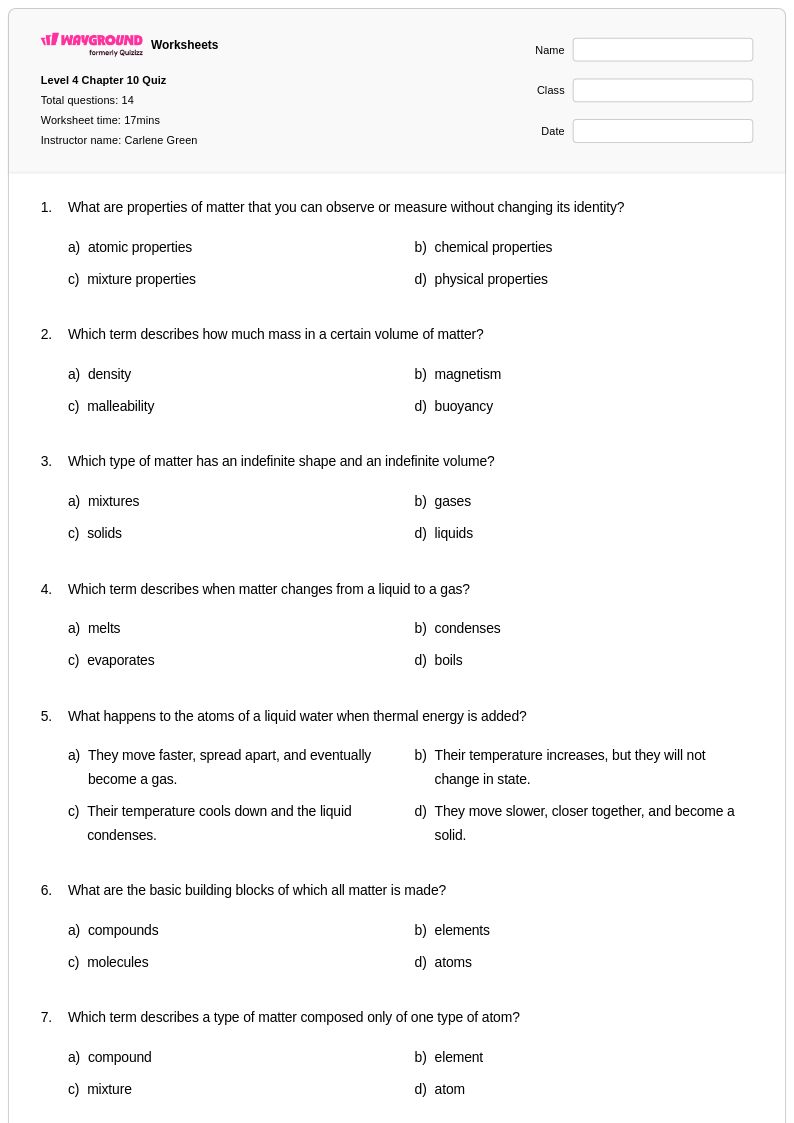
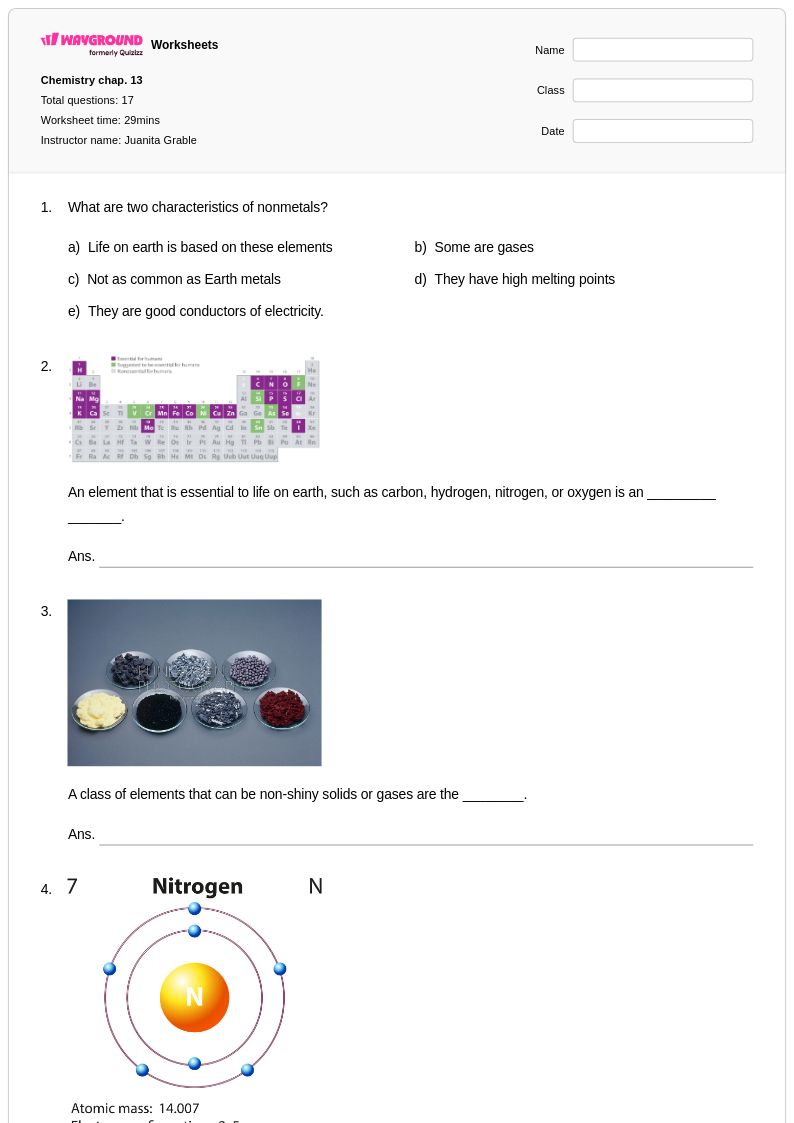
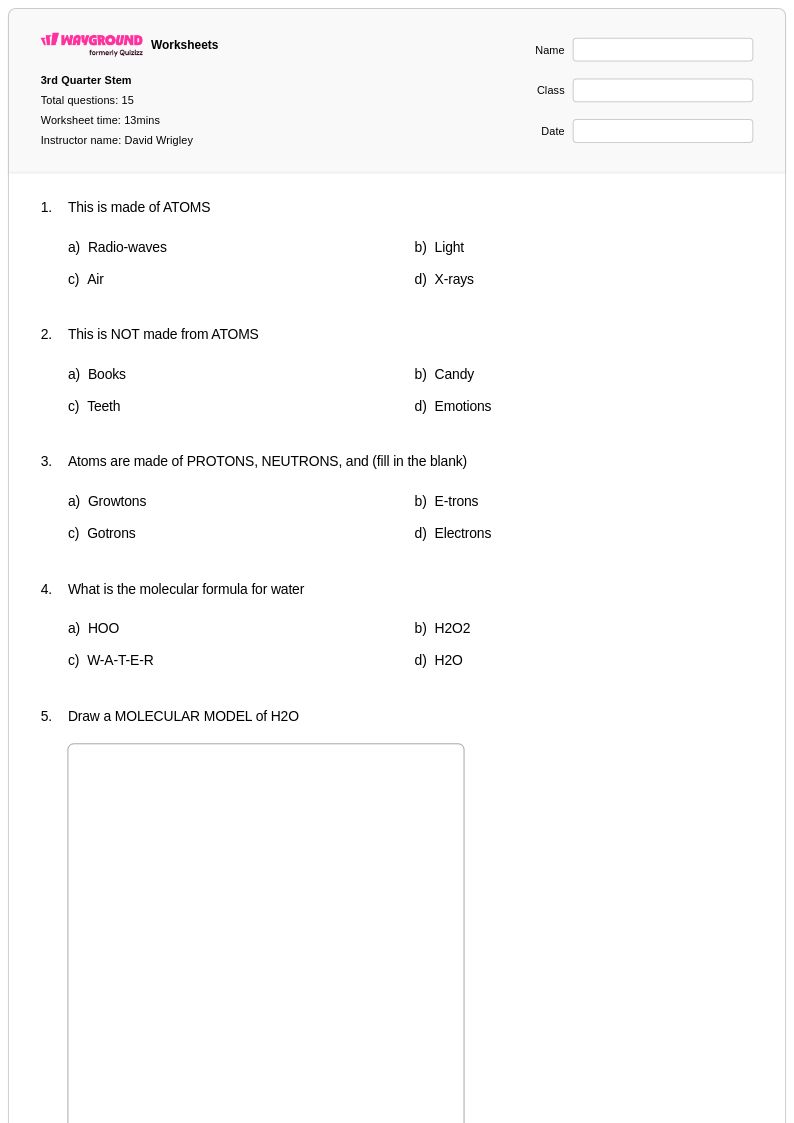
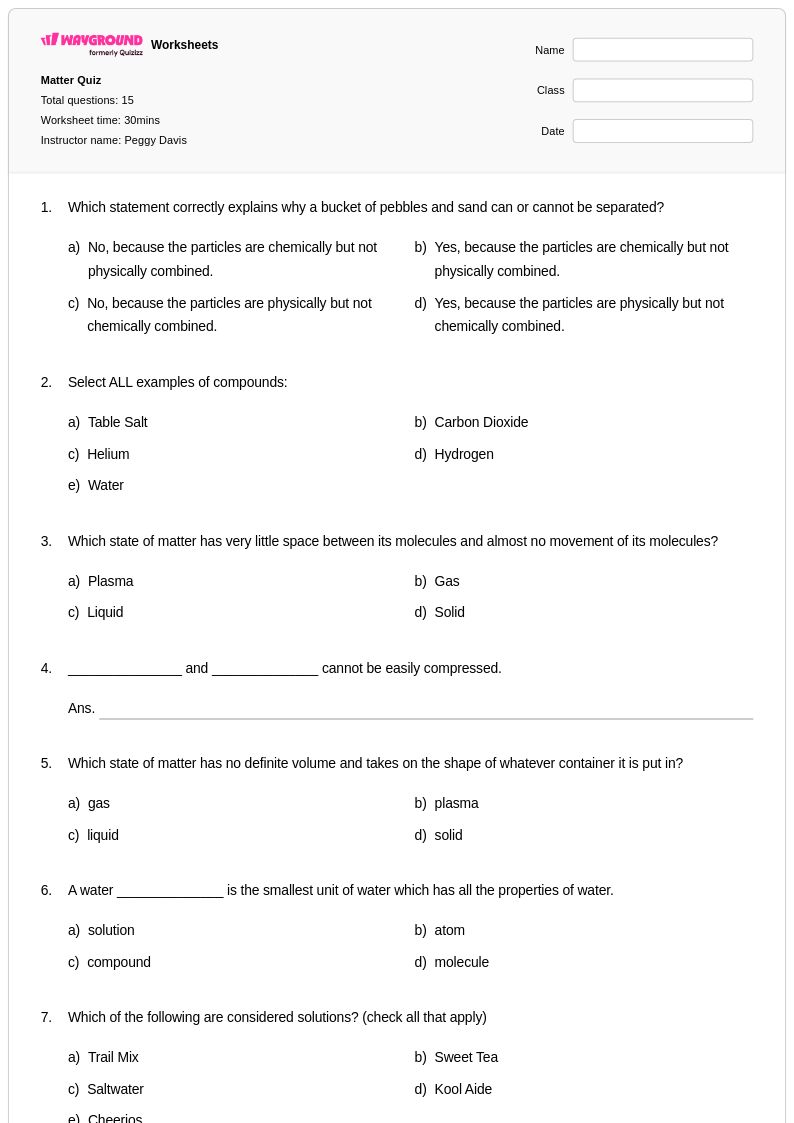
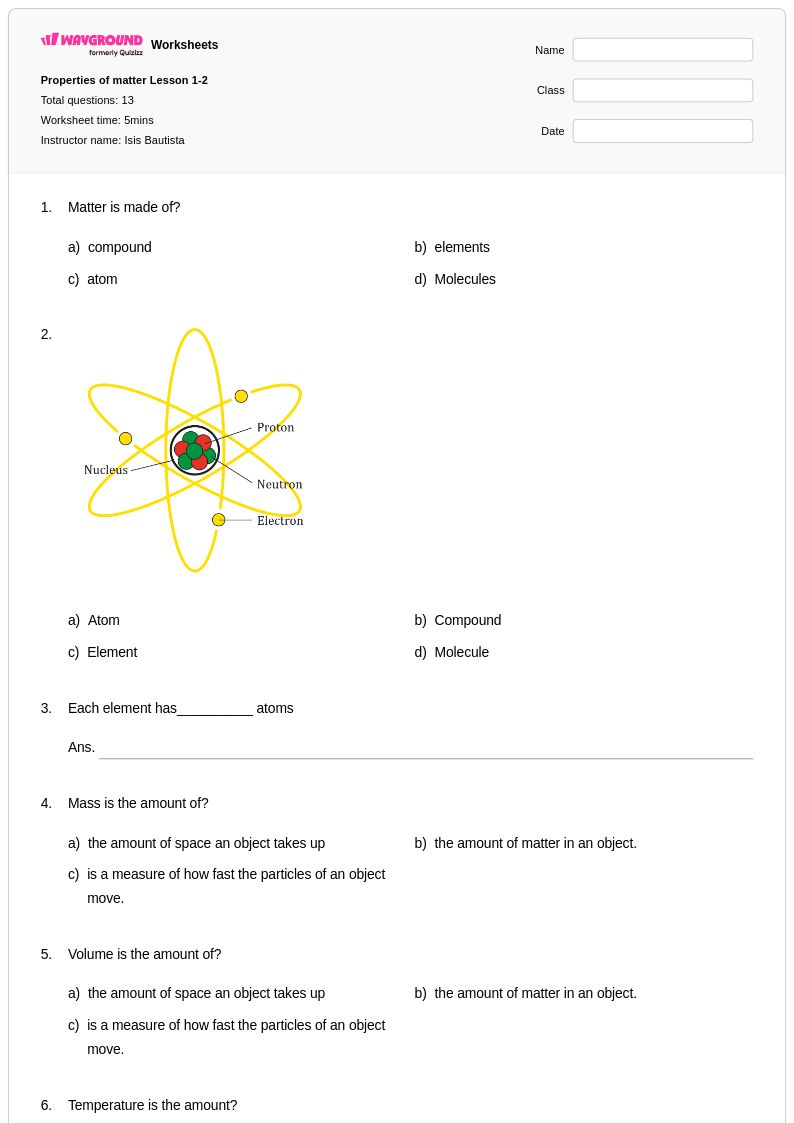
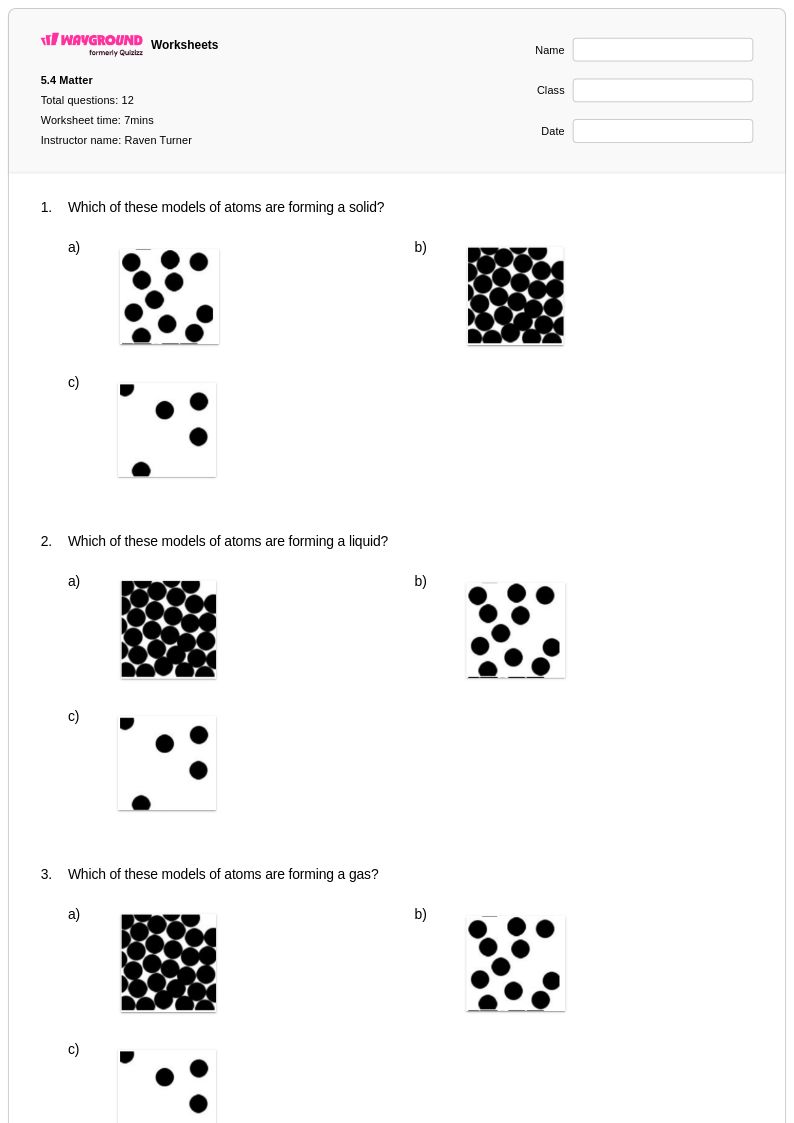
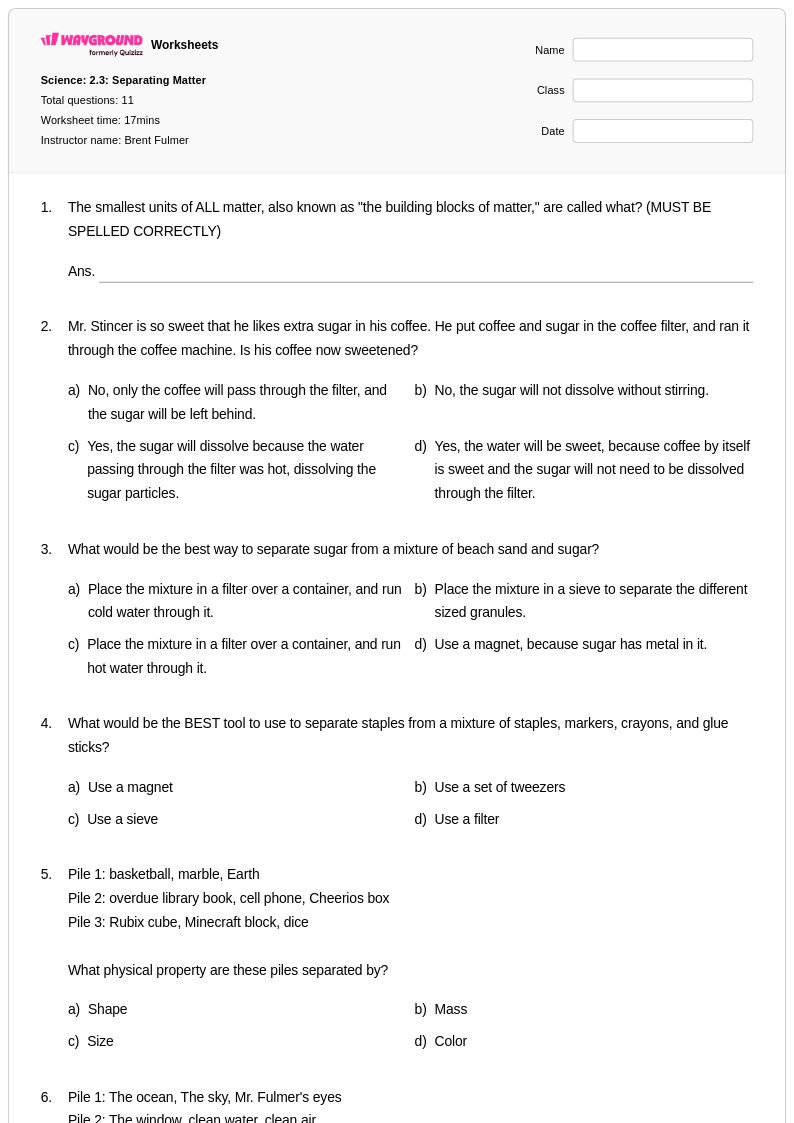
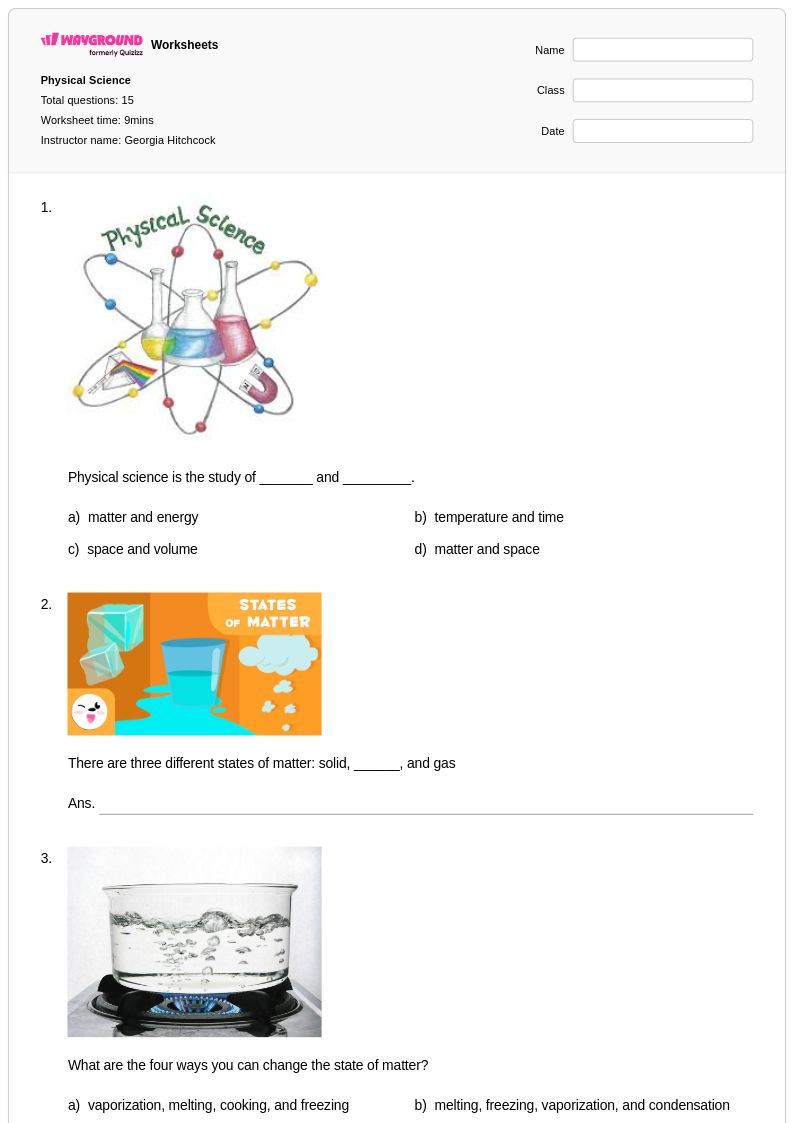
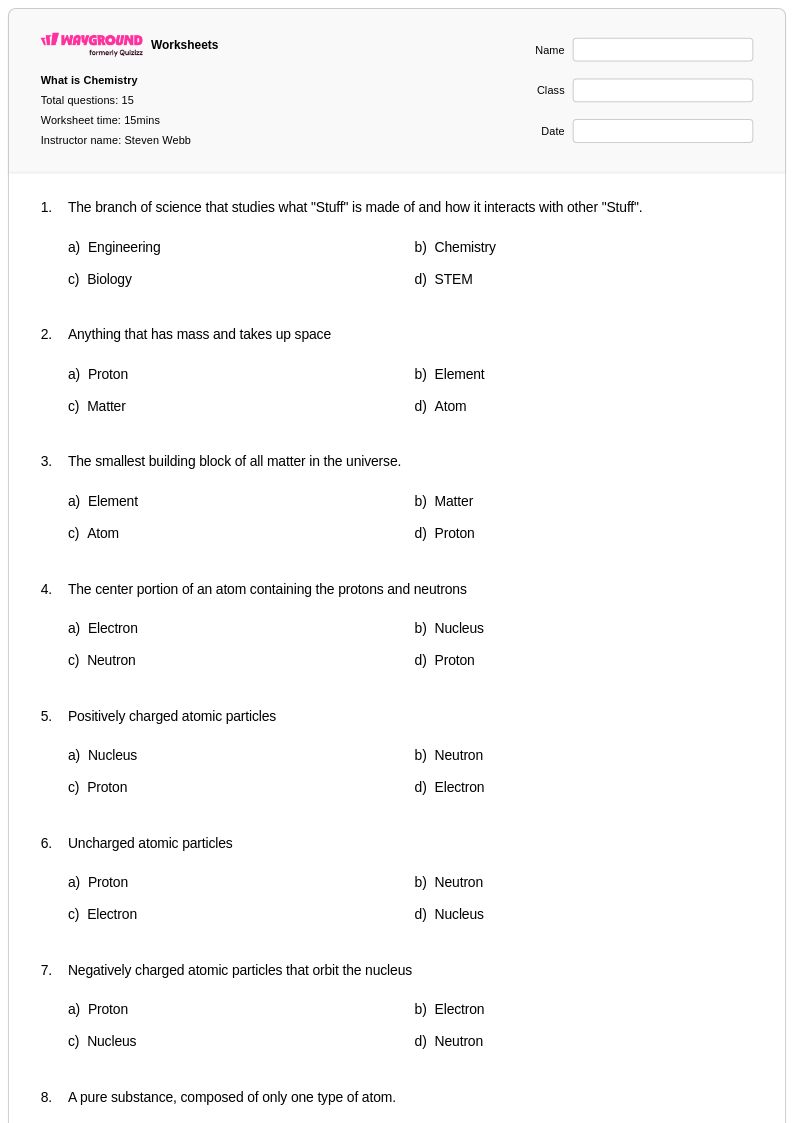
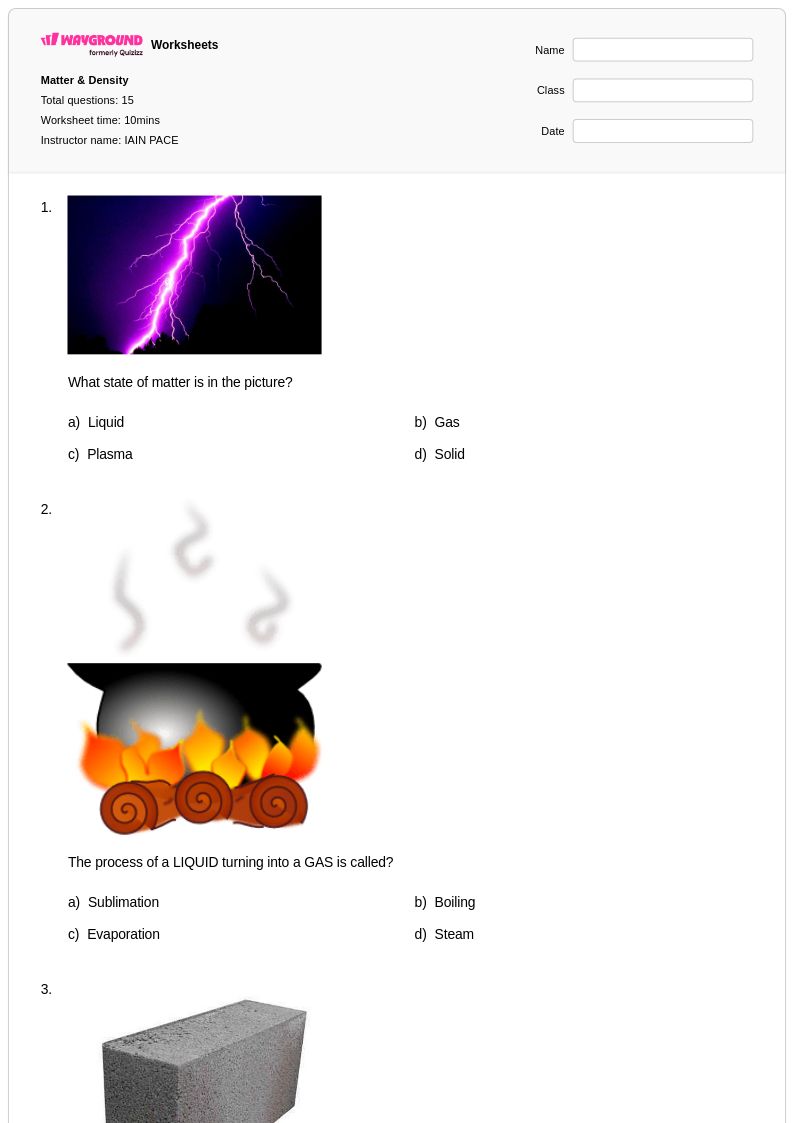
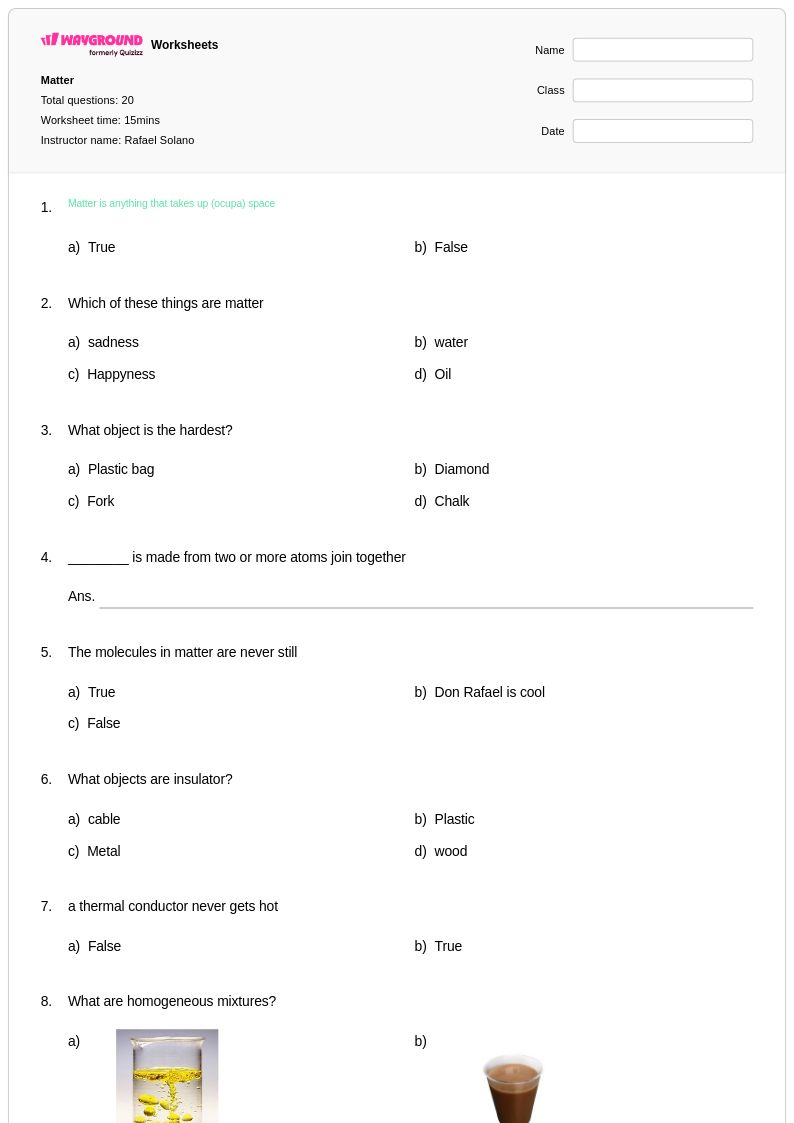
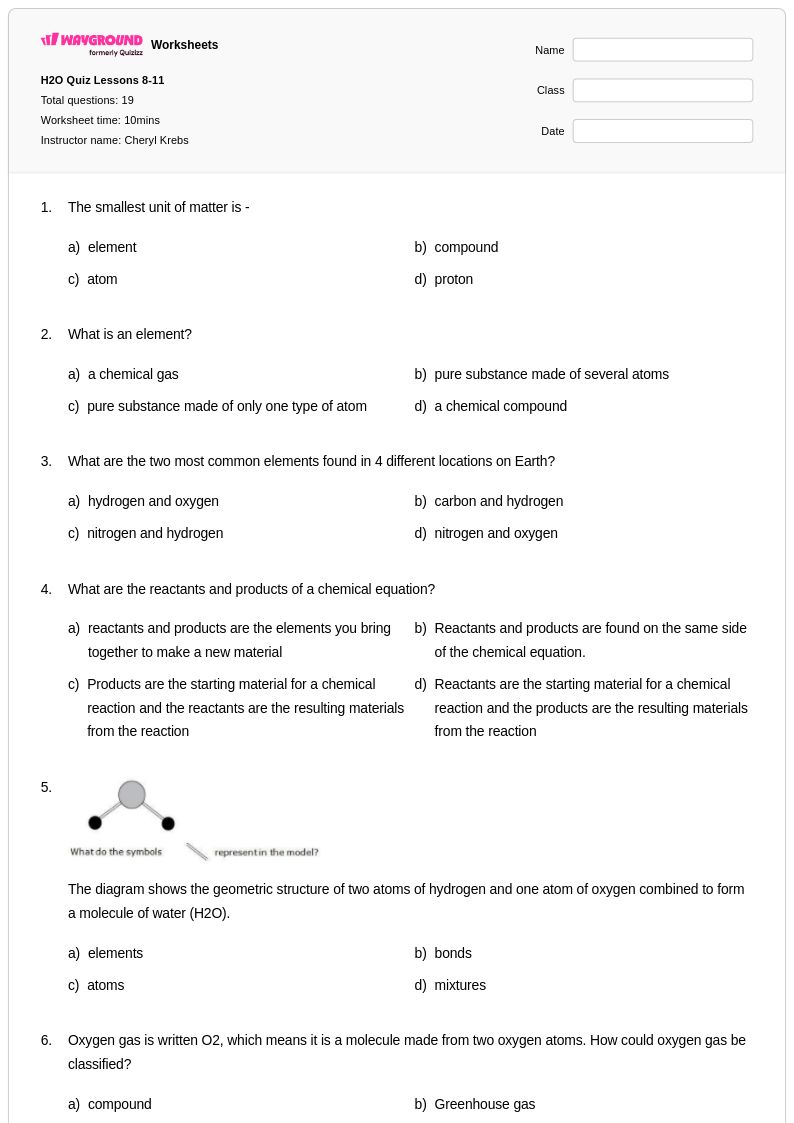
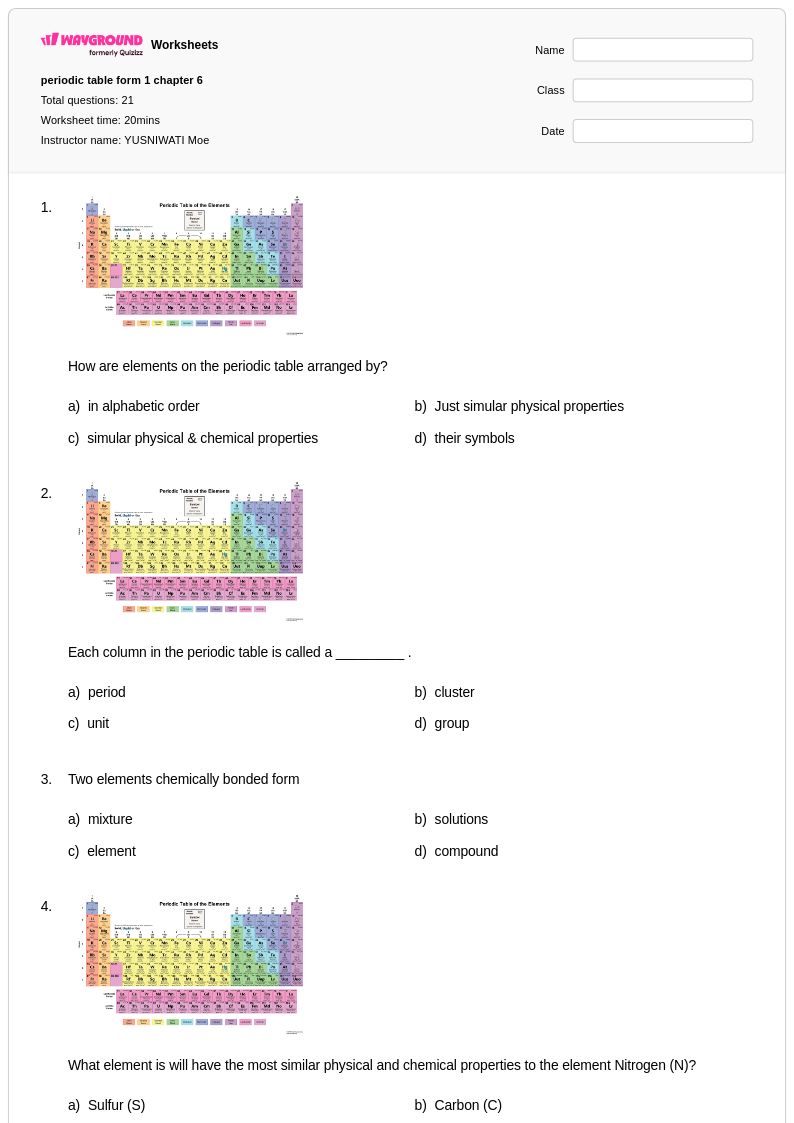
Atoms and elements worksheets for Year 4 students through Wayground (formerly Quizizz) provide essential foundational practice in understanding the basic building blocks of matter. These carefully designed educational resources help young learners grasp fundamental chemistry concepts by exploring how atoms form the smallest units of elements and how different elements possess unique properties. The worksheets strengthen critical thinking skills through engaging practice problems that guide students to identify common elements, understand atomic structure at an age-appropriate level, and recognize how atoms combine to create the materials around them. Each printable resource includes comprehensive answer keys to support both independent study and teacher-guided instruction, with free pdf formats making these valuable learning tools easily accessible for classroom and home use.
Wayground's extensive collection draws from millions of teacher-created resources specifically developed for Year 4 chemistry instruction, offering educators powerful search and filtering capabilities to locate atoms and elements worksheets that perfectly match their curriculum needs. The platform's robust standards alignment ensures that selected materials support required learning objectives while providing differentiation tools that accommodate diverse learning styles and ability levels within the classroom. Teachers benefit from flexible customization options that allow them to modify existing worksheets or combine multiple resources to create targeted practice sessions for skill development, remediation, or enrichment activities. Available in both printable pdf format and interactive digital versions, these comprehensive worksheet collections streamline lesson planning while providing the diverse practice opportunities students need to master fundamental concepts about atoms and elements.
FAQs
How do I teach atoms and elements to middle or high school students?
Start by grounding students in the structure of an atom — protons, neutrons, and electrons — before introducing how elements are organized on the periodic table. Use atomic models and hands-on diagramming activities to make abstract subatomic particles concrete. From there, connect atomic number and mass number to element identity so students understand why each element is unique. Building this conceptual sequence before introducing formulas or compound formation prevents early misconceptions that are difficult to correct later.
What exercises help students practice identifying atomic structure?
Labeling diagrams of atomic models is one of the most effective exercises for reinforcing the positions and roles of protons, neutrons, and electrons. Practice problems that ask students to calculate atomic mass, identify an element from its atomic number, or distinguish between elements and compounds also build fluency with foundational chemistry concepts. Worksheets that progress from basic identification to applying periodic table data give students scaffolded practice that builds confidence before tackling more complex atomic theory.
What mistakes do students commonly make when learning about atoms and elements?
One of the most persistent errors is confusing atomic number with atomic mass — students often treat them interchangeably rather than understanding that atomic number defines the element while atomic mass accounts for protons and neutrons. Another common misconception is assuming that all atoms of the same element are identical in mass, which leads to confusion when isotopes are introduced. Students also frequently conflate elements and compounds, especially when working with familiar substances like water or salt. Targeted practice problems that force students to distinguish these concepts help surface and correct these errors early.
How do I use atoms and elements worksheets in my classroom?
Atoms and elements worksheets on Wayground are available as printable PDFs for traditional classroom use and in digital formats for technology-integrated environments, giving you flexibility depending on your instructional setup. You can assign them as guided practice during instruction, independent work, or review before assessments. Digital versions can also be hosted as a quiz on Wayground, making it easy to track student responses and identify gaps in real time. Answer keys are included, so scoring and providing feedback is straightforward whether students are working in class or independently.
How can I differentiate atoms and elements instruction for students at different ability levels?
For students who need additional support, focus first on single-concept tasks such as identifying the number of protons from an atomic number before introducing multi-step problems involving atomic mass or isotopes. On Wayground, teachers can apply individual accommodations such as read aloud, reduced answer choices, and extended time to specific students, allowing the rest of the class to work with standard settings without disruption. For advanced students, shift toward application problems that require interpreting periodic table trends or distinguishing between elements based on electron configuration.
How does the periodic table connect to teaching atoms and elements?
The periodic table is the organizational backbone of atoms and elements instruction because it encodes atomic number, atomic mass, and elemental groupings in a single reference tool. Teaching students to read a periodic table entry — identifying the element symbol, atomic number, and atomic mass — gives them a practical skill they will use throughout chemistry. Connecting periodic table position to element properties, such as metallic character or reactivity, also helps students move beyond memorization toward conceptual understanding of why elements behave the way they do.