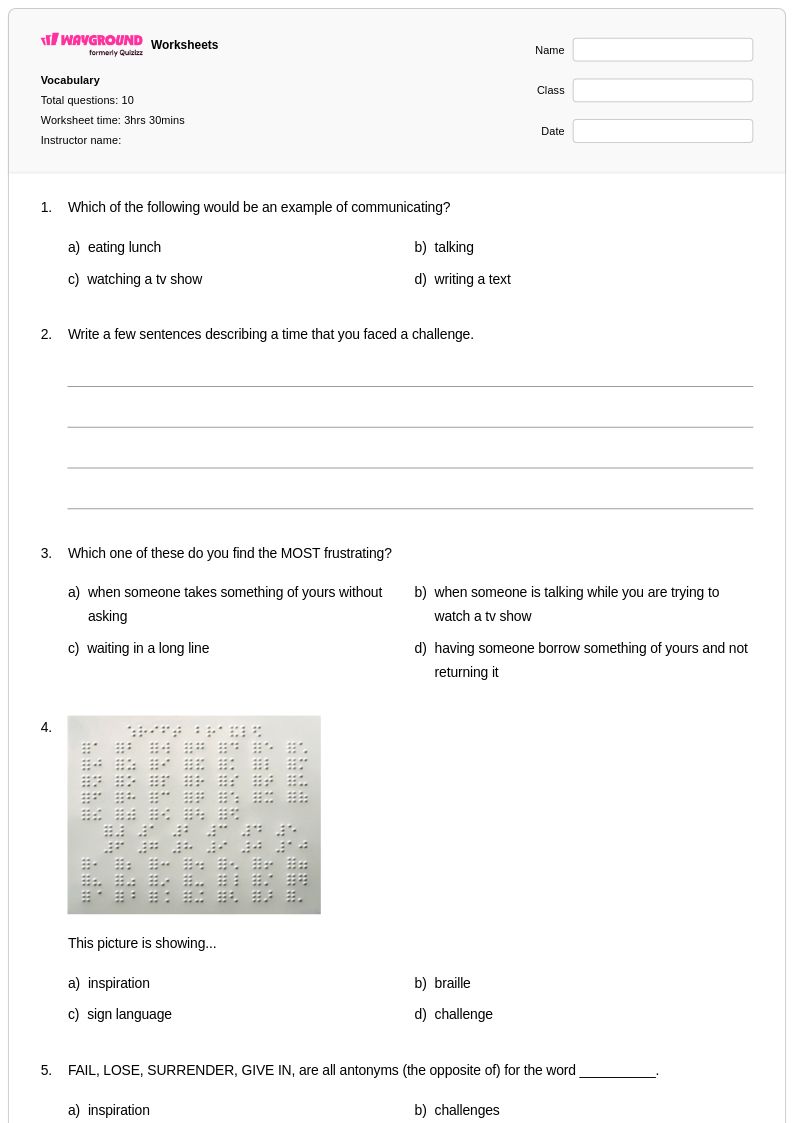
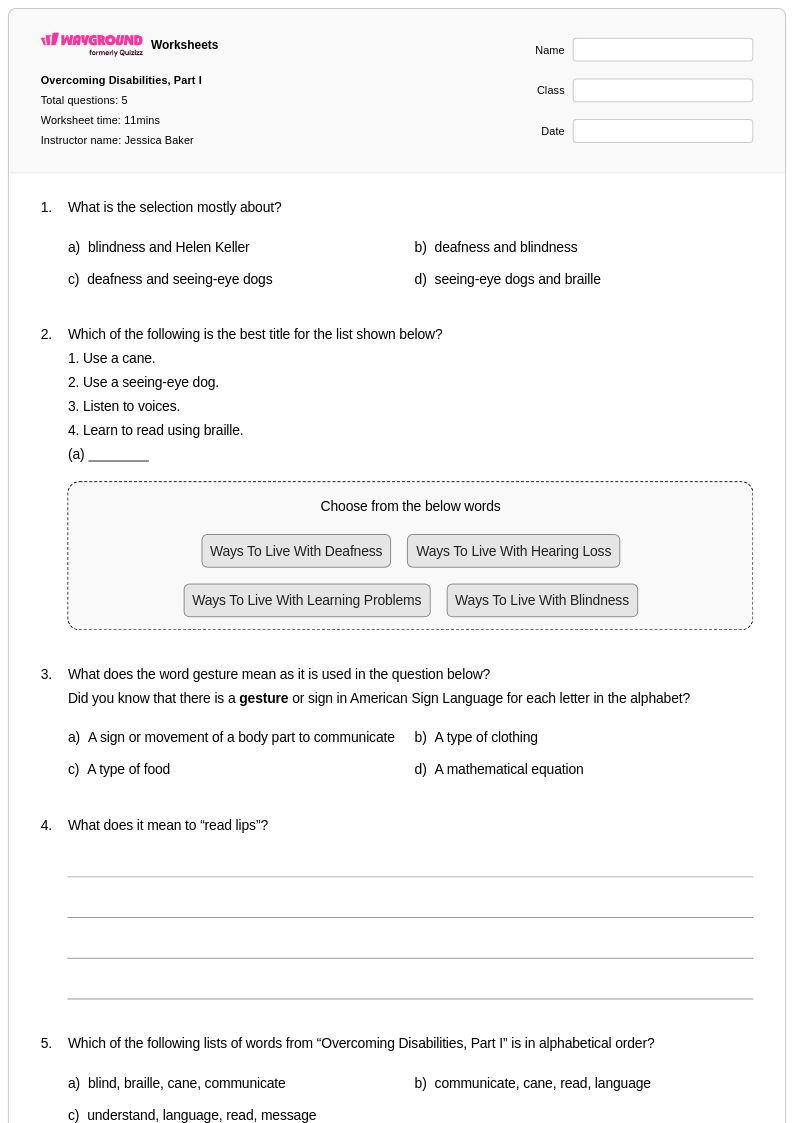
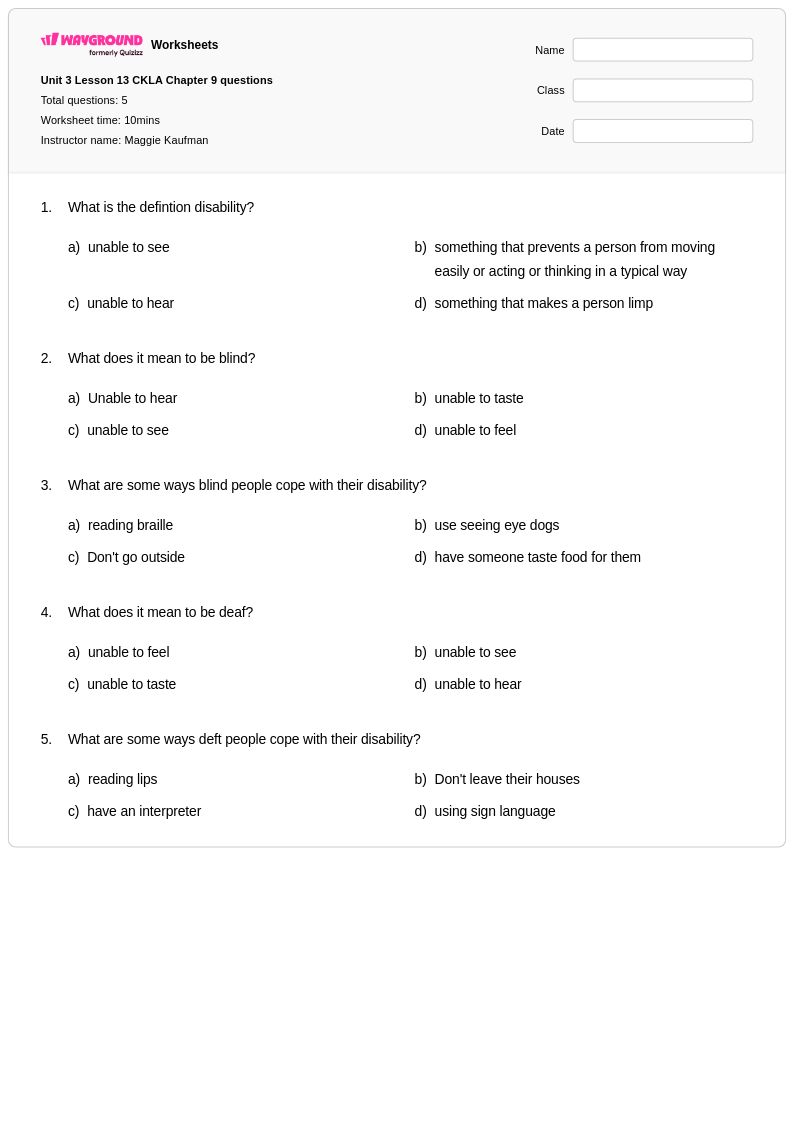
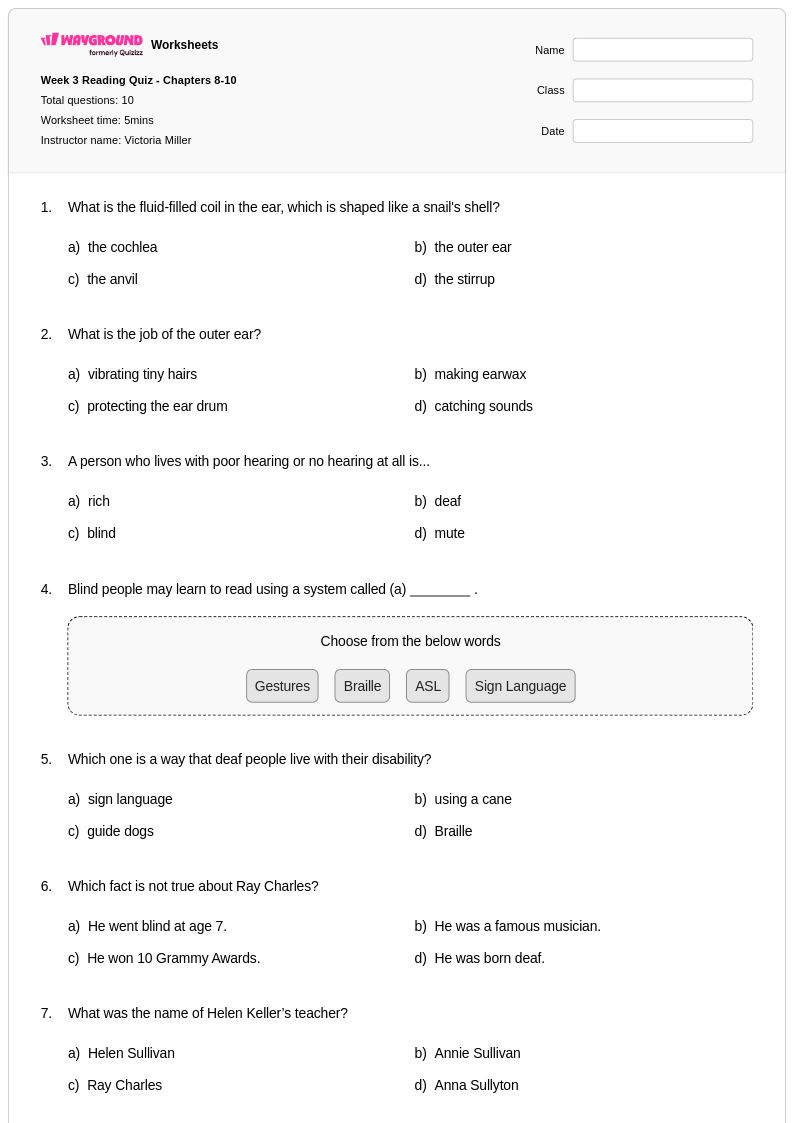
Explore Year 3 Braille worksheets and printables from Wayground that help students learn tactile reading fundamentals through engaging practice problems, free PDF downloads, and comprehensive answer keys.
Braille worksheets for Year 3 students available through Wayground (formerly Quizizz) provide essential foundational practice for young learners beginning to understand this critical tactile reading and writing system. These comprehensive printables focus on developing fundamental Braille literacy skills including letter recognition, basic contractions, and simple word formation patterns that align with third-grade developmental expectations. Each worksheet collection includes detailed answer keys and structured practice problems that guide students through progressive skill-building exercises, from identifying individual Braille cells to reading short sentences. The free pdf resources emphasize hands-on learning opportunities that help students develop the finger sensitivity and systematic reading techniques essential for Braille proficiency.
Wayground's extensive library supports educators with millions of teacher-created Braille resources specifically designed for Year 3 instruction, featuring robust search and filtering capabilities that allow teachers to quickly locate materials matching their specific curriculum needs and standards alignment requirements. The platform's differentiation tools enable instructors to customize worksheets for varying skill levels within their classrooms, accommodating students who may be progressing at different rates in their Braille learning journey. Available in both printable and digital pdf formats, these resources provide flexible implementation options for classroom instruction, individual practice sessions, targeted remediation, and enrichment activities. Teachers can efficiently plan comprehensive Braille instruction sequences while having immediate access to assessment tools and supplementary materials that support systematic skill development in this specialized literacy domain.
FAQs
How do I teach braille to students who are new to tactile reading?
Begin with the six-dot cell structure, helping students understand how dot positions correspond to letters before introducing full words. Consistent finger positioning and light, even pressure across both index fingers are foundational habits to establish early. Repetition with isolated letter patterns before moving to words or contractions gives students the tactile memory they need to build fluency over time.
What exercises help students practice braille dot pattern recognition?
Pattern recognition activities that isolate individual cell configurations help students distinguish letters that are mirror images or near-identical, such as the letters d, f, and h. Worksheets that pair dot diagrams with corresponding letters and ask students to decode short words reinforce the connection between tactile input and meaning. Repeated exposure to high-frequency contractions through structured practice problems builds automaticity in braille reading.
What mistakes do students commonly make when learning to read braille?
A frequent error is scrubbing or pressing too hard with the fingertips, which flattens dots and reduces tactile clarity. Students also commonly confuse mirror-image letter pairs like d and f or the letters e and i due to their similar dot configurations. Skipping cells or losing place within a line is another common issue, particularly when students have not yet developed consistent left-to-right tracking habits.
How can I differentiate braille instruction for students at different skill levels?
For beginning learners, focus on single-letter identification and simple three-letter words before introducing grade 1 or grade 2 braille contractions. More advanced students benefit from exercises that incorporate common contractions and punctuation in context. On Wayground, teachers can apply accommodations such as read aloud support and reduced answer choices to individual students, ensuring that each learner engages with braille materials at the appropriate level of challenge without disrupting the rest of the class.
How do I use Wayground's braille worksheets in my classroom?
Wayground's braille worksheets are available as printable PDFs for hands-on classroom use and in digital formats for technology-integrated instruction, including the option to host them as a quiz directly on Wayground. This flexibility makes them suitable for one-on-one pull-out sessions with a vision specialist, inclusion settings, or home practice. Each worksheet includes a complete answer key, which supports efficient review whether used in a structured lesson or independently.
How do braille worksheets fit into an Individualized Education Program (IEP)?
Braille literacy goals in an IEP commonly address letter recognition, tracking, contraction knowledge, and independent reading fluency, all of which can be targeted through structured worksheet practice. Teachers and vision specialists can use Wayground's filtering tools to locate materials aligned to specific learning objectives and accessibility standards, making it easier to document targeted skill work. The worksheets support both remediation and enrichment, depending on where a student currently falls within their braille literacy progression.