
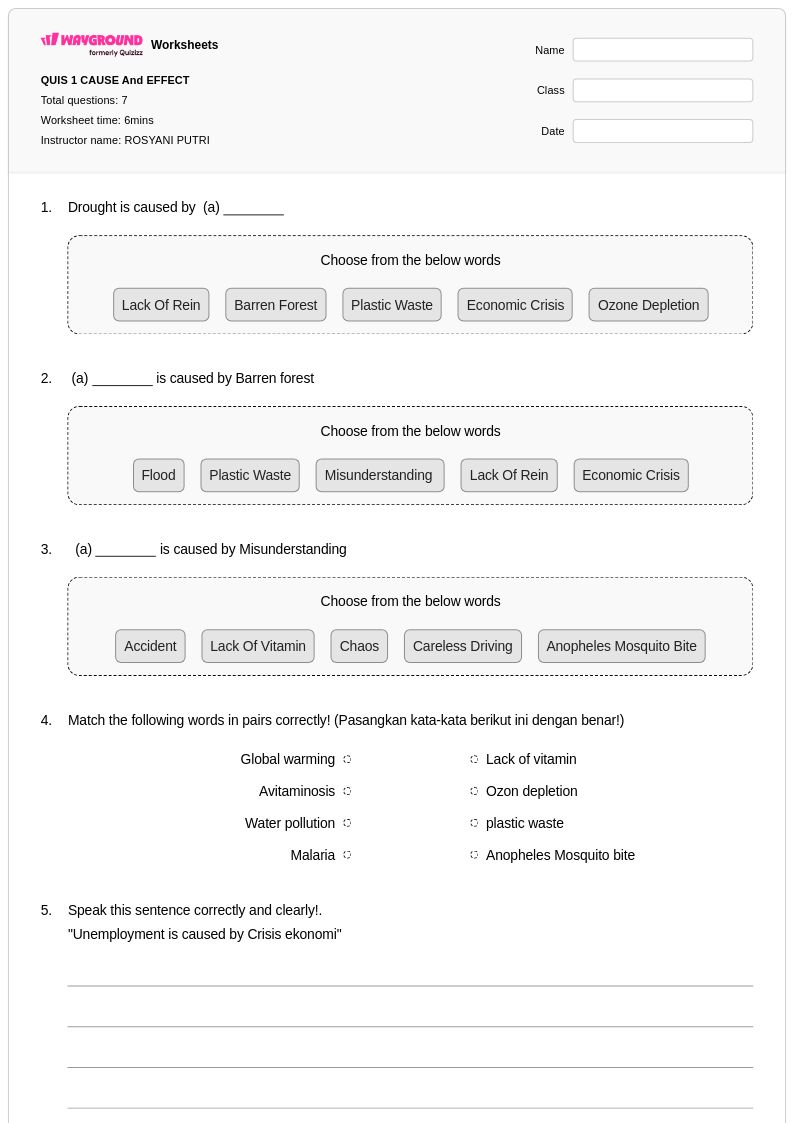
7 Q
2nd
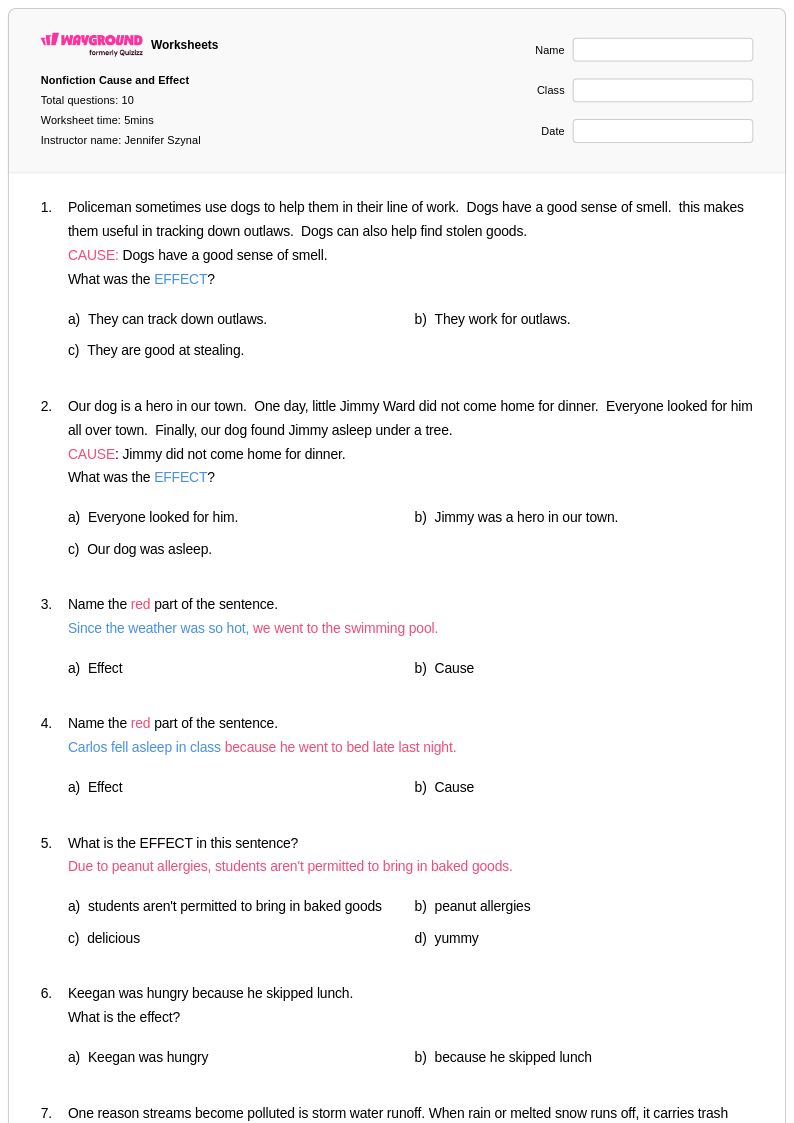
10 Q
2nd - 5th
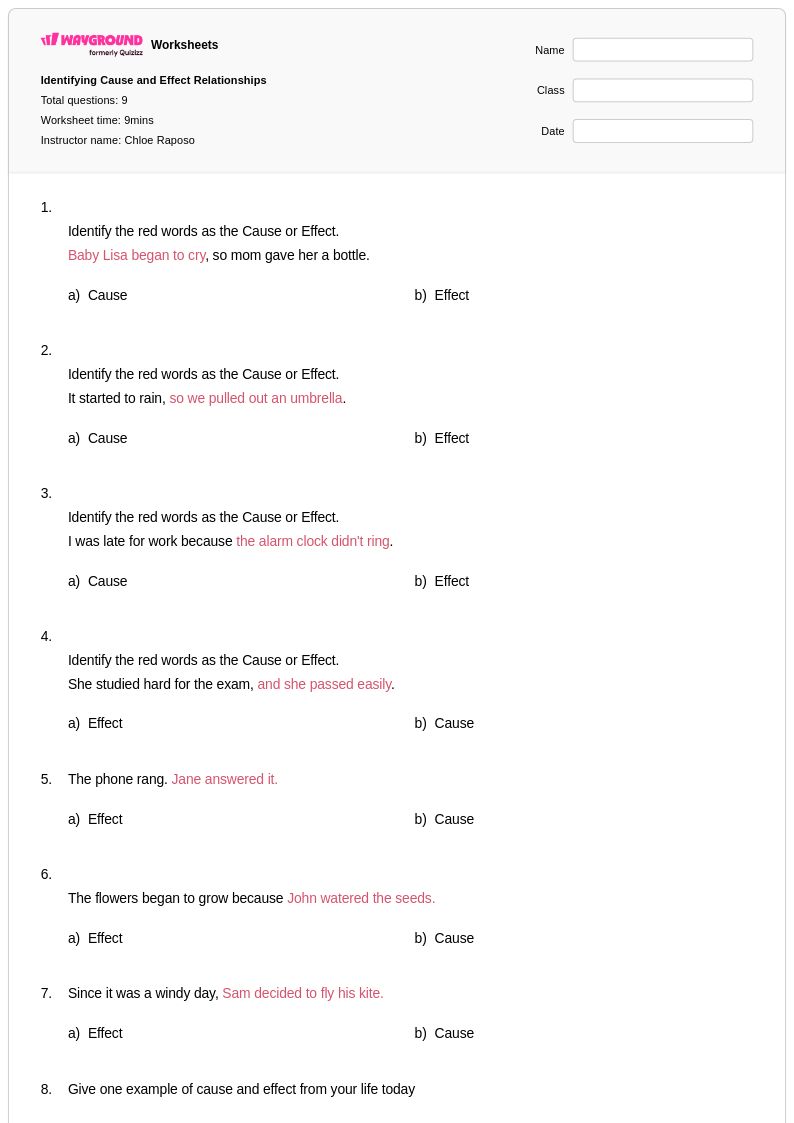
9 Q
2nd
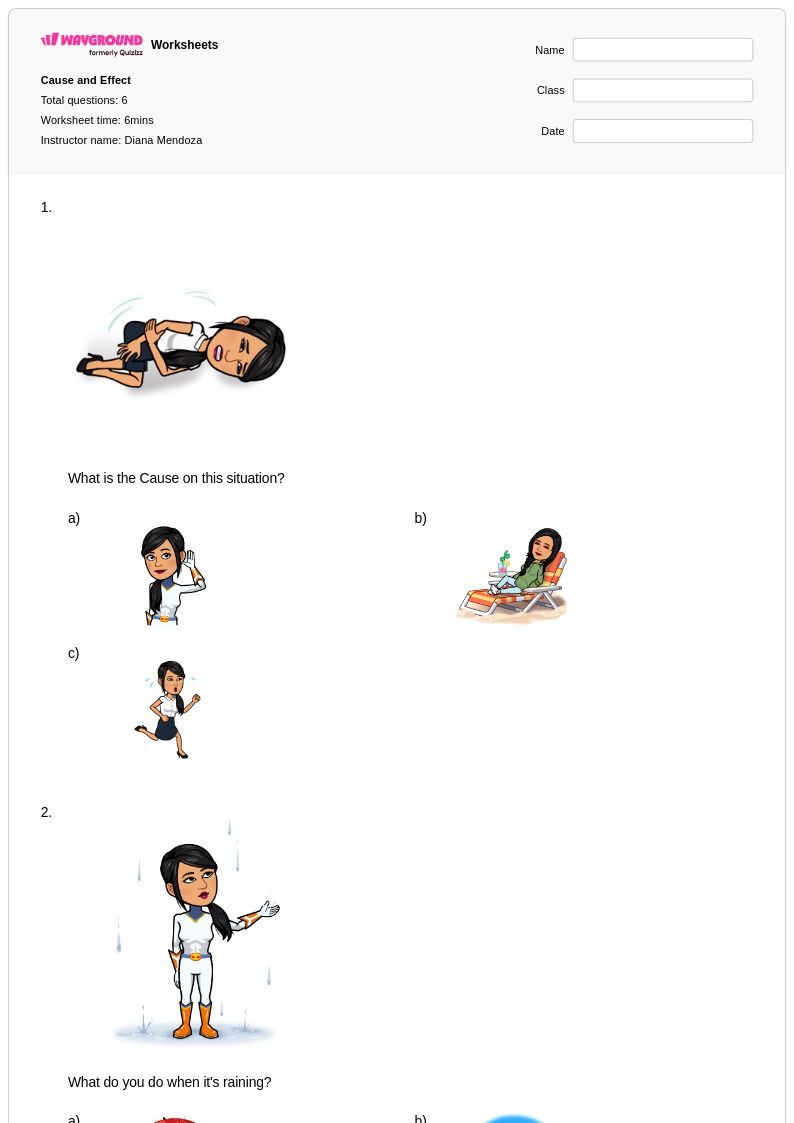
6 Q
2nd
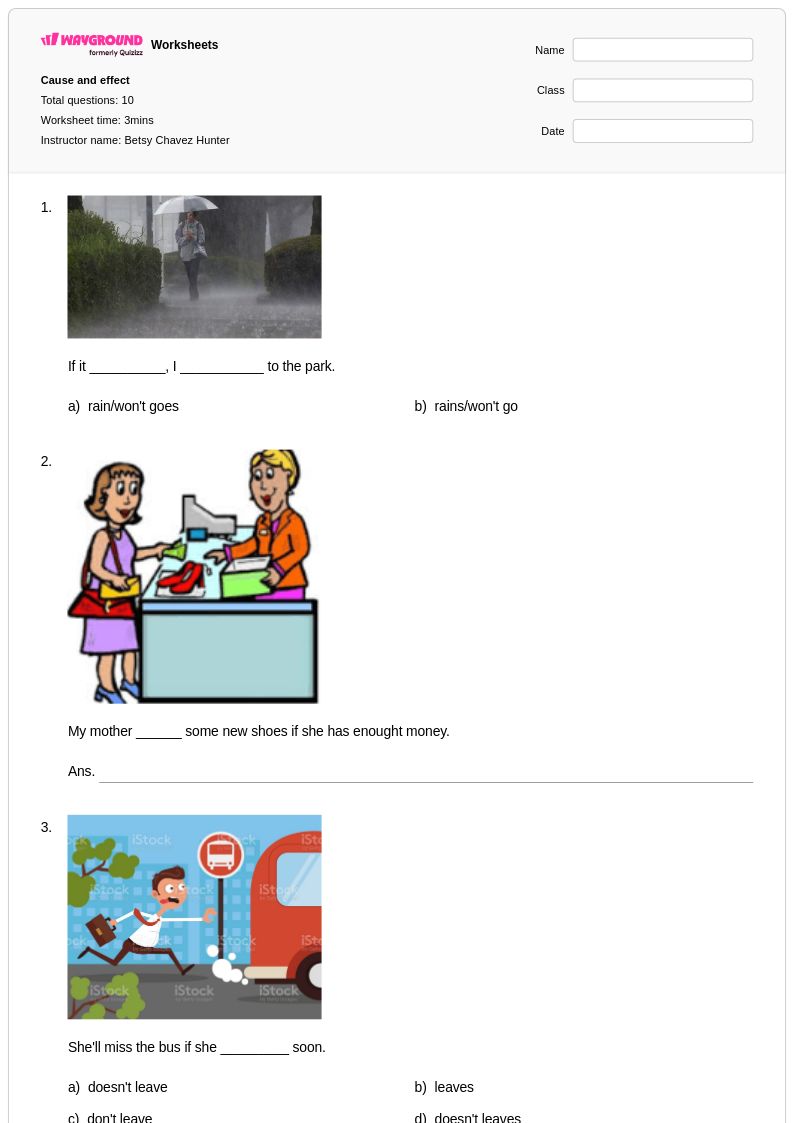
10 Q
2nd
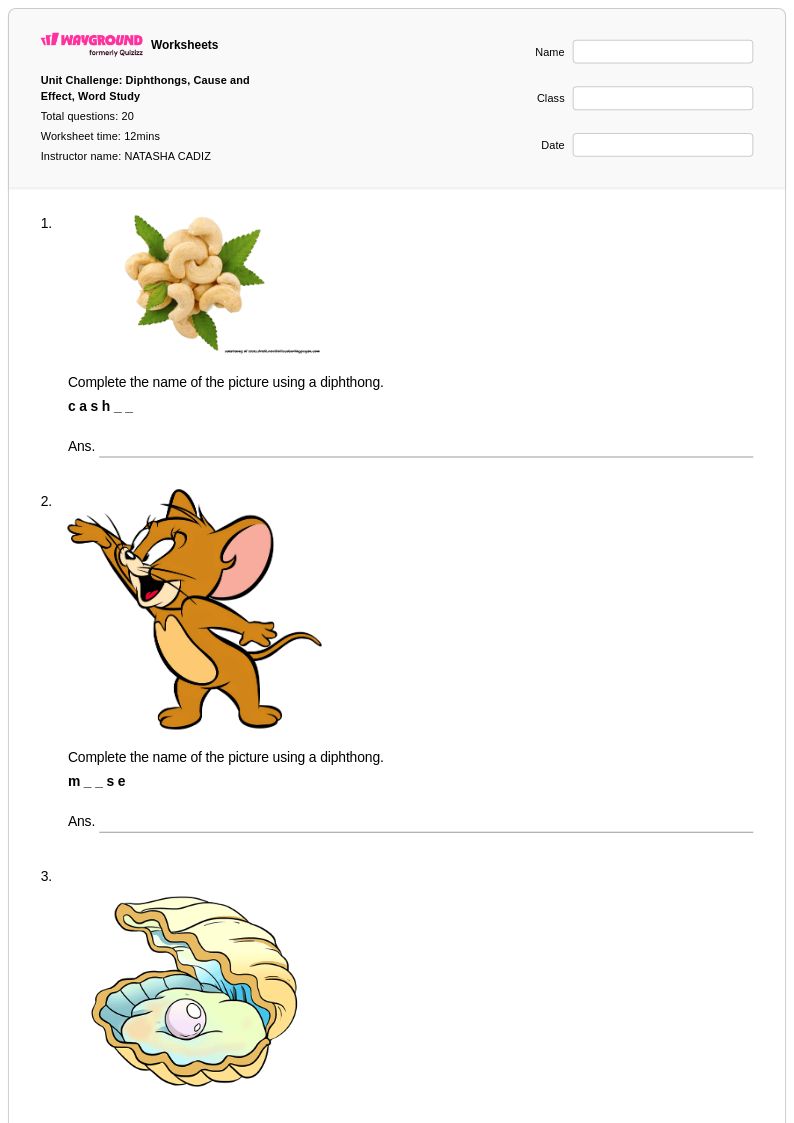
20 Q
2nd
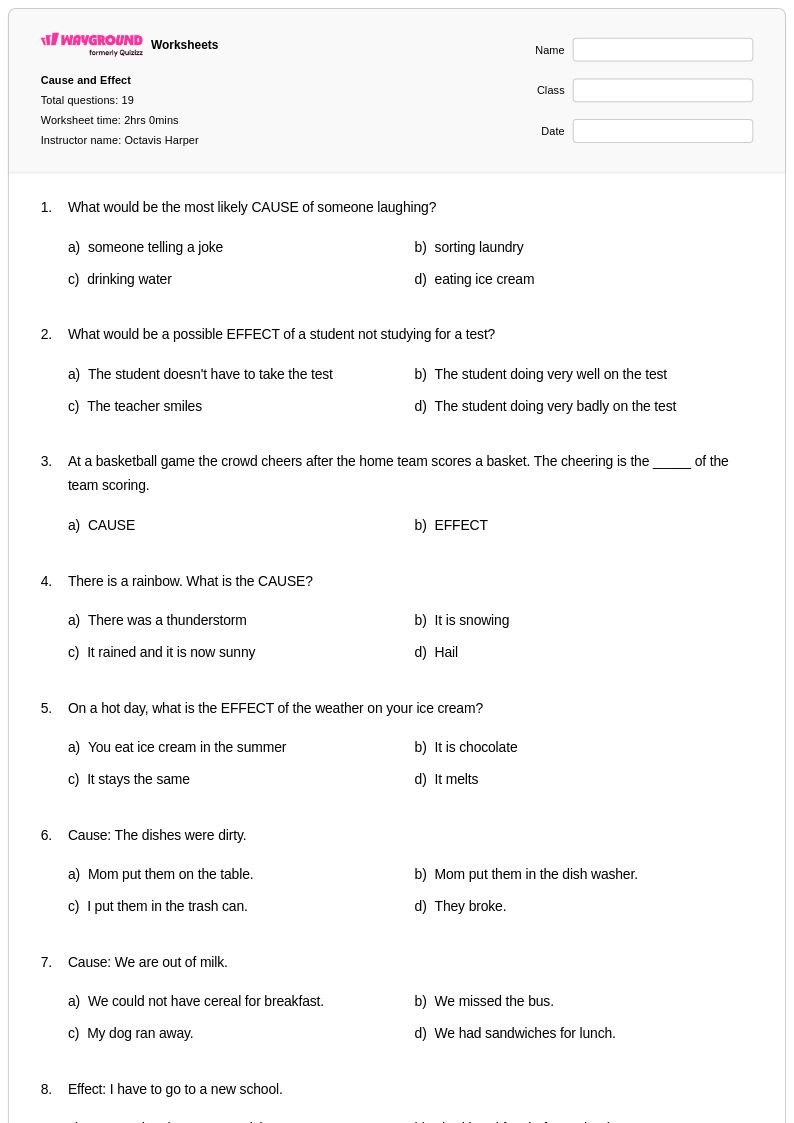
19 Q
2nd - 4th
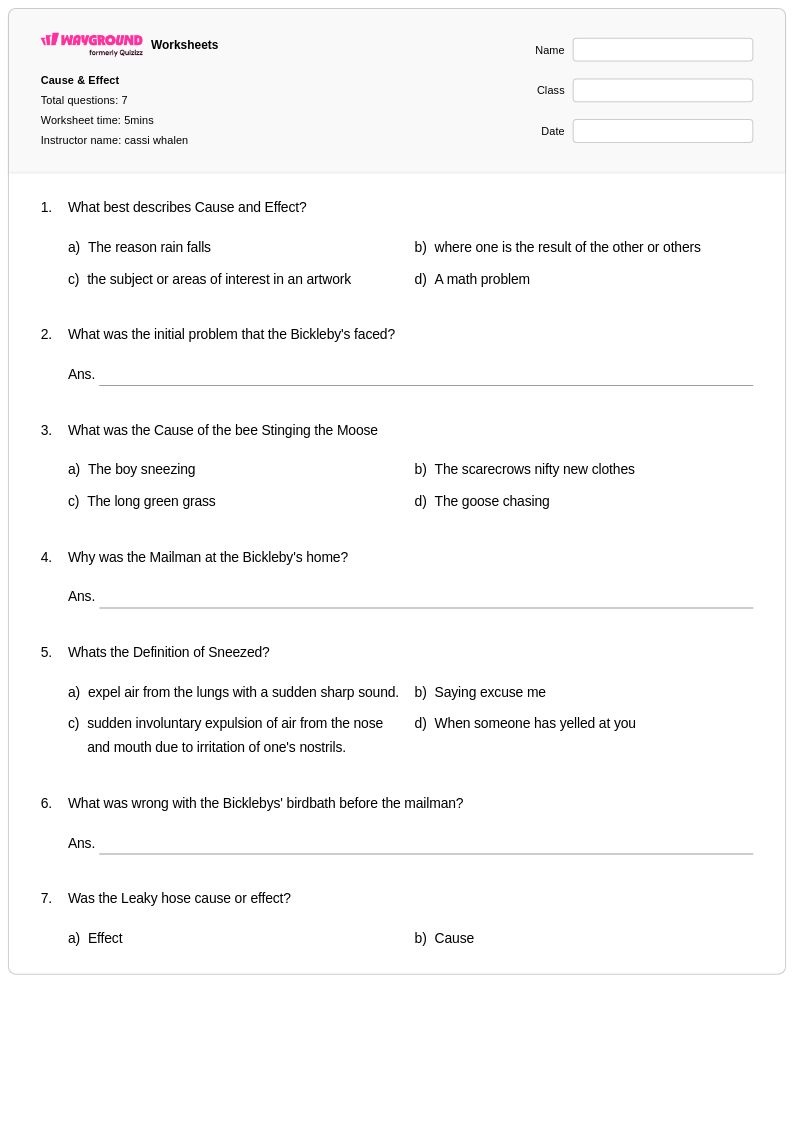
7 Q
KG - 2nd
10 Q
2nd
12 Q
2nd - 4th
10 Q
2nd
8 Q
2nd
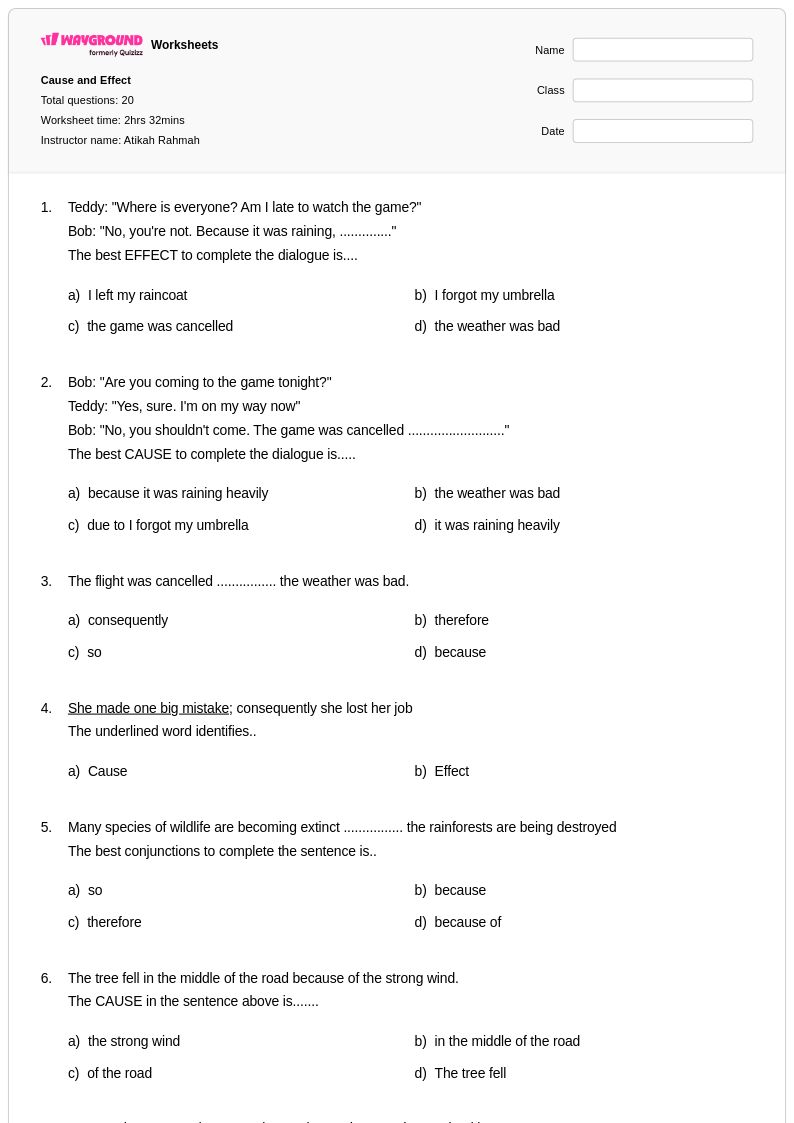
20 Q
KG - 12th
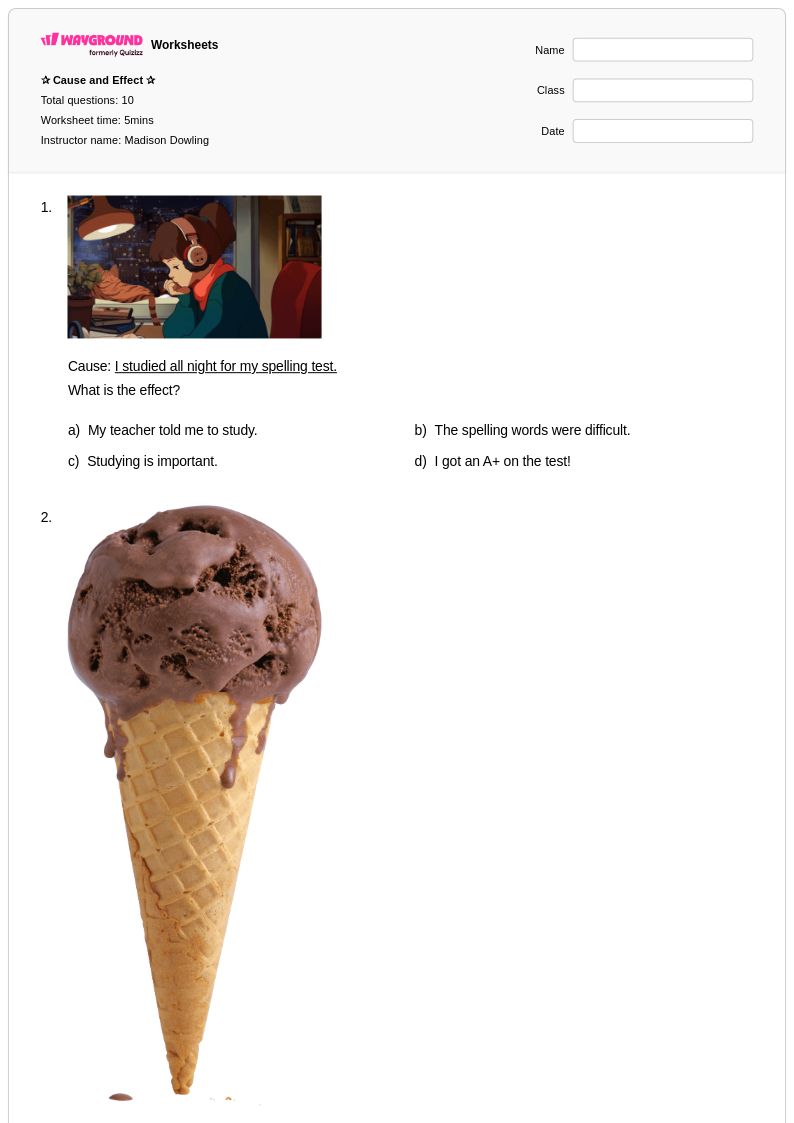
10 Q
2nd
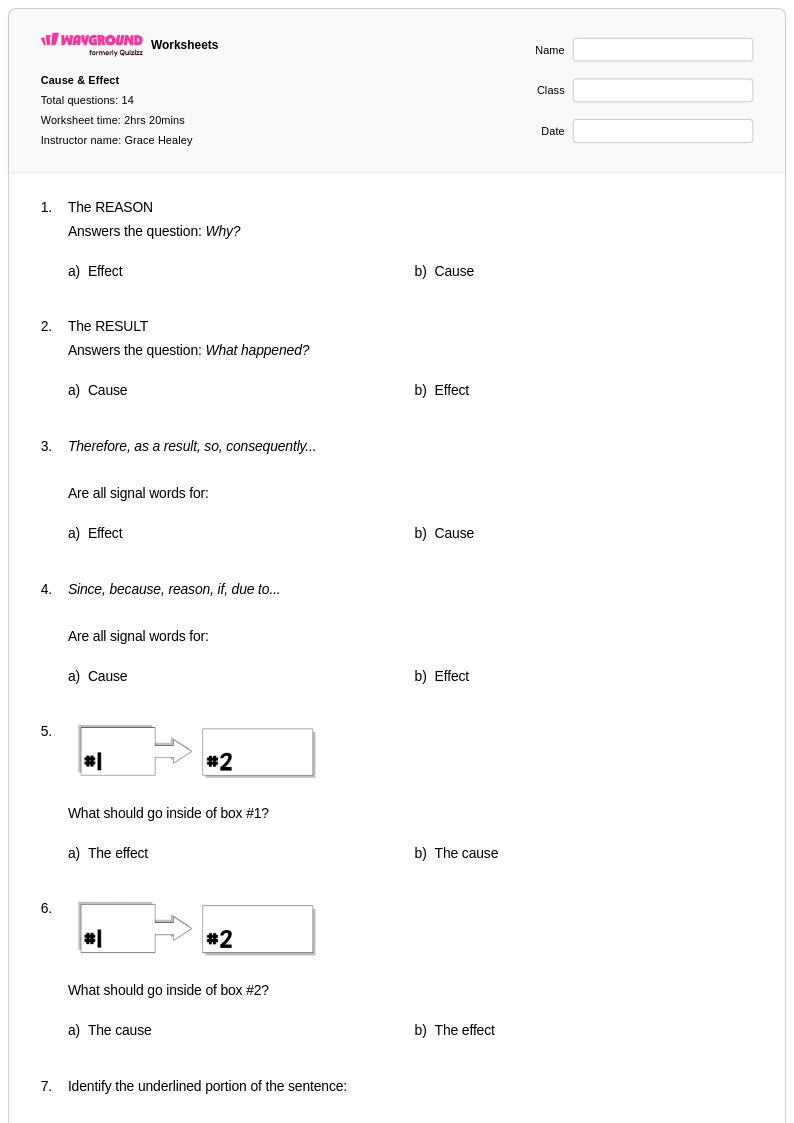
14 Q
2nd - 4th
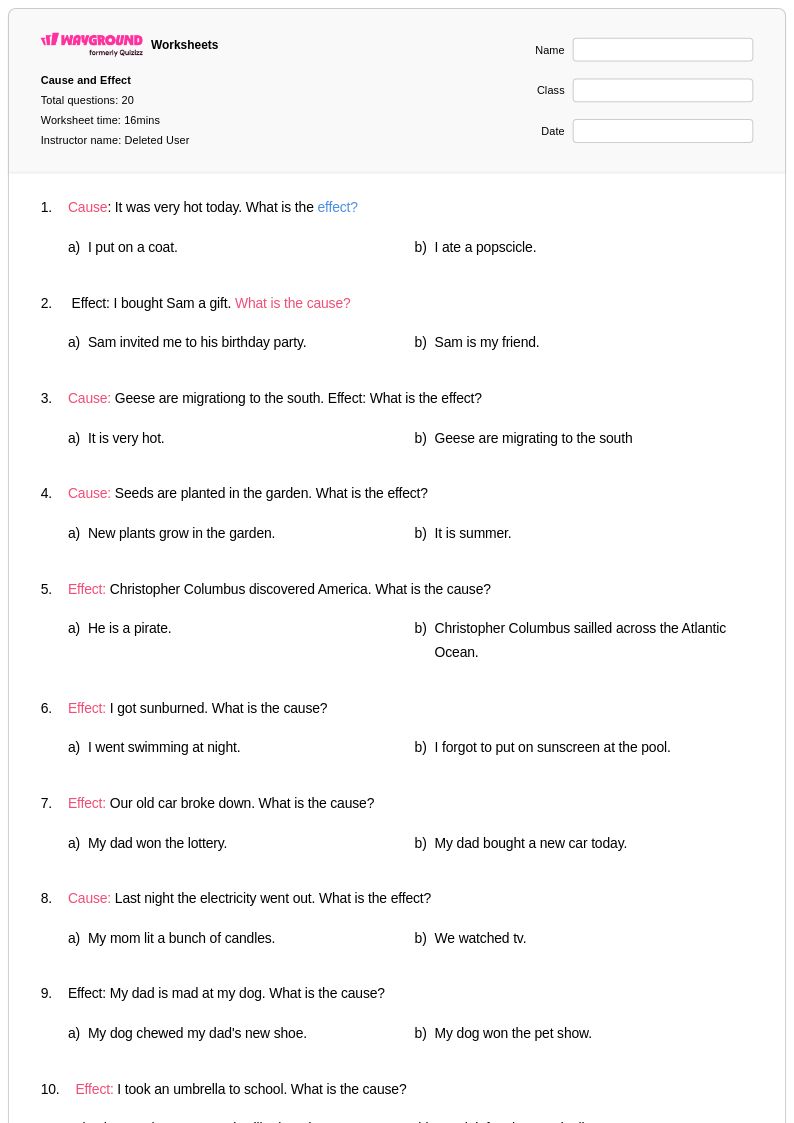
20 Q
2nd - 3rd
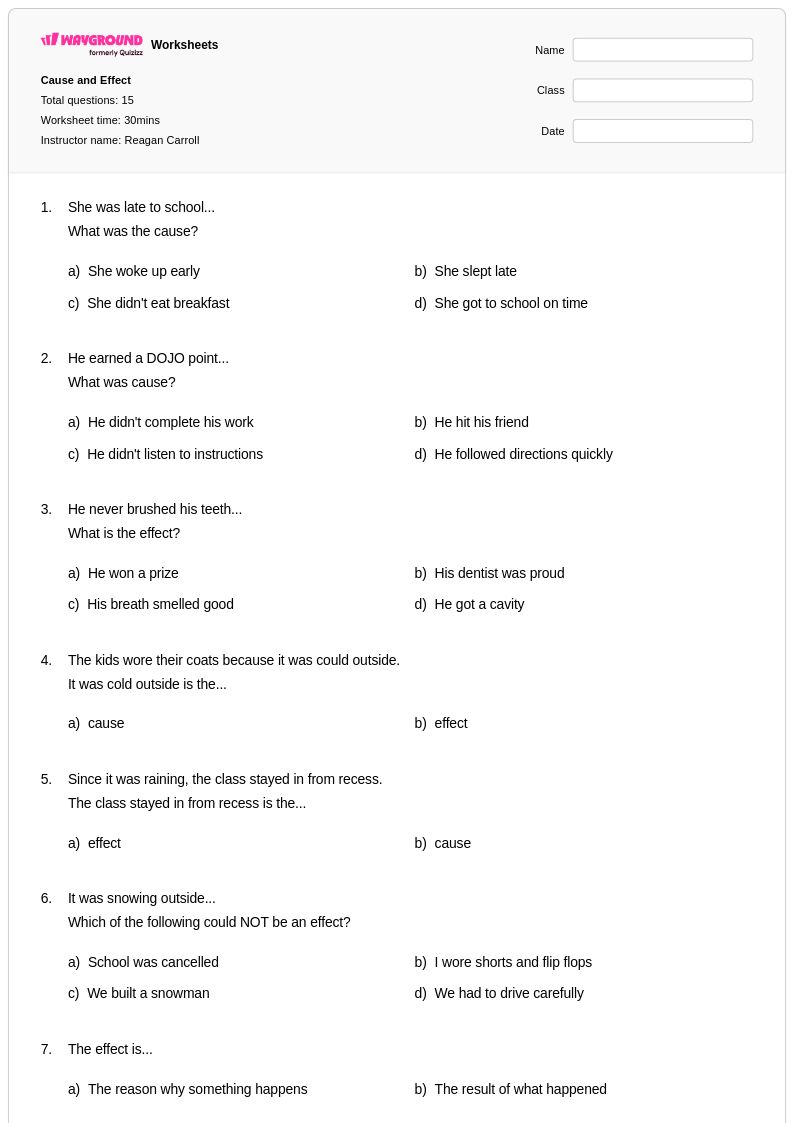
15 Q
2nd - 4th
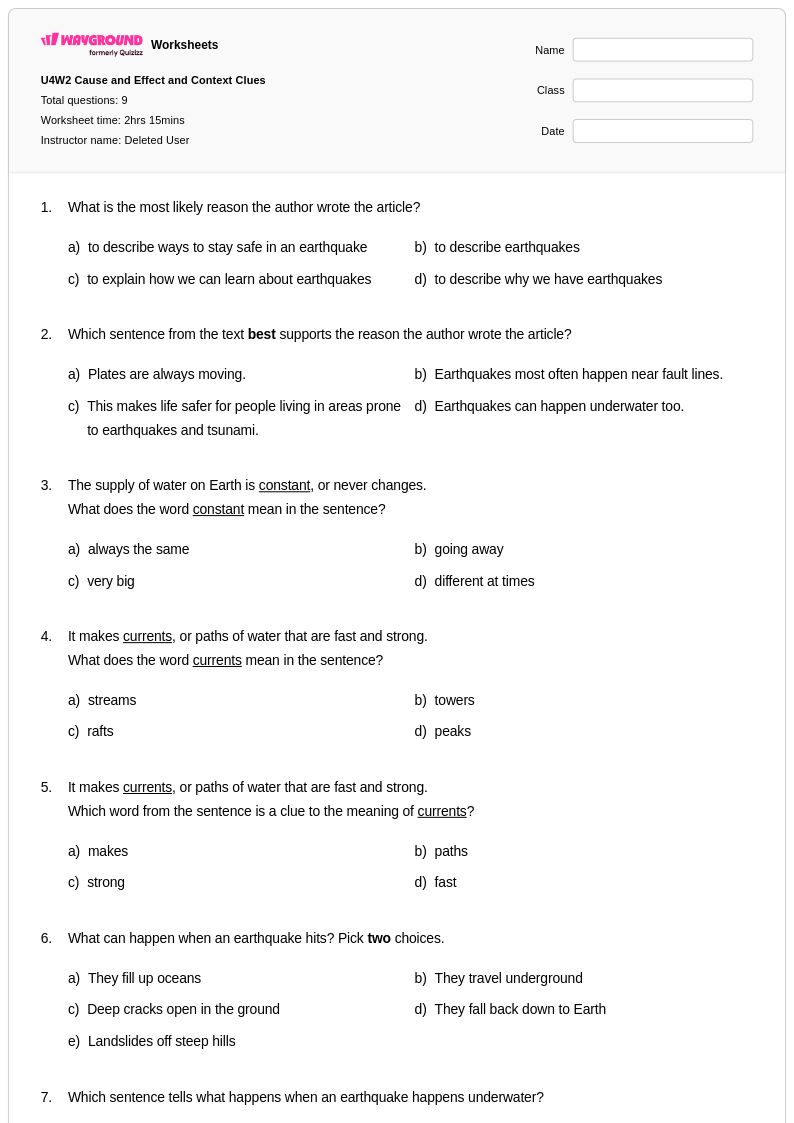
9 Q
2nd
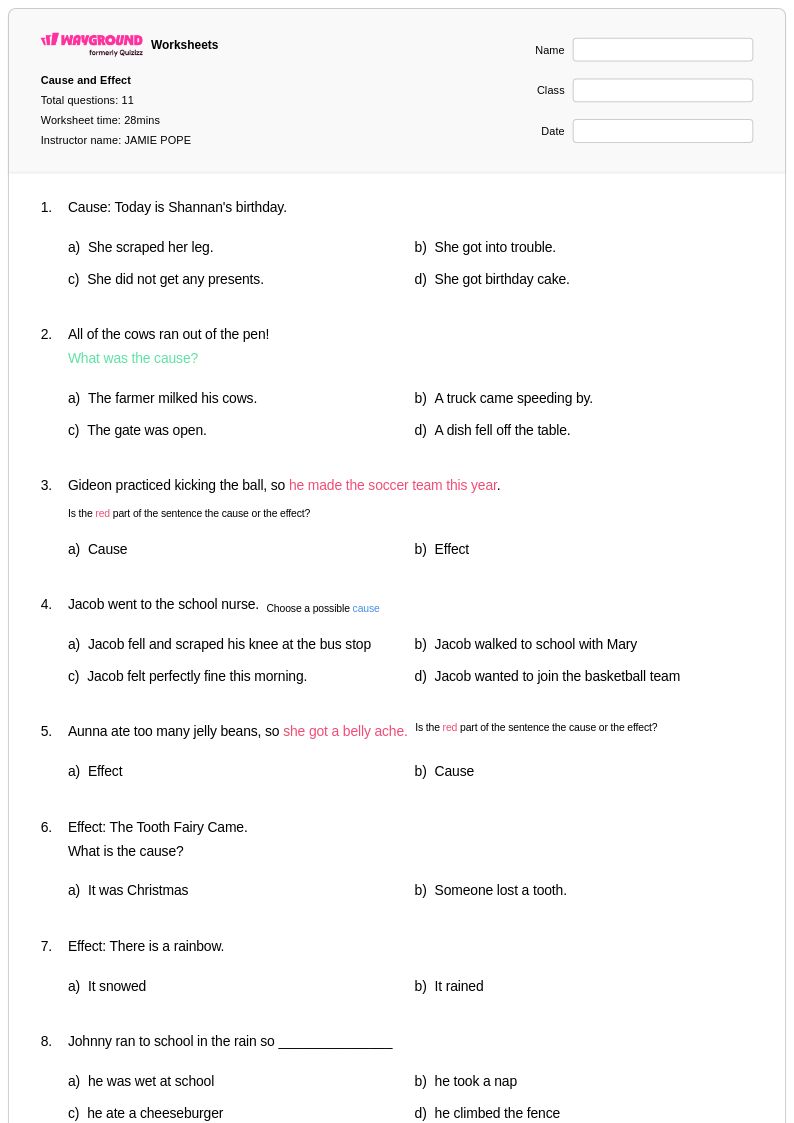
11 Q
1st - 3rd
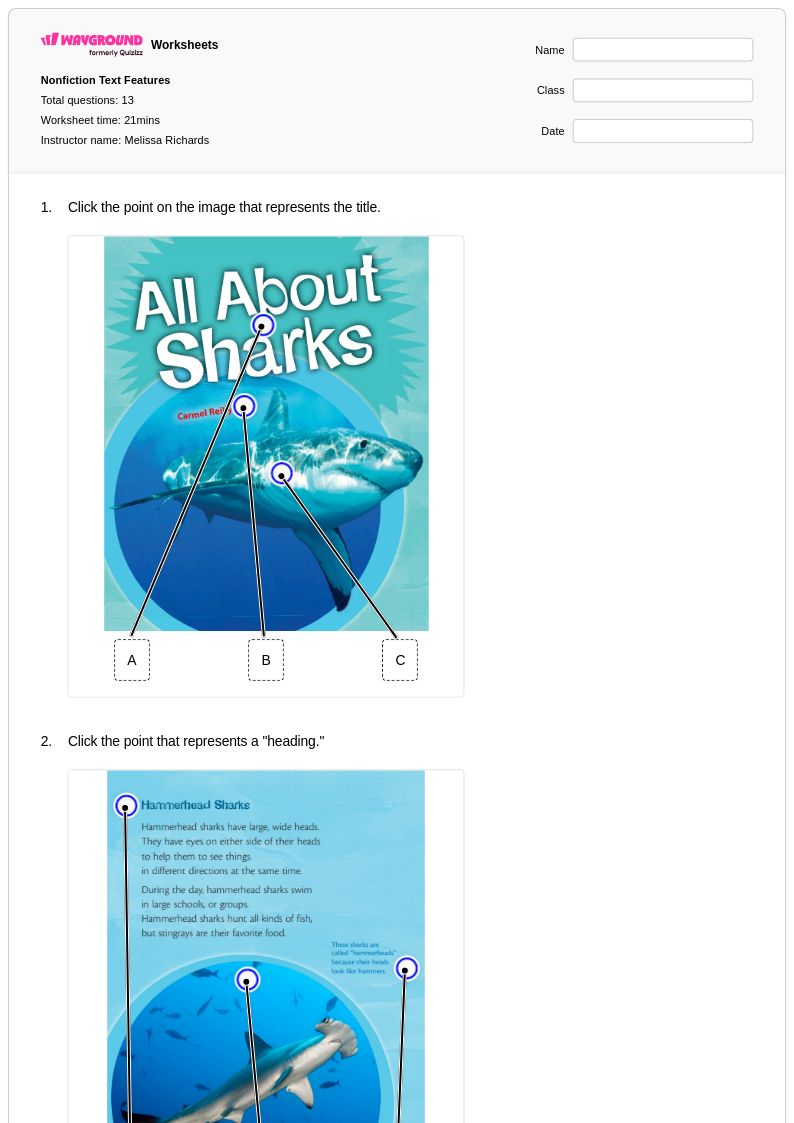
13 Q
2nd
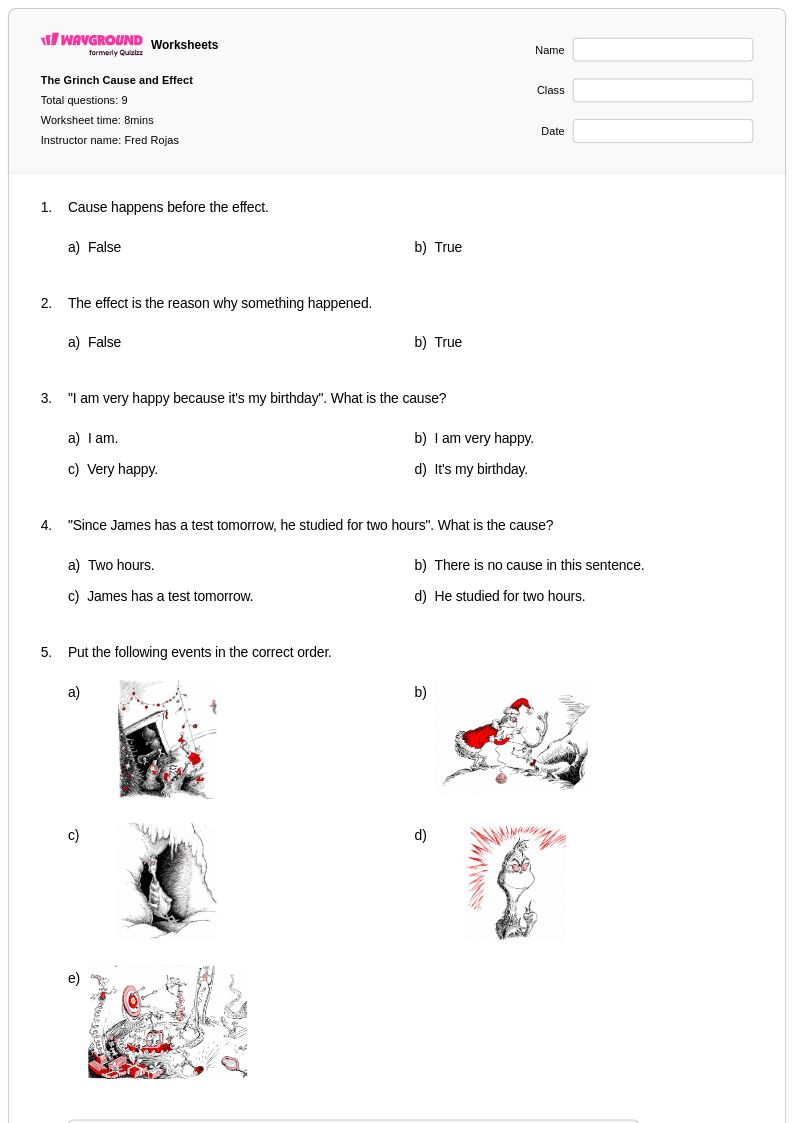
9 Q
2nd
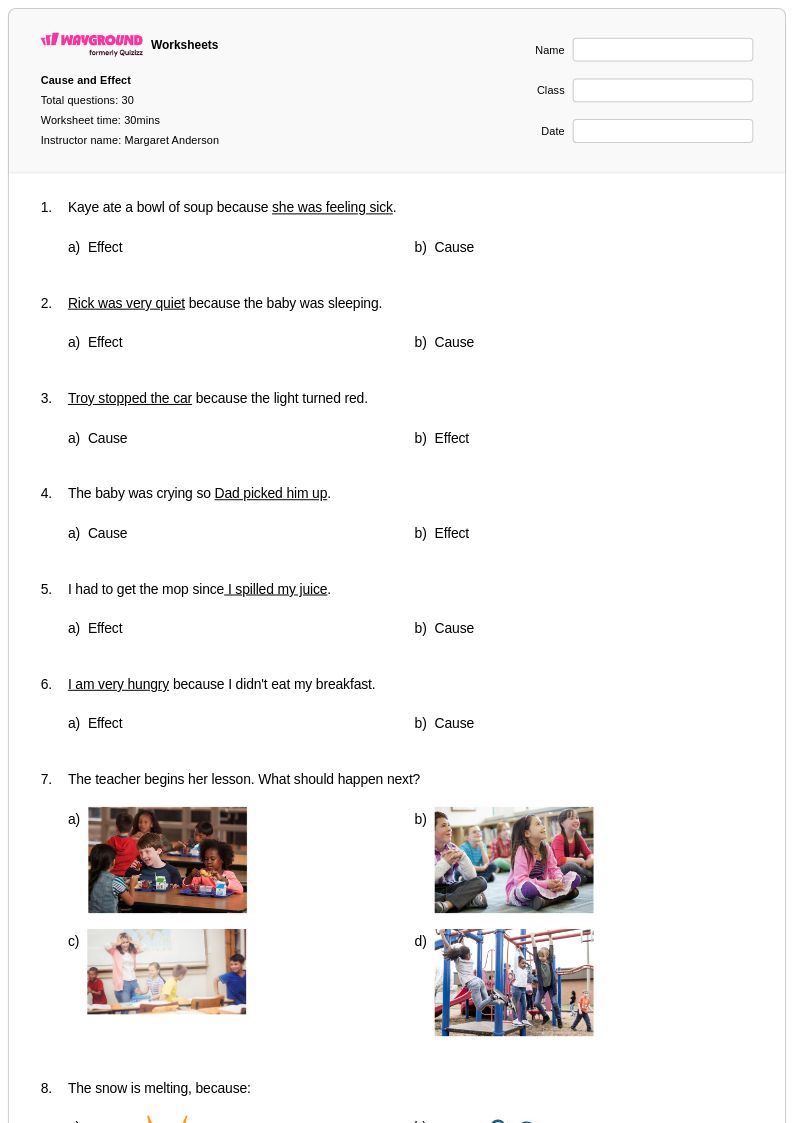
30 Q
1st - 3rd
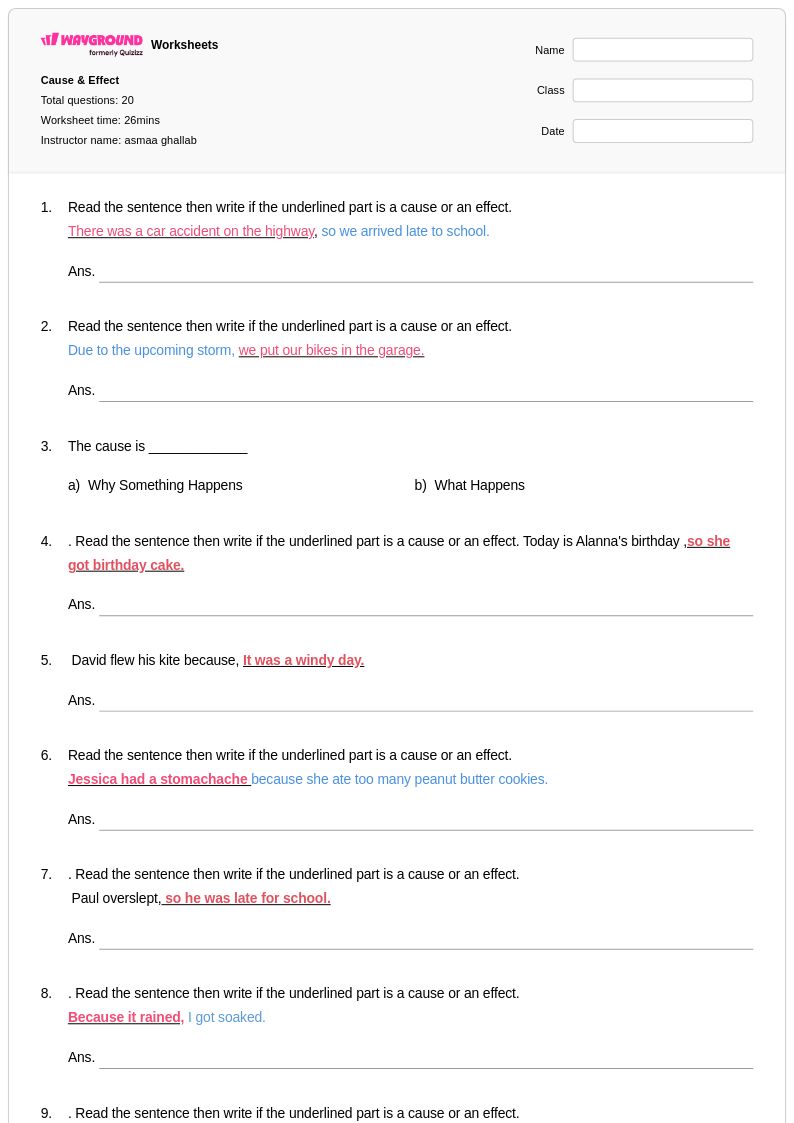
20 Q
2nd
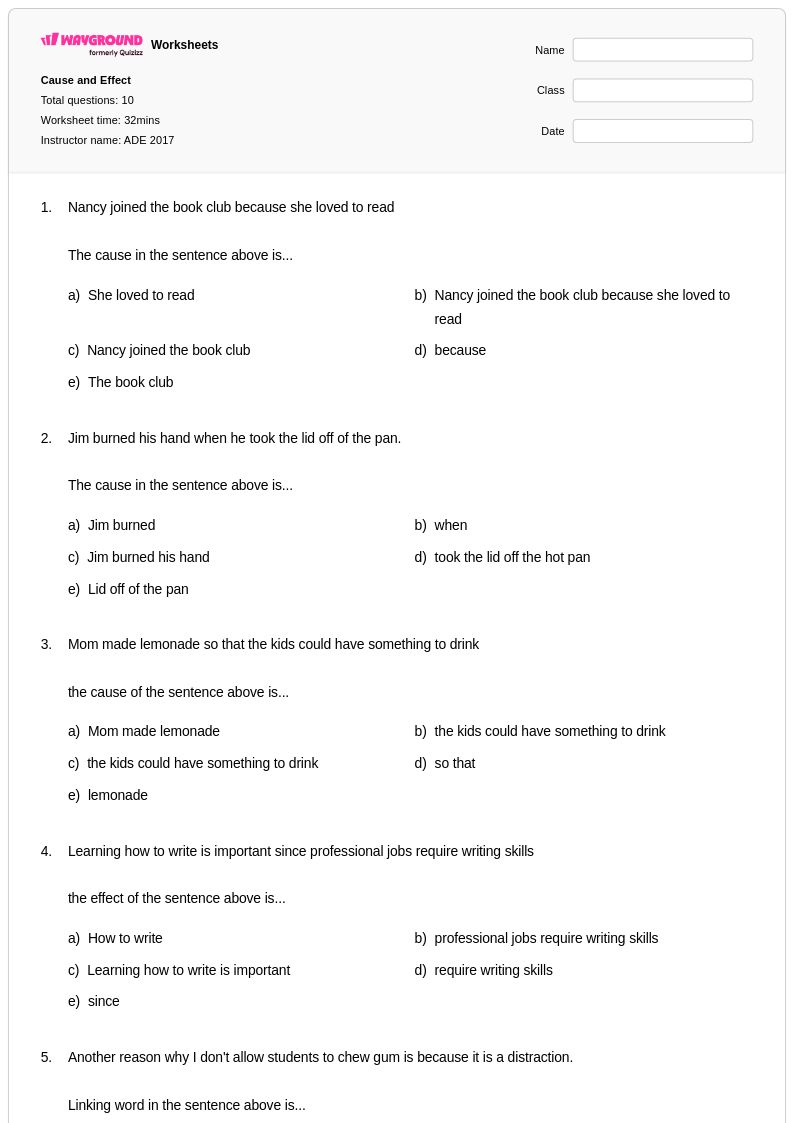
10 Q
2nd
Explore Identifying Cause and Effect in Nonfiction Worksheets by Grades
Explore Other Subject Worksheets for year 2
Explore printable Identifying Cause and Effect in Nonfiction worksheets for Year 2
Identifying cause and effect relationships in nonfiction texts represents a fundamental reading comprehension skill that Year 2 students must master to become proficient readers and critical thinkers. Wayground's extensive collection of worksheets focusing on this essential skill provides young learners with structured practice opportunities to recognize how events, actions, and phenomena connect within informational texts. These carefully designed practice problems guide students through the process of distinguishing between what happens (the effect) and why it happens (the cause) in real-world contexts, from simple scientific observations to basic historical events. Each worksheet includes a comprehensive answer key that enables teachers and parents to provide immediate feedback, while the free printable format ensures accessibility for all classrooms and learning environments. The pdf versions maintain consistent formatting and can be easily distributed for both individual practice and small group activities.
Wayground, formerly Quizizz, empowers educators with millions of teacher-created resources specifically designed to strengthen students' analytical reading skills through systematic cause and effect instruction. The platform's robust search and filtering capabilities allow teachers to quickly locate worksheets that align with specific curriculum standards and match their students' diverse reading levels and learning needs. These differentiation tools enable seamless customization of practice materials, ensuring that struggling readers receive appropriate scaffolding while advanced students encounter sufficiently challenging content. Available in both printable and digital formats, including downloadable pdf versions, these resources support flexible lesson planning whether teachers need materials for whole-class instruction, targeted remediation sessions, or enrichment activities. The comprehensive collection facilitates ongoing skill practice throughout the academic year, helping educators track student progress in identifying cause and effect relationships across various nonfiction genres and complexity levels.
FAQs
How do I teach students to identify cause and effect in nonfiction texts?
What exercises help students practice identifying cause and effect in nonfiction?
What mistakes do students commonly make when identifying cause and effect in nonfiction?
How do I differentiate cause and effect instruction for struggling readers?
How can I use Wayground's cause and effect in nonfiction worksheets in my classroom?
How do I assess whether students can identify cause and effect relationships in nonfiction?