Free Printable Syllable Types Worksheets for Kindergarten
Wayground's free kindergarten syllable types worksheets offer engaging printables and practice problems that help young learners identify and categorize different syllable patterns, complete with answer keys for easy assessment.
Explore printable Syllable Types worksheets for Kindergarten
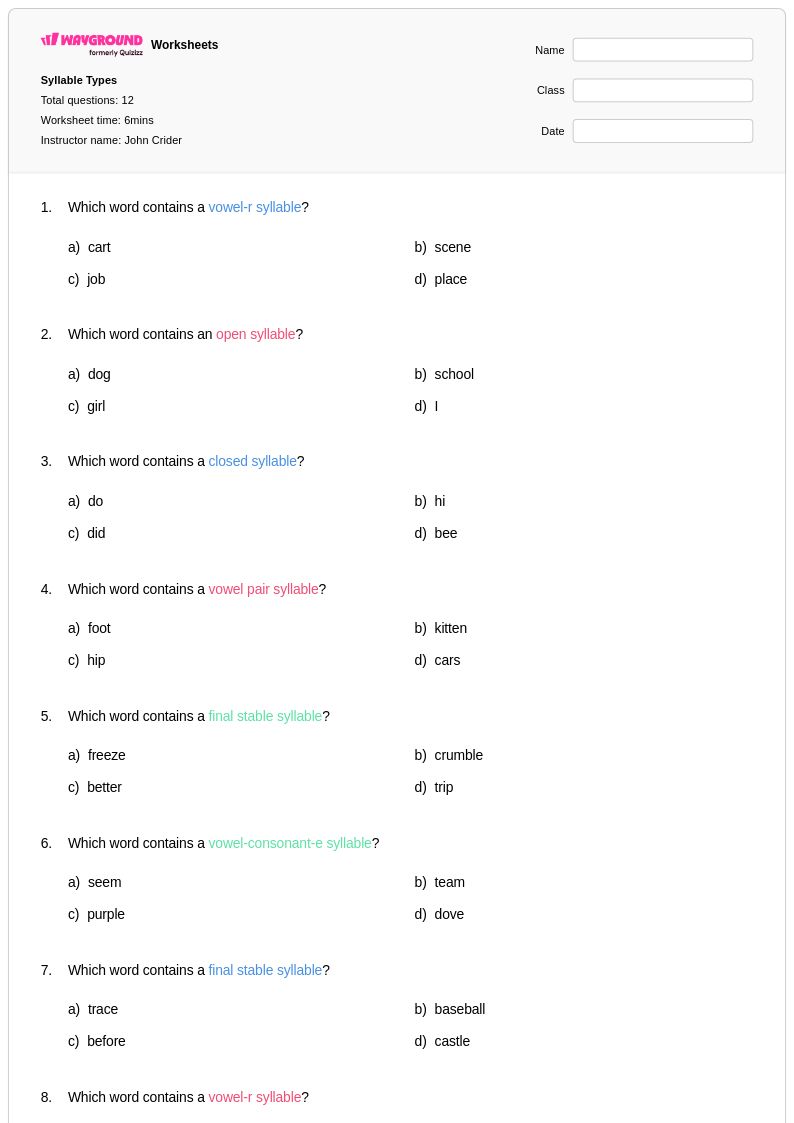
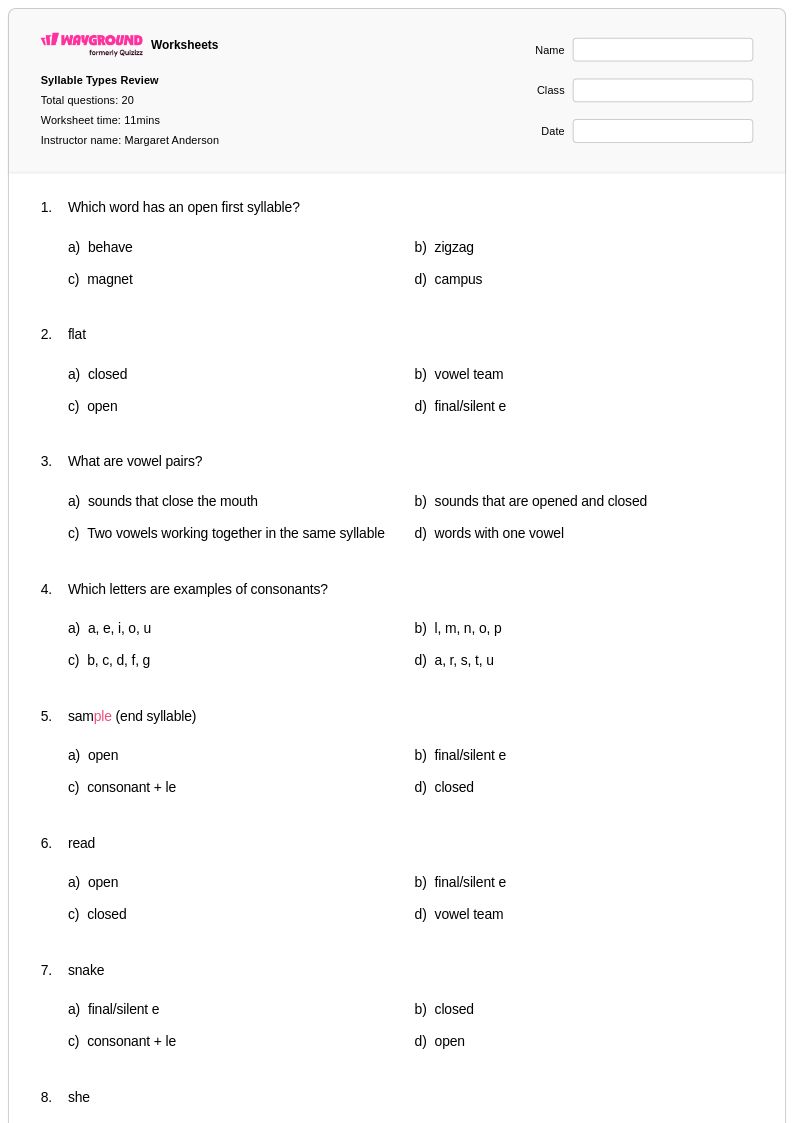
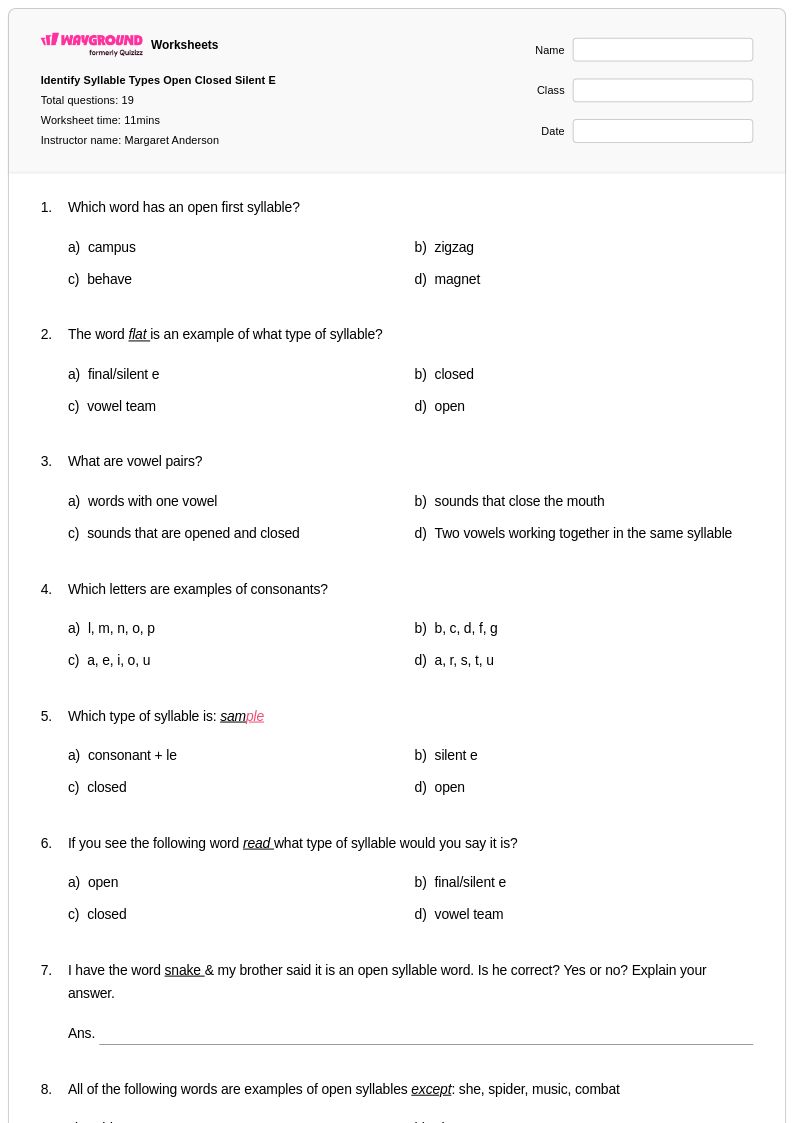
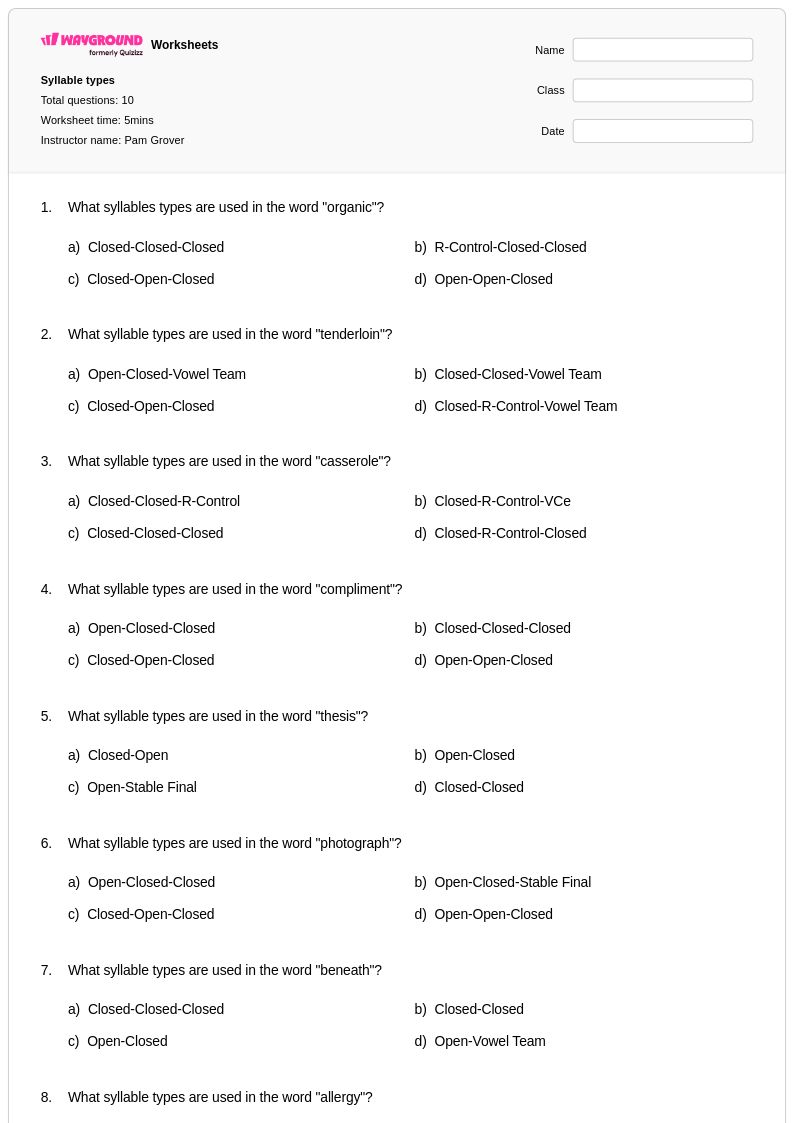
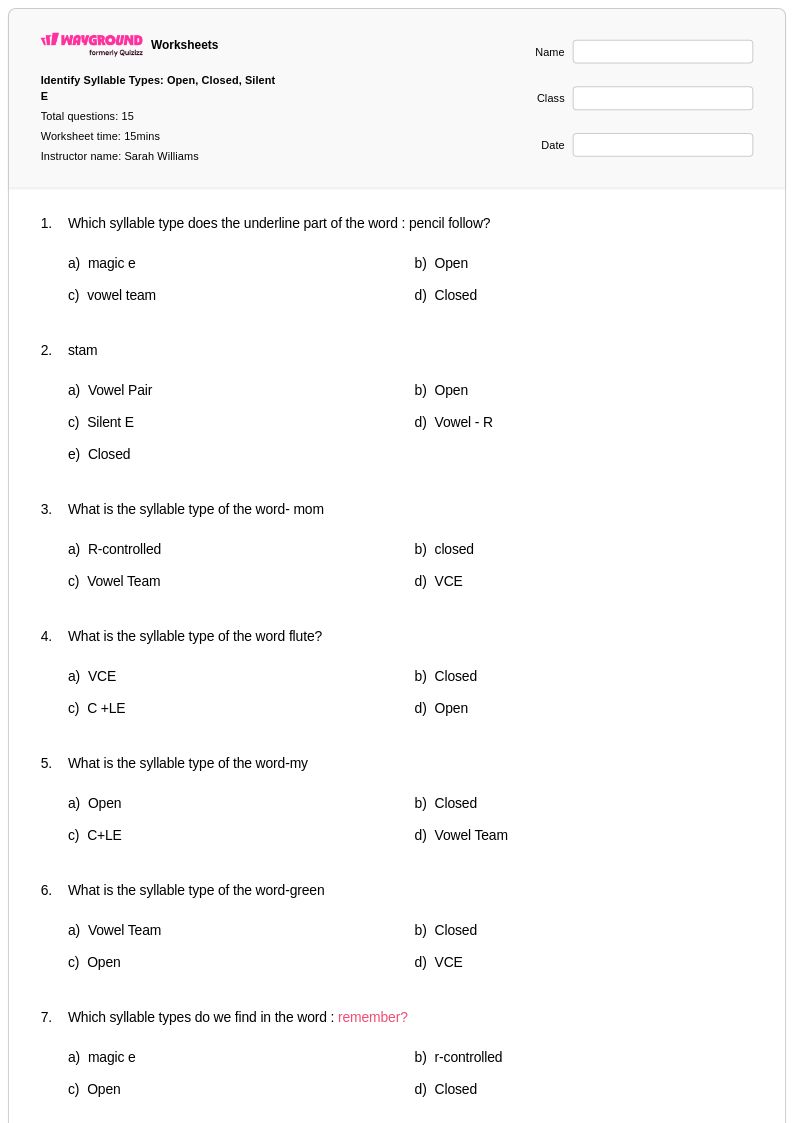
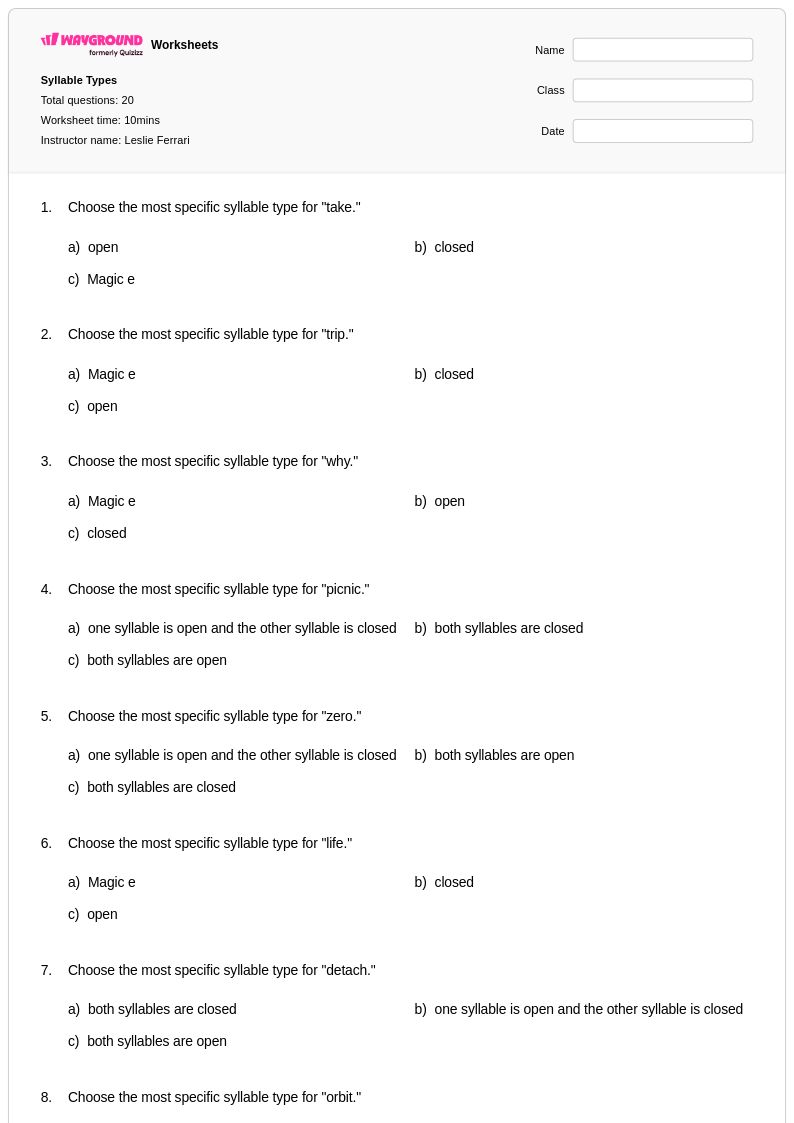
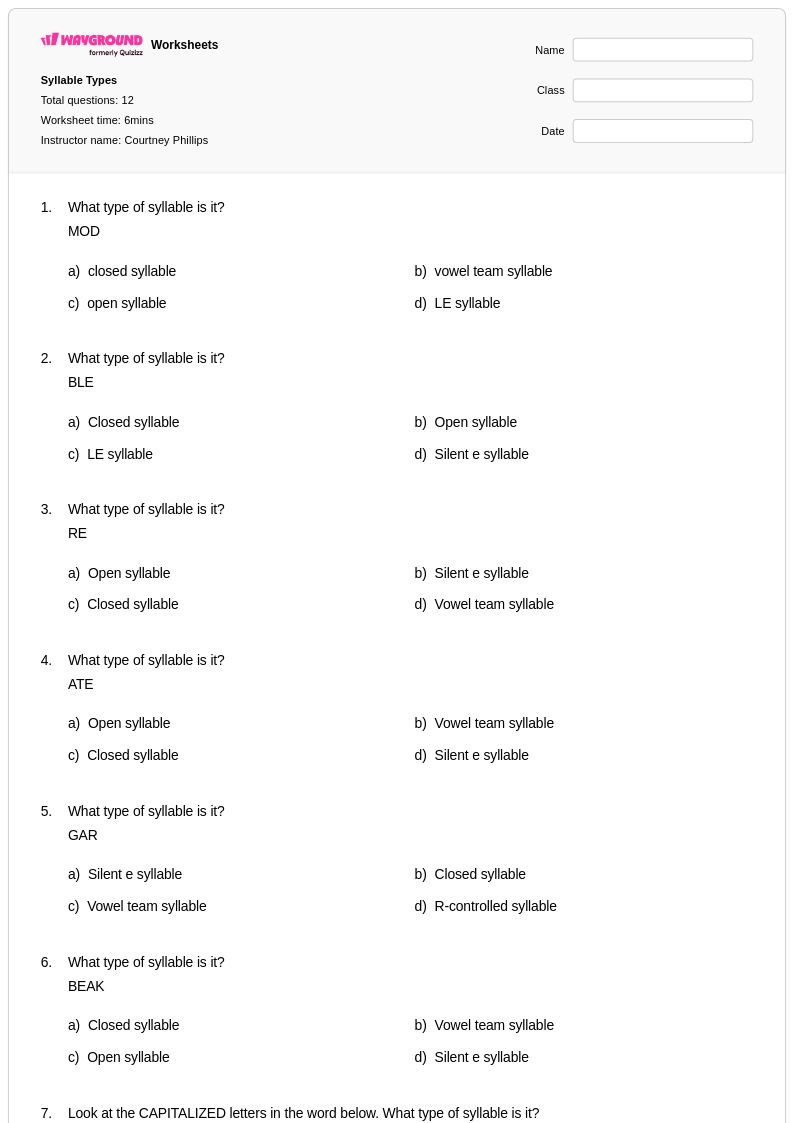
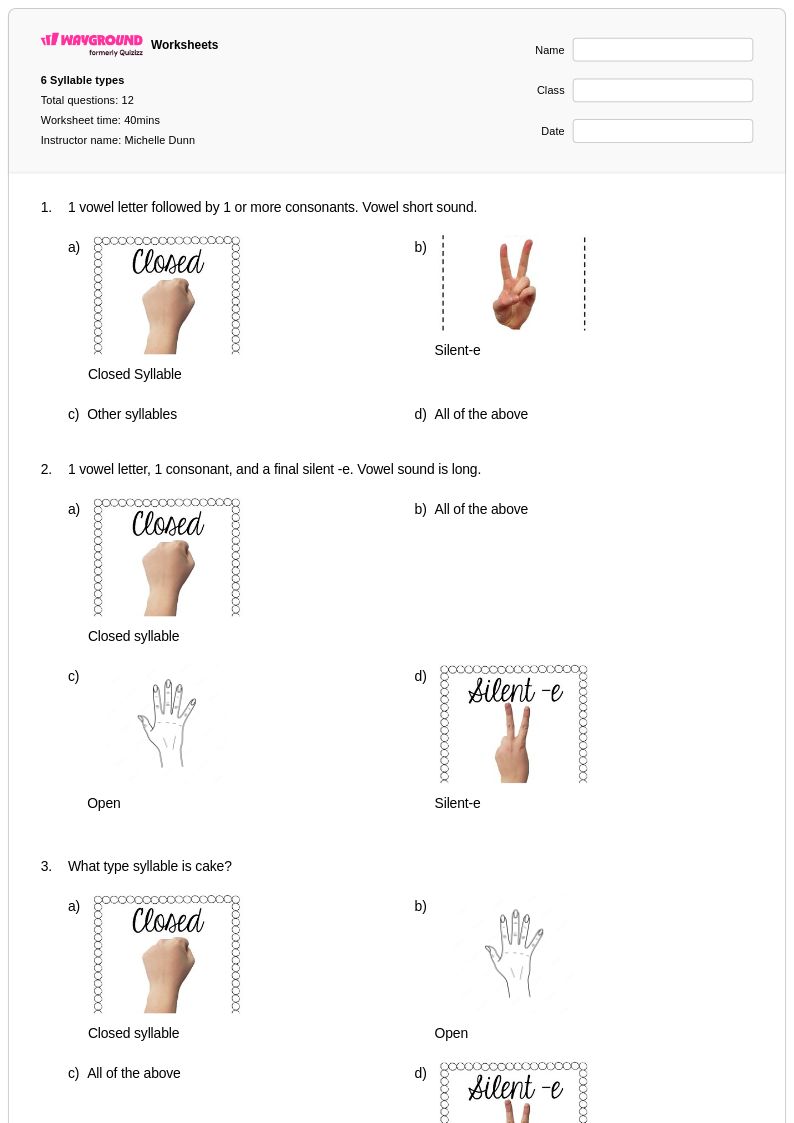
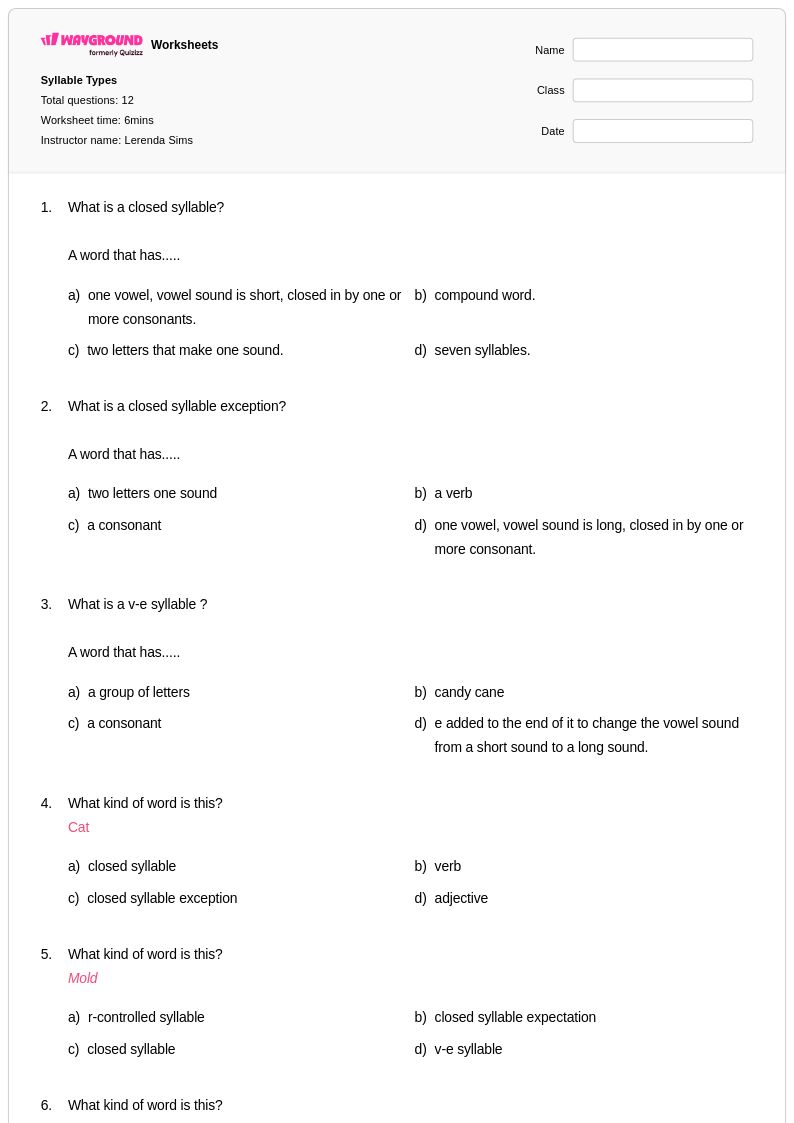
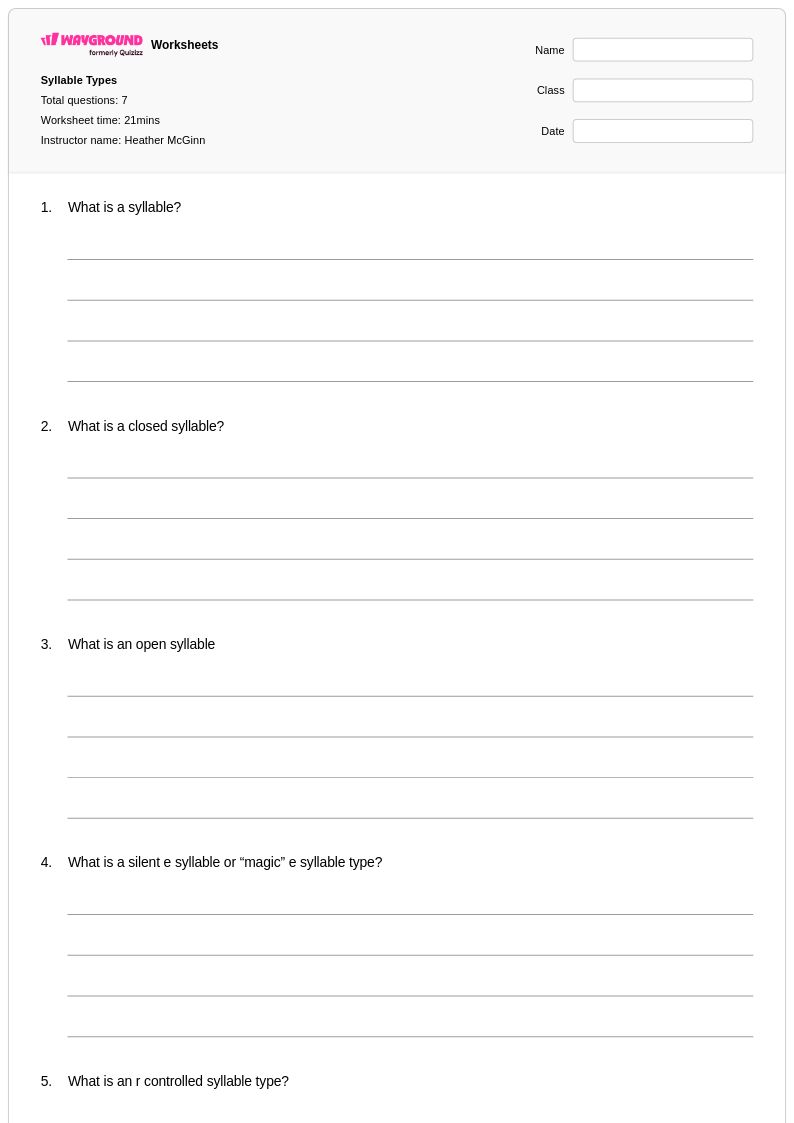
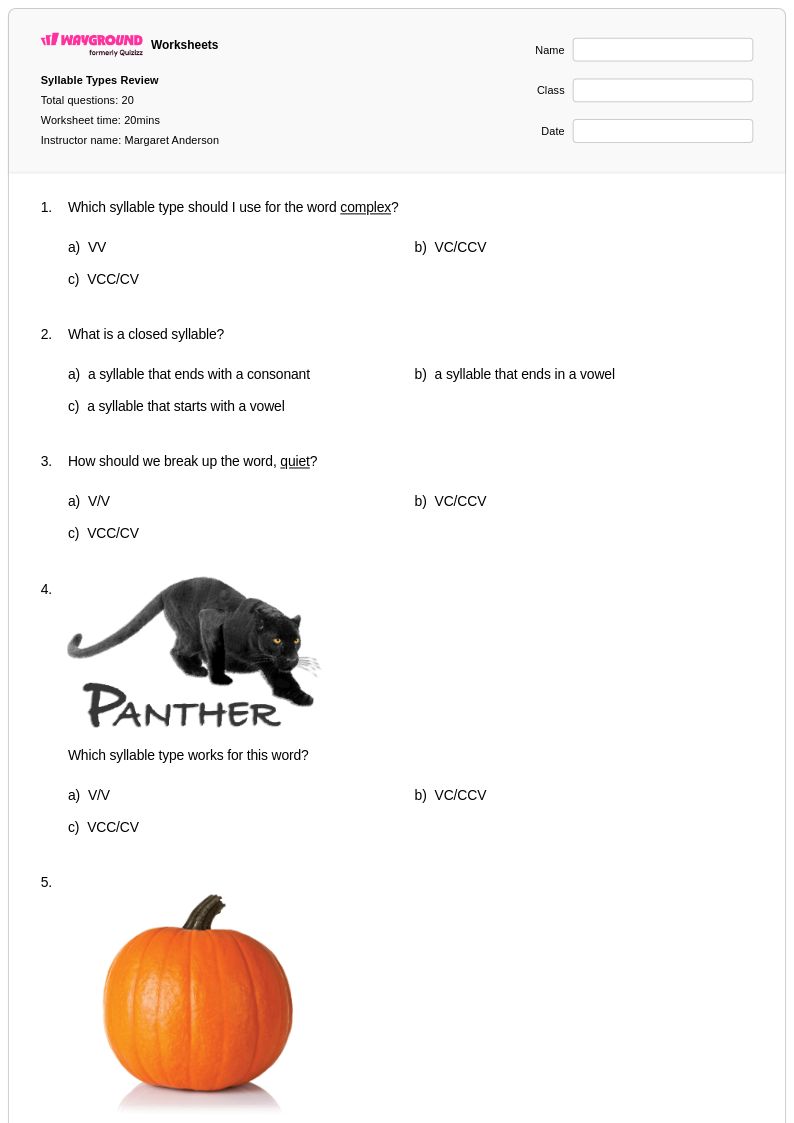
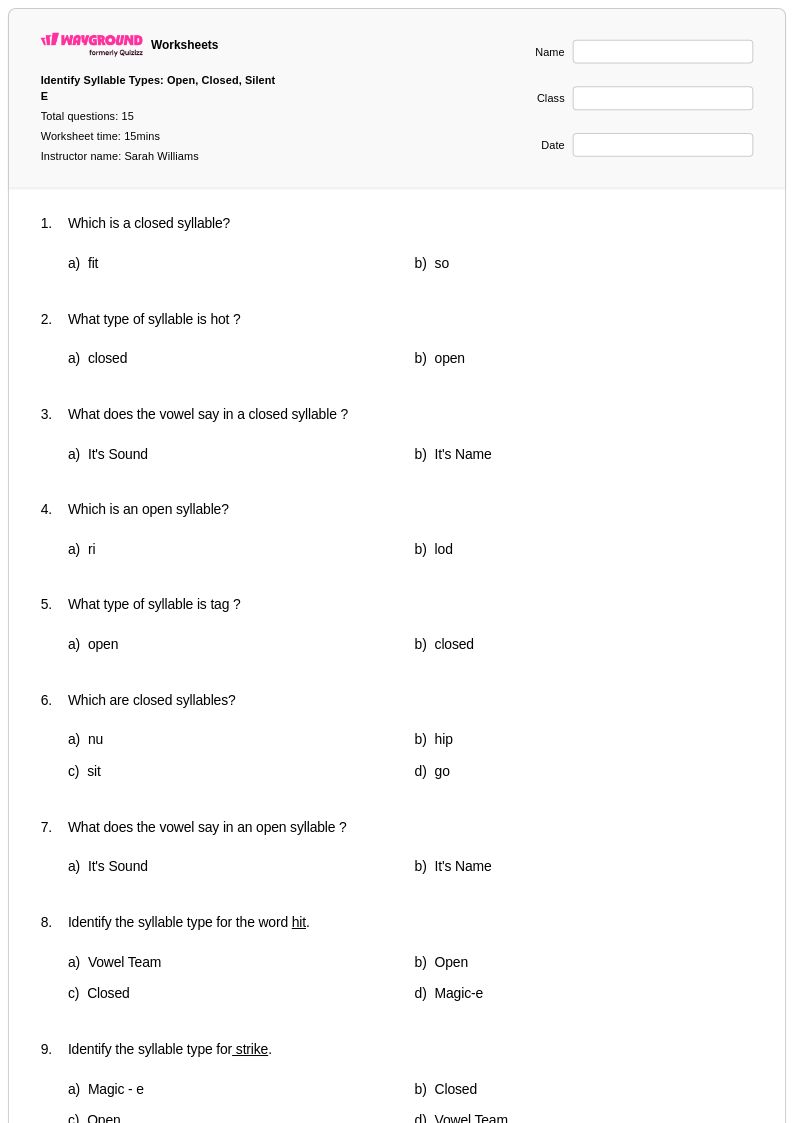
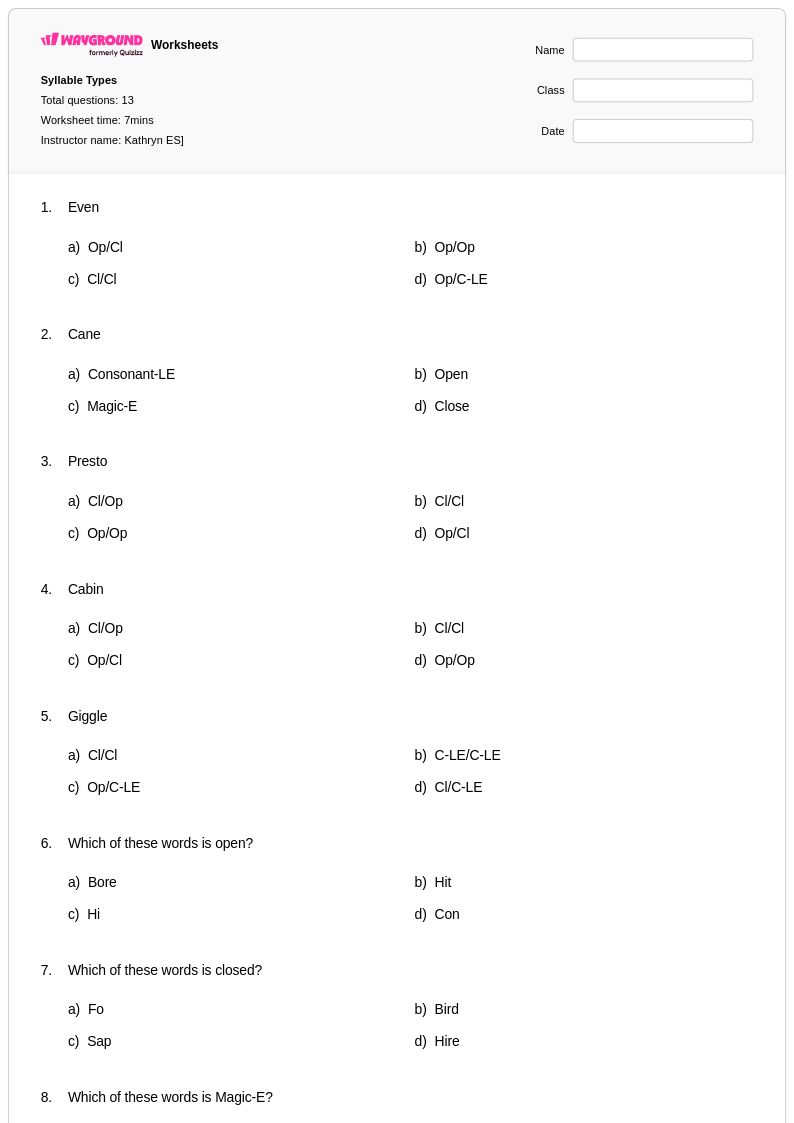
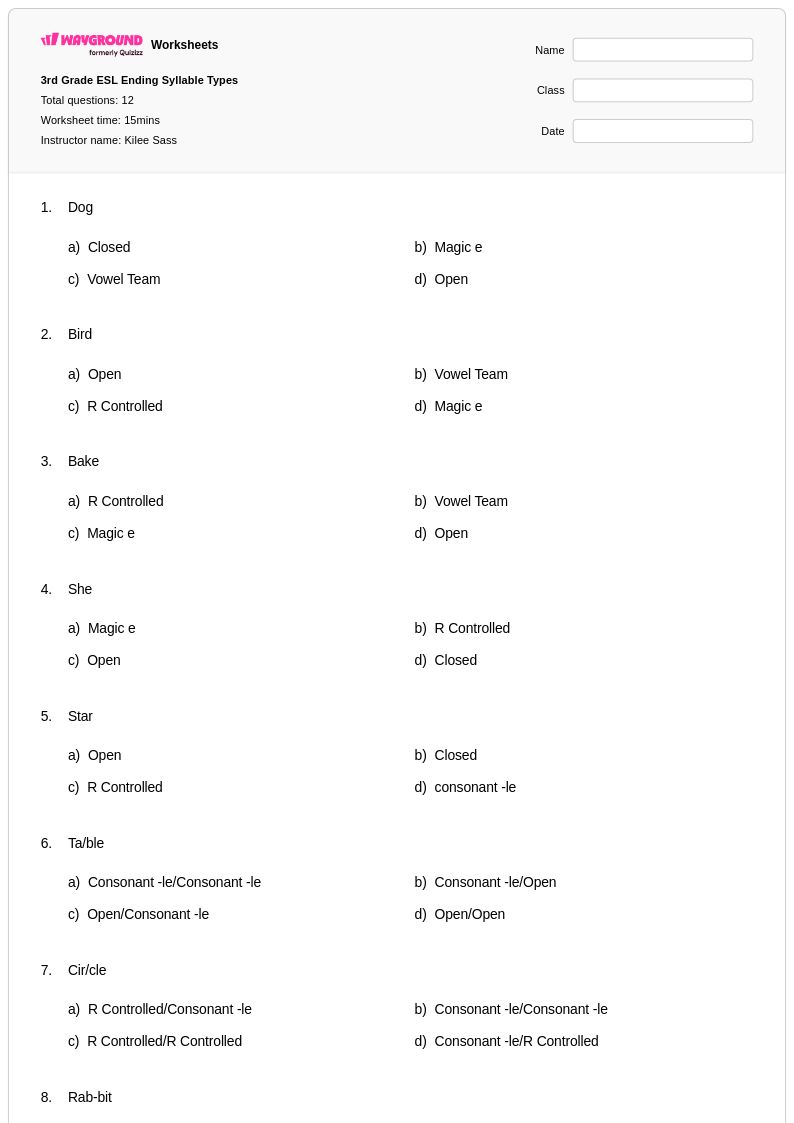
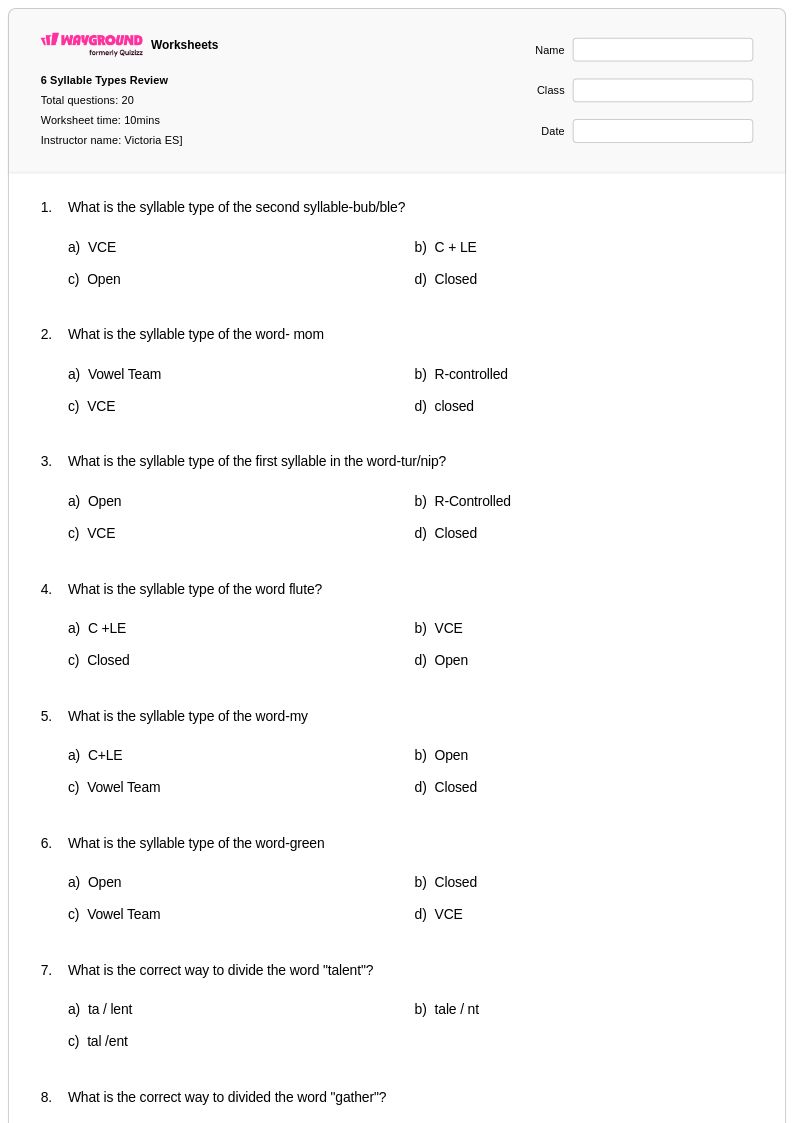
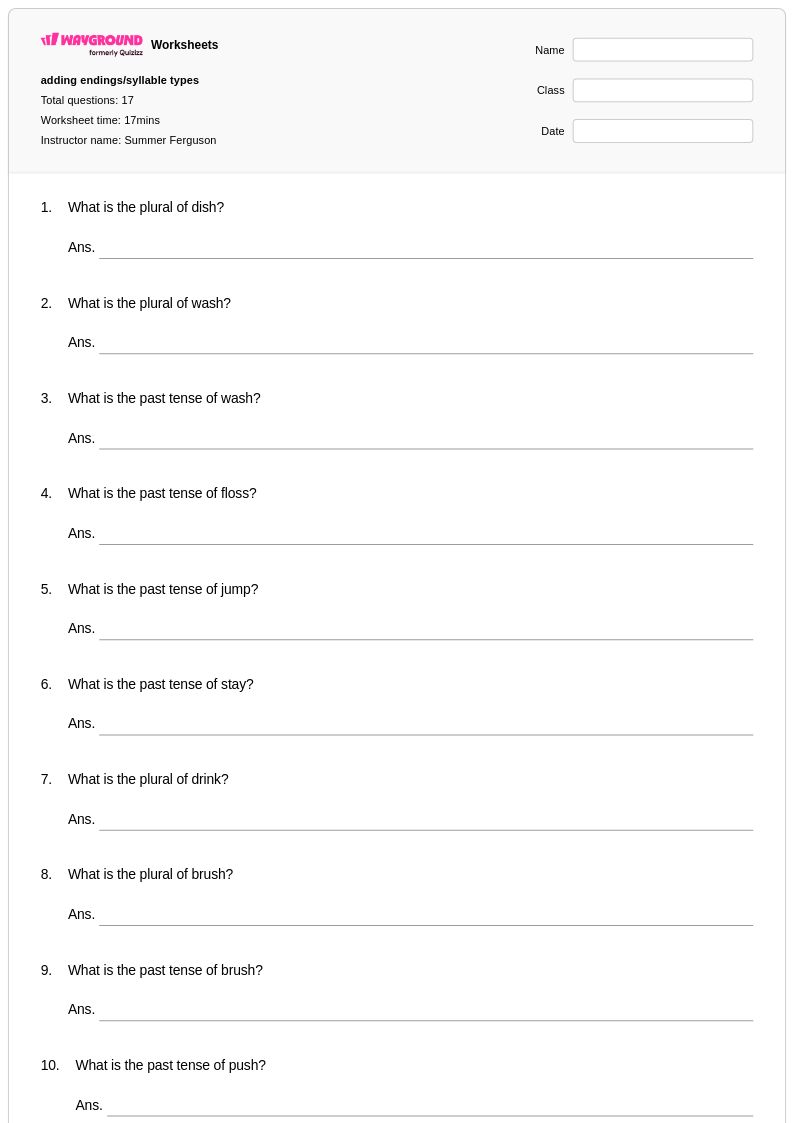
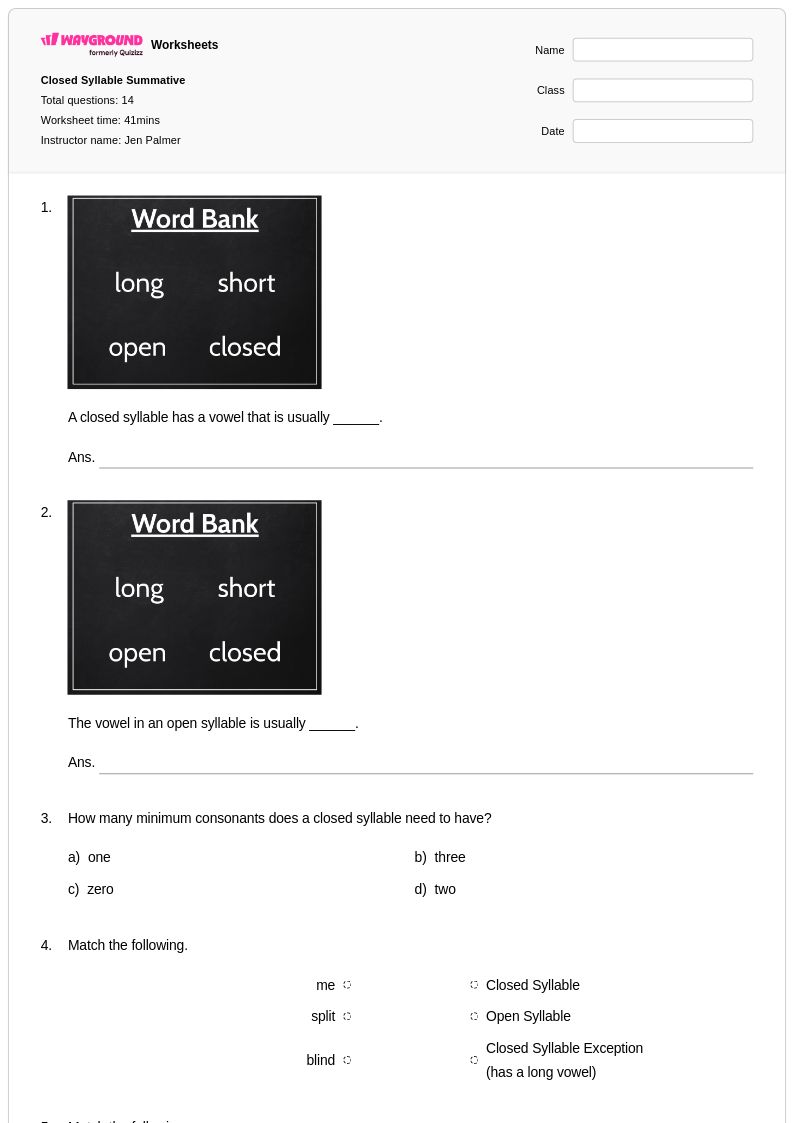
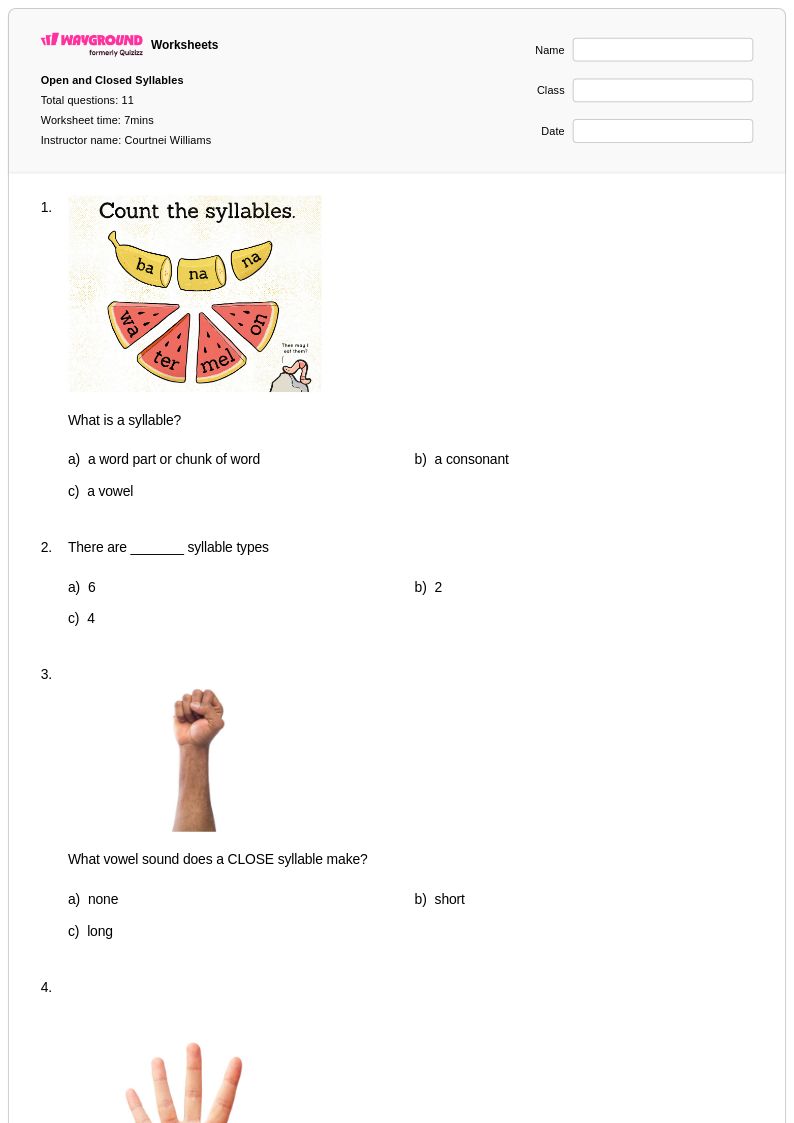
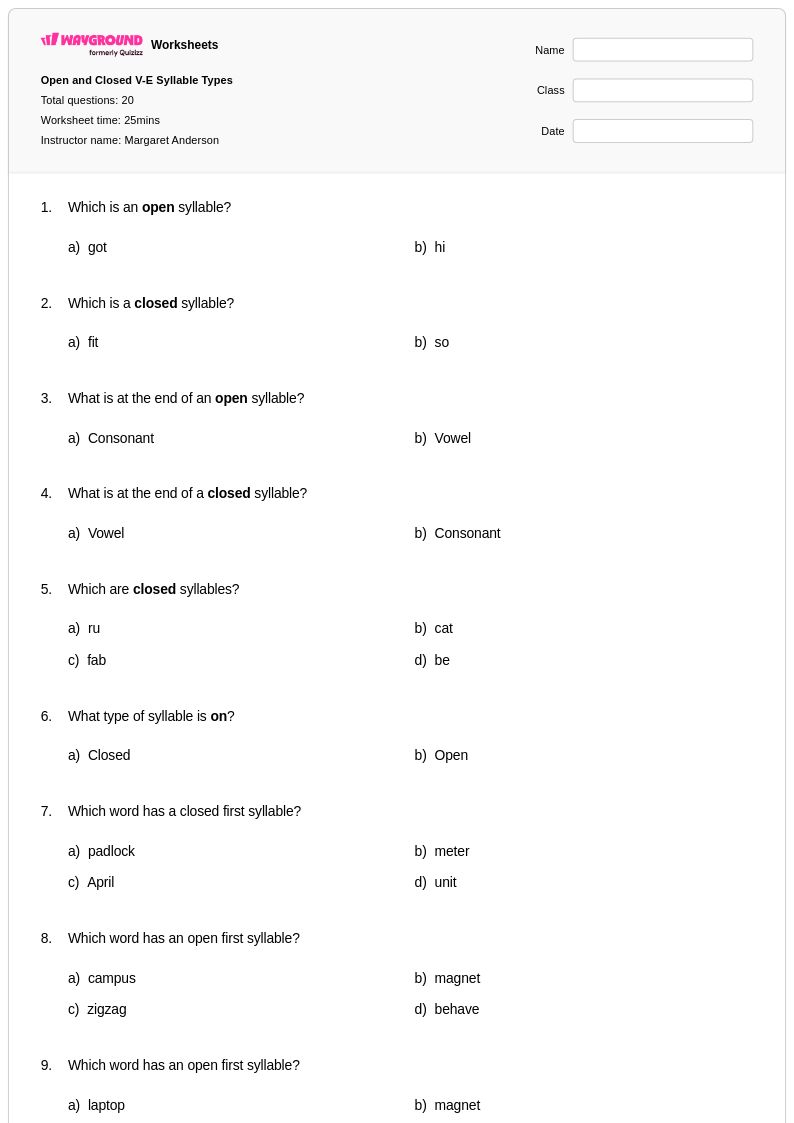
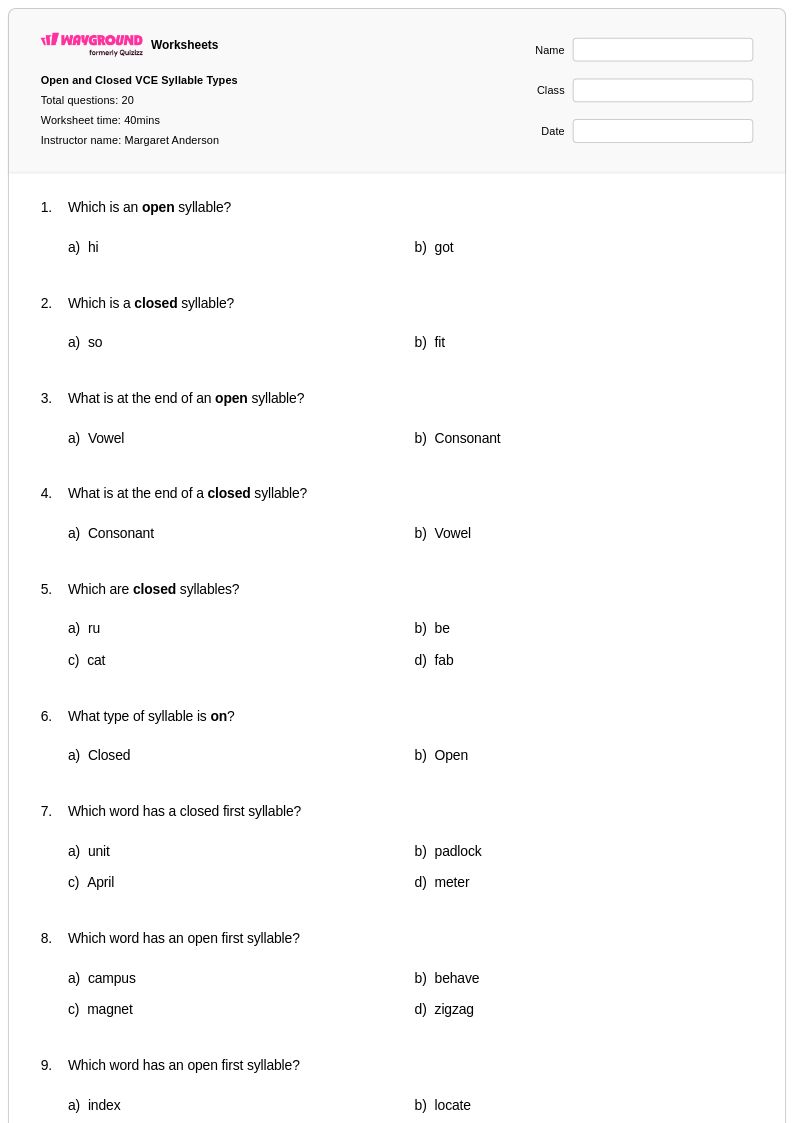
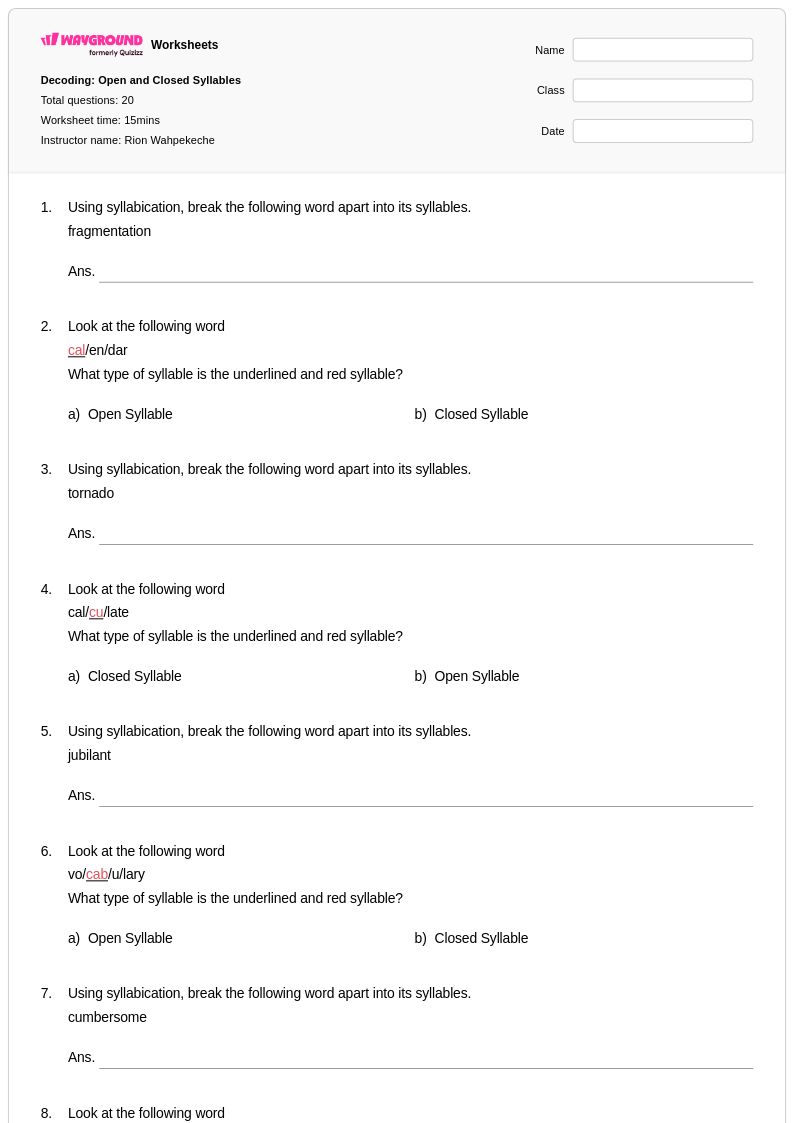
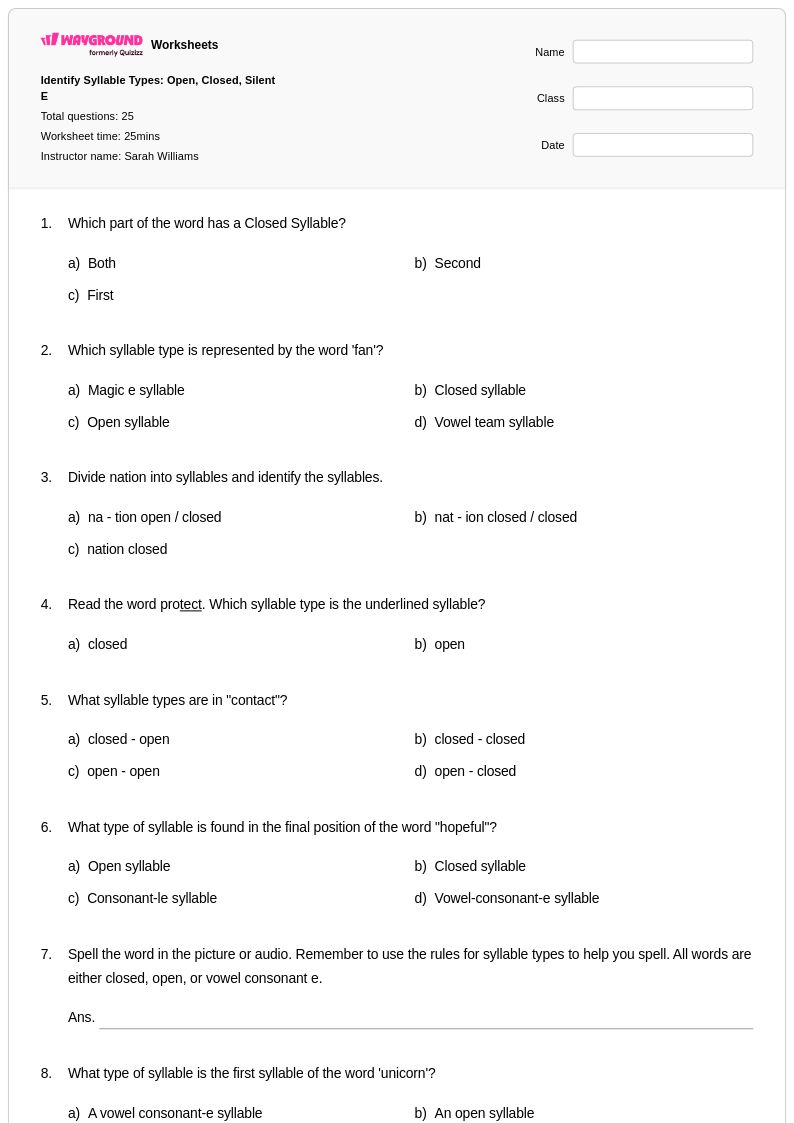
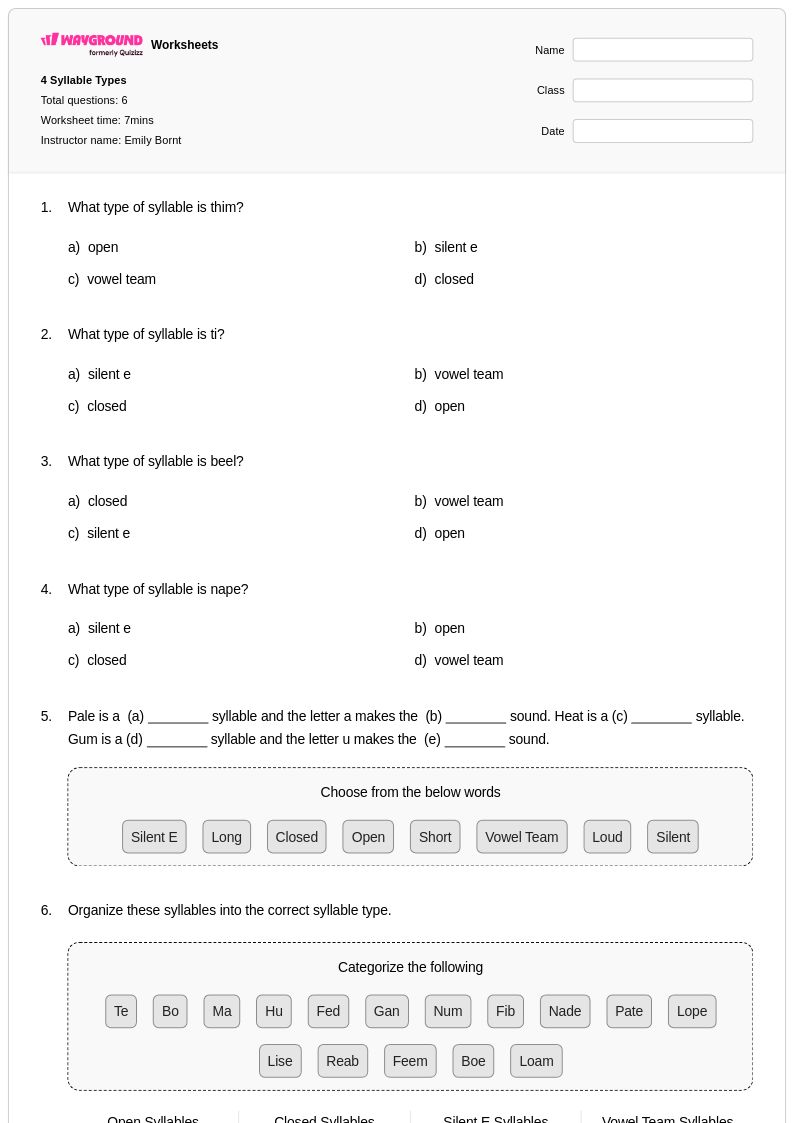
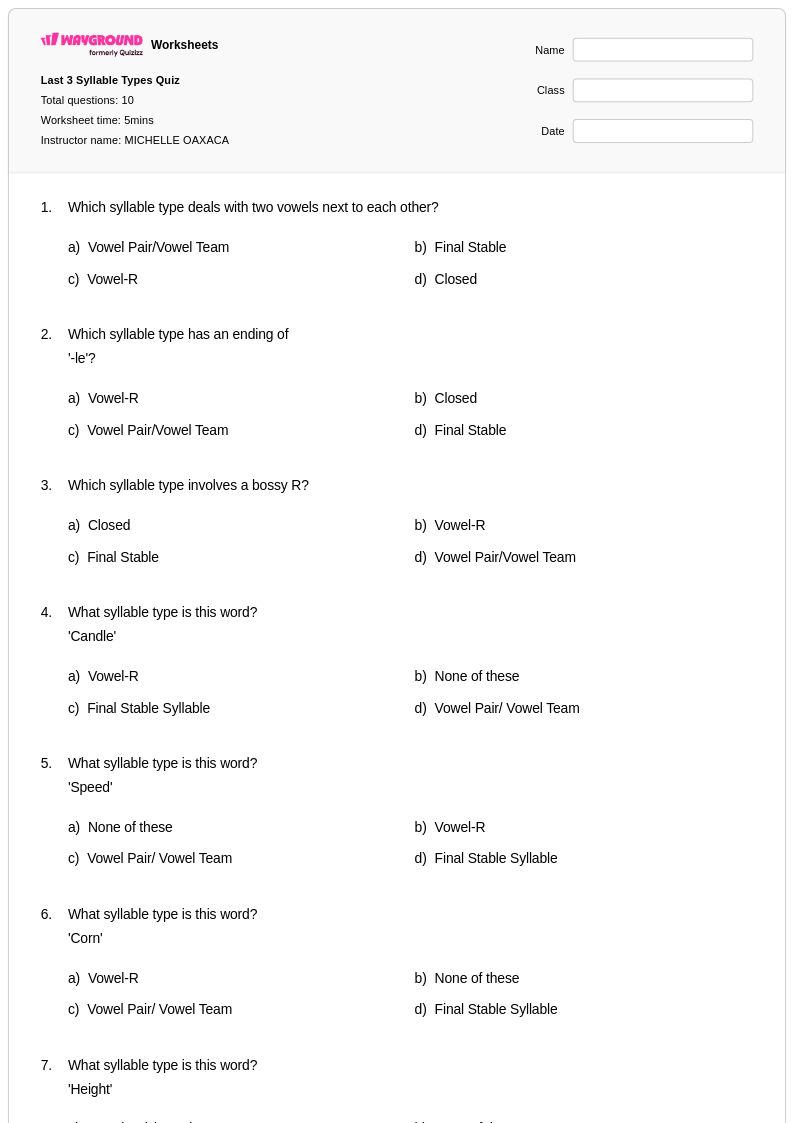
Syllable types worksheets for kindergarten students through Wayground (formerly Quizizz) provide foundational phonemic awareness instruction that builds essential reading readiness skills. These comprehensive printables introduce young learners to the fundamental concept that words are composed of distinct sound units, helping them recognize and identify different syllable patterns through engaging practice problems. The worksheets systematically guide kindergarten students through various syllable types, including closed syllables with short vowel sounds, open syllables with long vowel sounds, and consonant-le syllables, using age-appropriate vocabulary and visual supports. Each free resource includes detailed answer keys that enable teachers to quickly assess student understanding, while the pdf format ensures consistent formatting for both classroom instruction and independent practice at home.
Wayground (formerly Quizizz) empowers educators with access to millions of teacher-created syllable types resources specifically designed for kindergarten literacy instruction, featuring robust search and filtering capabilities that align with state reading standards and developmental milestones. The platform's differentiation tools allow teachers to customize worksheets based on individual student needs, providing multiple complexity levels within the same syllable type concepts to support both remediation for struggling readers and enrichment for advanced learners. These flexible resources are available in both printable and digital formats, including downloadable pdfs, enabling seamless integration into diverse instructional settings and learning modalities. Teachers can efficiently plan comprehensive phonics lessons, target specific skill gaps during small group instruction, and provide meaningful practice opportunities that strengthen students' syllable recognition abilities as they progress toward fluent reading development.
FAQs
How do I teach the six syllable types to elementary students?
Teach syllable types by introducing each pattern explicitly and in sequence, starting with closed syllables (short vowels blocked by a consonant) and open syllables (ending in a long vowel), then progressing to vowel-consonant-e, vowel teams, r-controlled, and consonant-le patterns. Use color-coding to help students visually distinguish syllable boundaries and vowel sounds within words. Anchor each new type with a high-frequency keyword — for example, 'hop' for closed and 'go' for open — so students have a concrete reference when decoding unfamiliar words. Systematic, cumulative instruction is most effective: review previous types before introducing new ones.
What exercises help students practice identifying syllable types?
Effective practice exercises include syllable sorting tasks where students categorize words by type, word-building activities that require students to construct multi-syllabic words using known patterns, and marking or labeling exercises where students annotate the syllable type within a word. Structured worksheets that progress from single-syllable identification to multi-syllabic word analysis build both accuracy and automaticity. Repeated, low-stakes practice with immediate feedback is key to helping students apply syllable knowledge during independent reading and spelling.
What mistakes do students commonly make when identifying syllable types?
The most common errors involve confusing open and closed syllables — students frequently mark a syllable as closed even when the vowel is the final letter and should be long. Students also struggle to correctly identify r-controlled syllables, often misclassifying them as closed because a consonant follows the vowel. Vowel teams and vowel-consonant-e patterns are frequently conflated when words contain both a vowel pair and a final e. Consistent exposure to contrasting word pairs and error-correction practice helps students internalize the distinctions.
How can I differentiate syllable types instruction for struggling readers?
For struggling readers, narrow the focus to one or two syllable types at a time rather than presenting all six simultaneously, and use decodable word lists that isolate the target pattern. On Wayground, teachers can apply individual accommodations such as Read Aloud, which reads questions and content aloud, and reduced answer choices, which lowers cognitive load by displaying fewer options — both configurable per student without notifying the rest of the class. Extended time can also be assigned to specific students to reduce anxiety during timed practice. These settings are saved and reusable across future sessions, making differentiated phonics instruction easier to manage at scale.
How do I use syllable types worksheets in my classroom?
Syllable types worksheets on Wayground are available as printable PDFs for traditional classroom use and in digital formats for technology-integrated environments, including the option to host them as a quiz directly on Wayground. Printable versions work well for guided small-group instruction or independent seat work, while digital formats allow for real-time progress monitoring. Each worksheet includes a complete answer key, so teachers can use them for immediate whole-class review or student self-correction. Wayground's search and filtering tools let teachers locate materials aligned to specific phonics standards and student ability levels quickly.
At what reading level should I introduce the six syllable types?
Syllable type instruction is most commonly introduced in first and second grade as part of systematic phonics programs, beginning with closed and open syllables before layering in more complex patterns. Students who are reading at a late kindergarten or early first-grade level and have mastered consonant-vowel-consonant decoding are generally ready to begin. Multi-syllabic word analysis using all six types is typically formalized in second through fourth grade, though older struggling readers at any grade level benefit from explicit re-teaching of these foundational patterns.