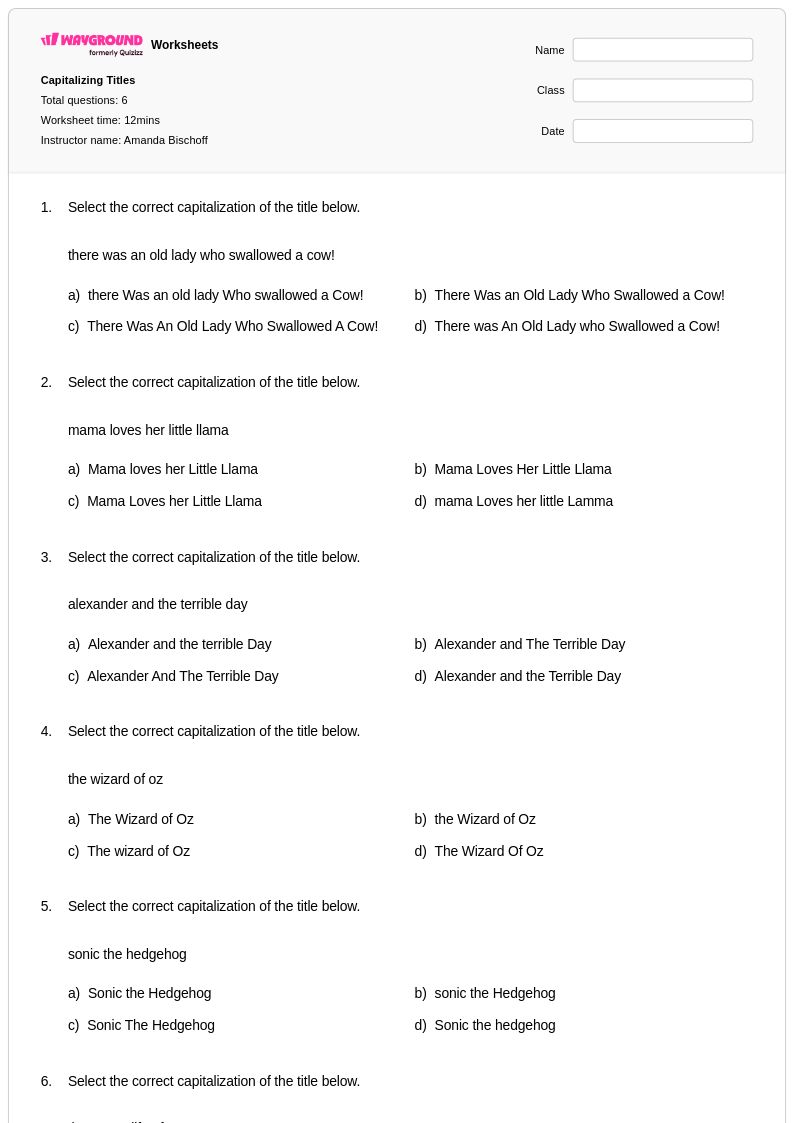
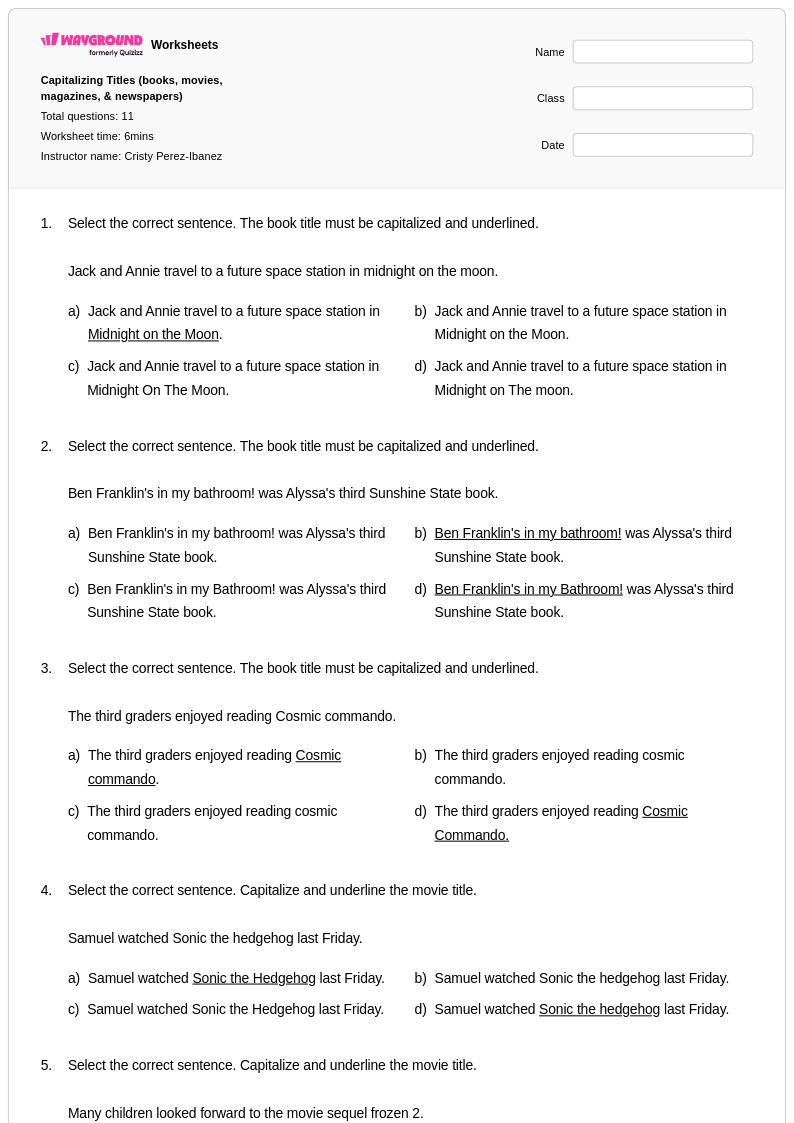
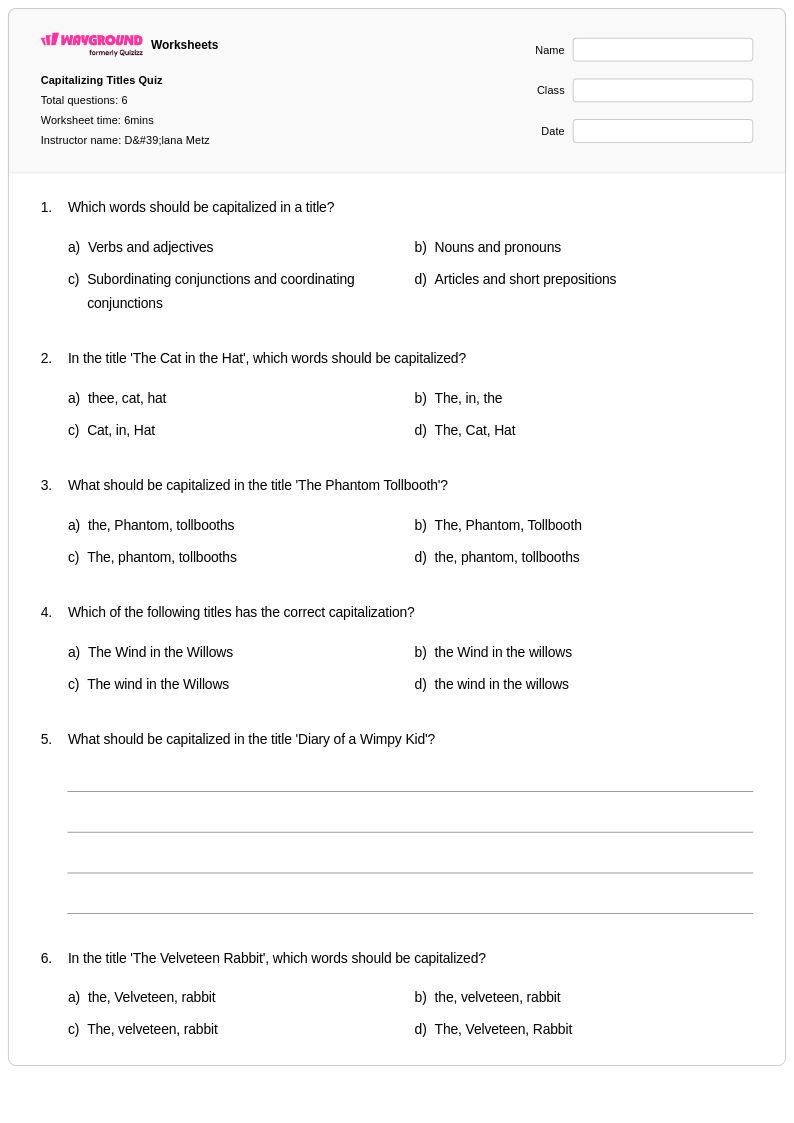
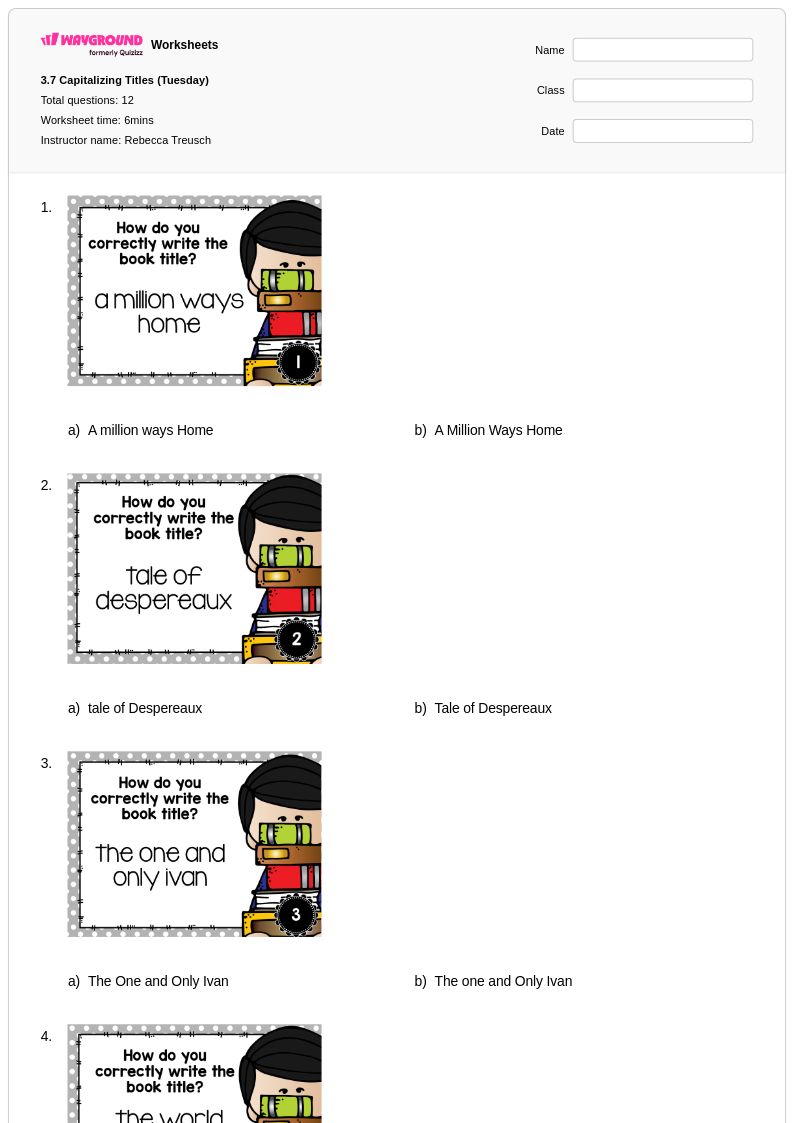
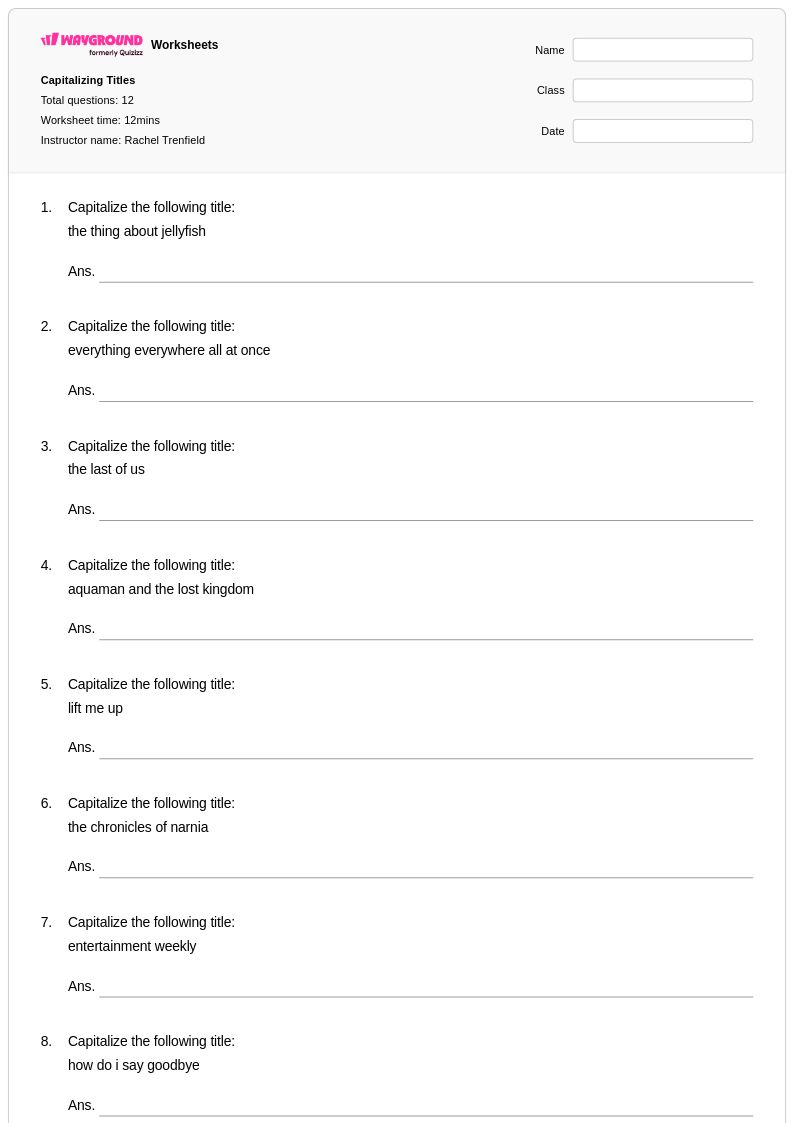
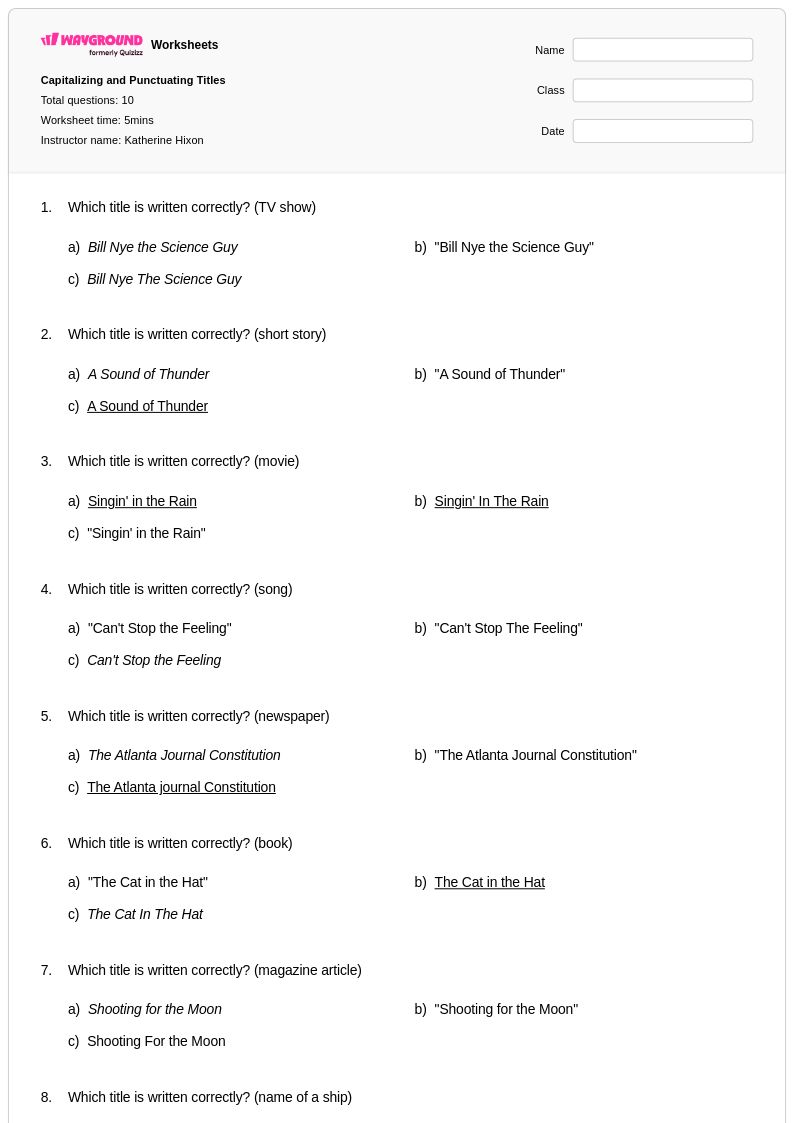
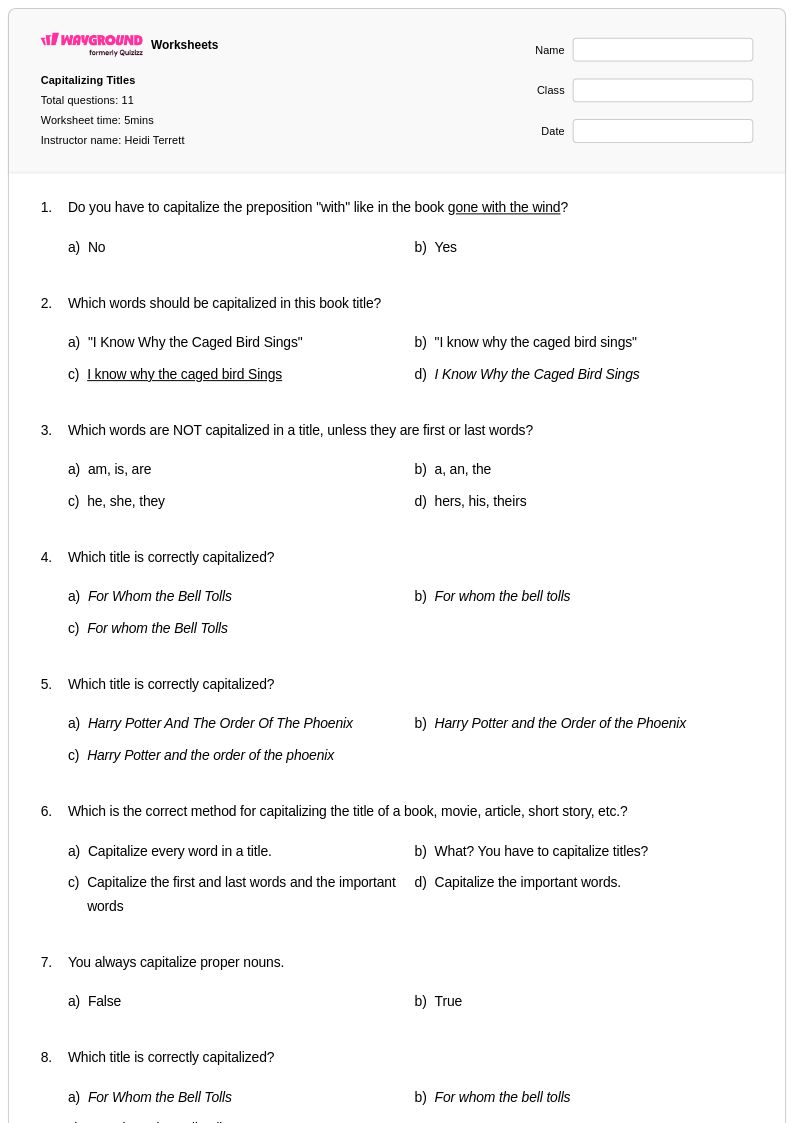
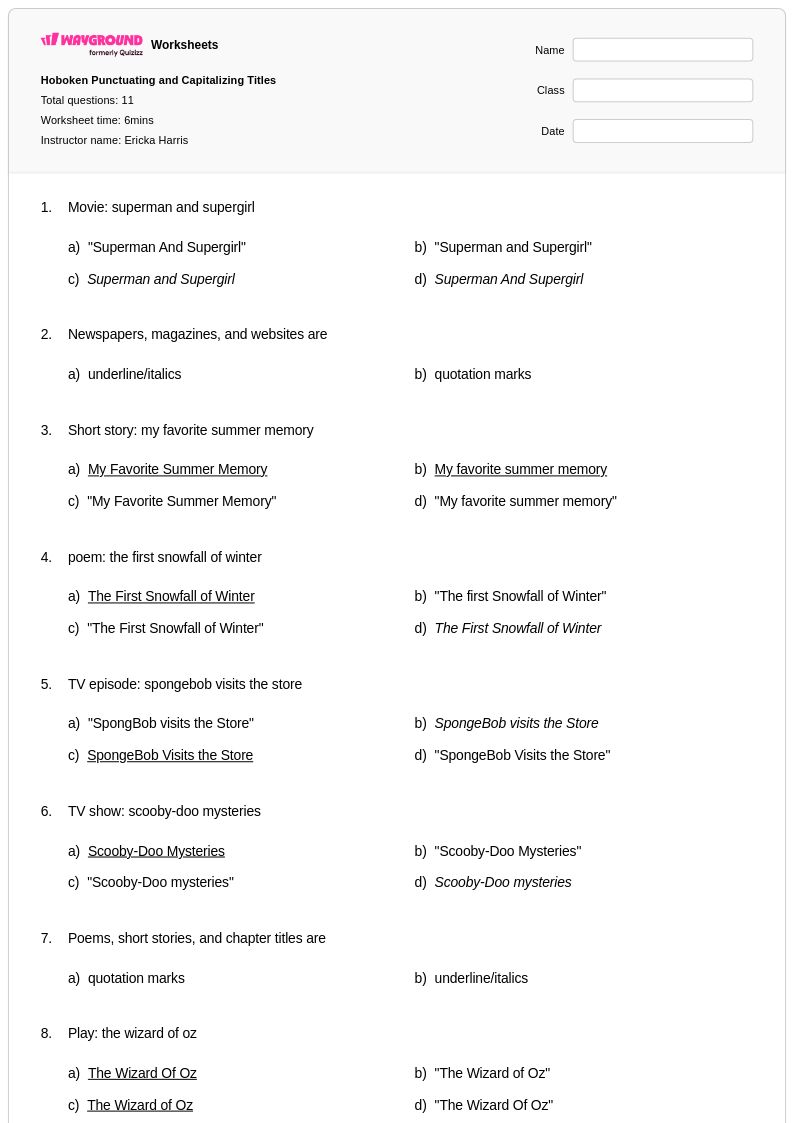
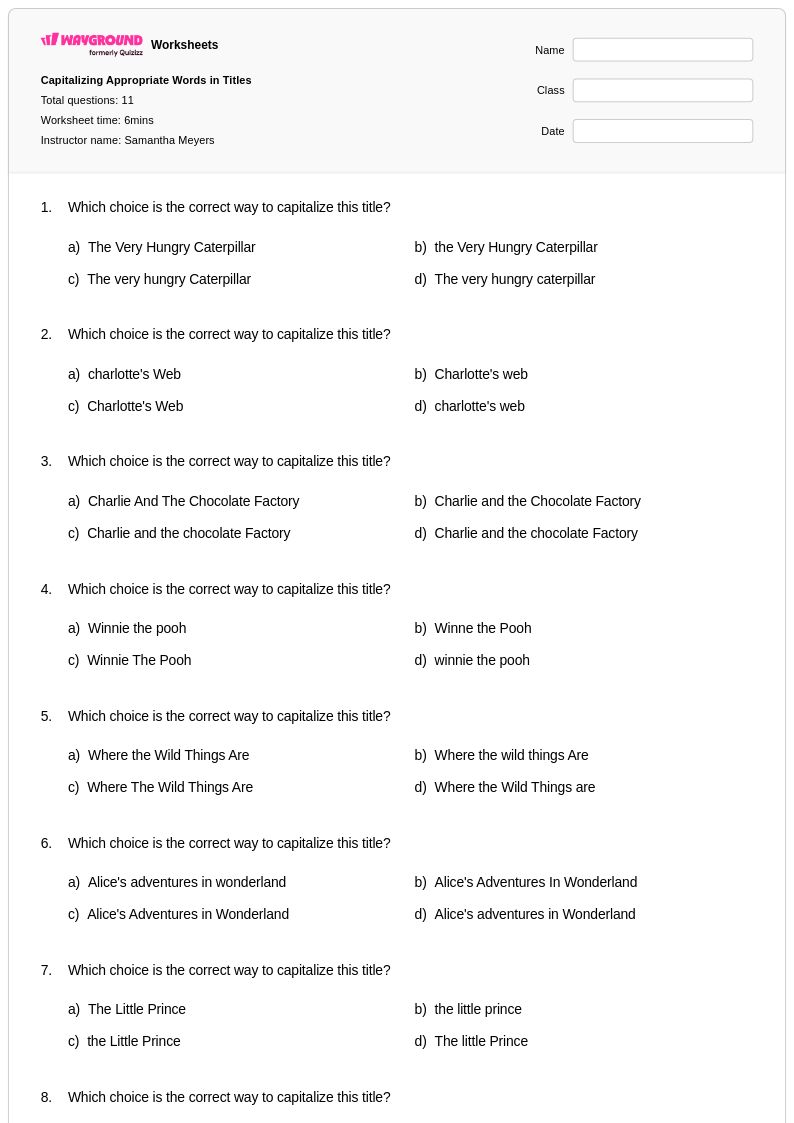
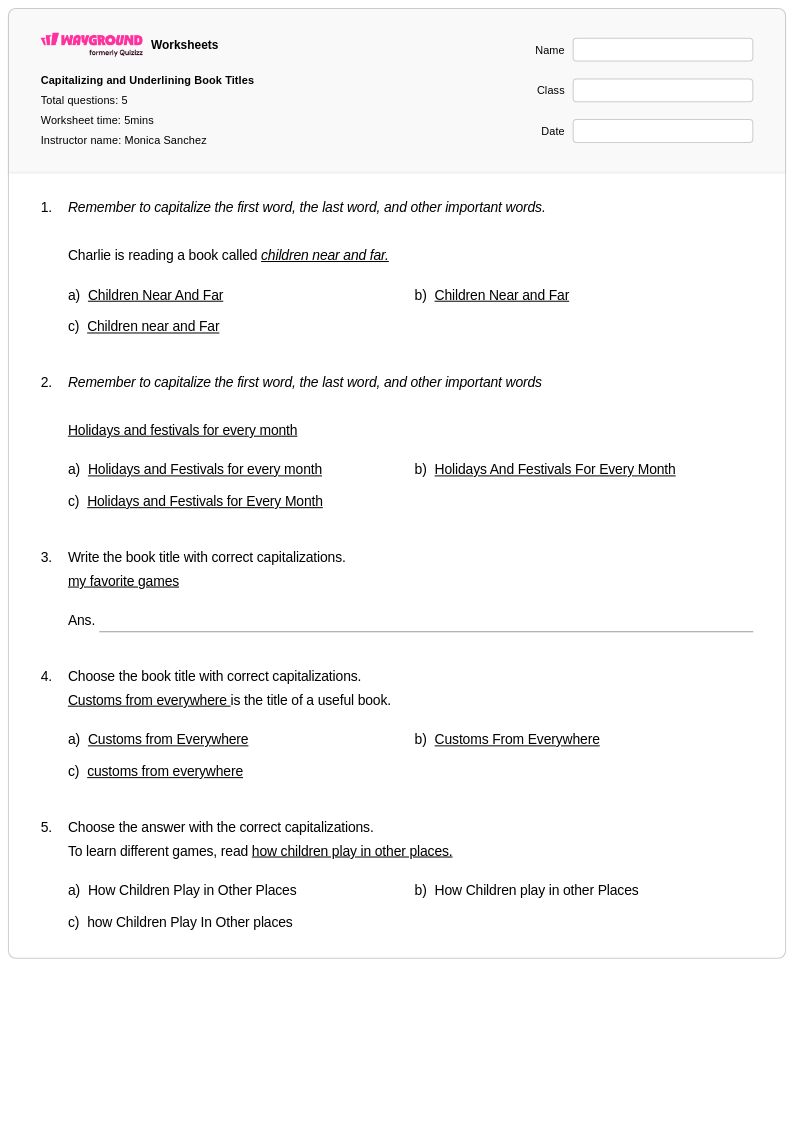
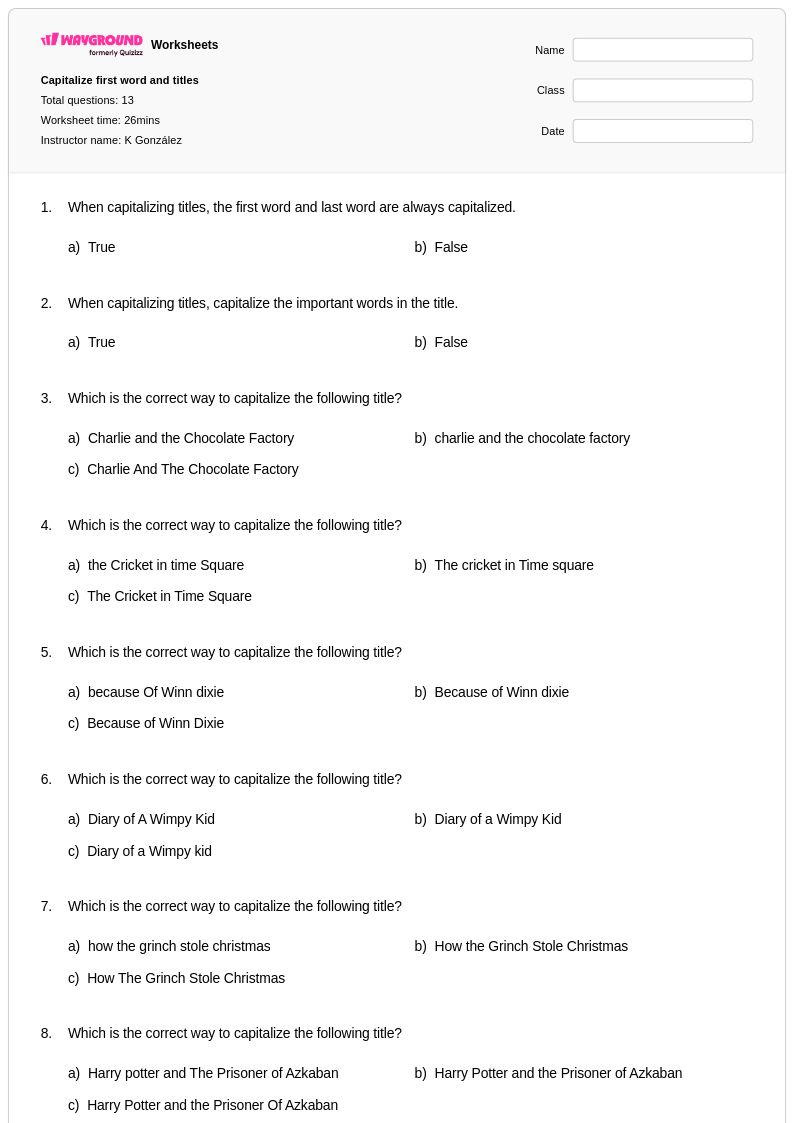
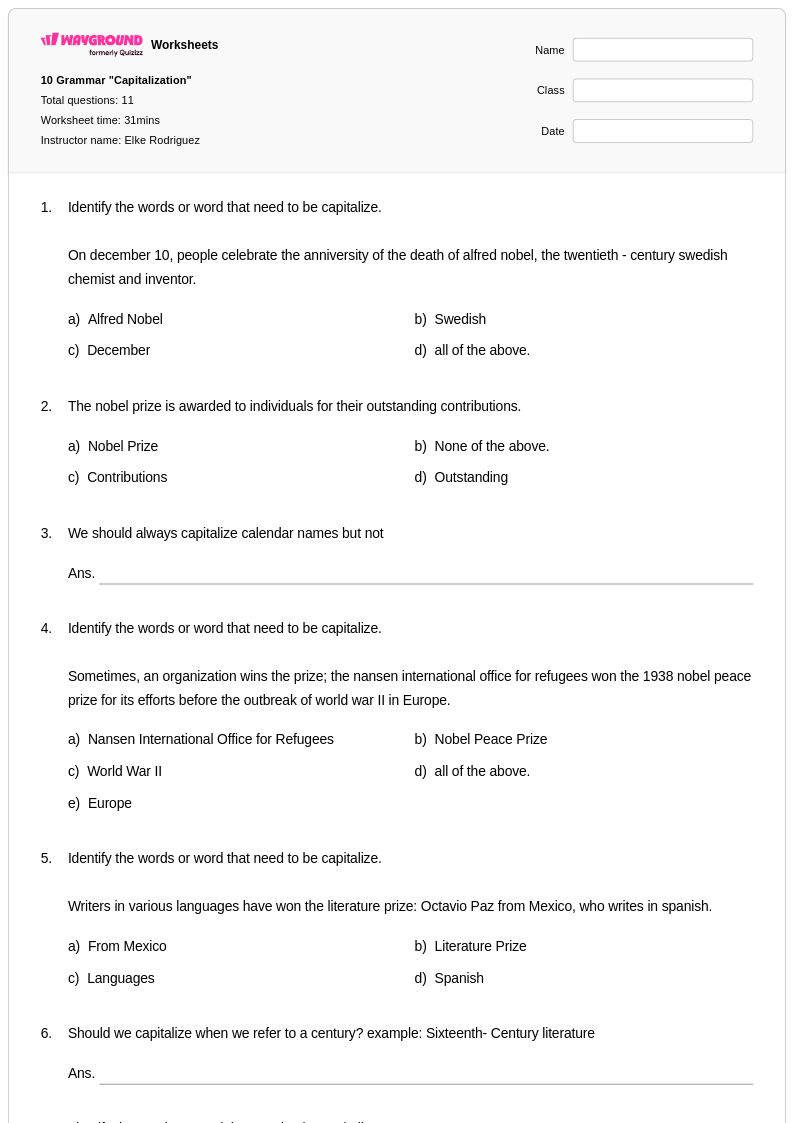
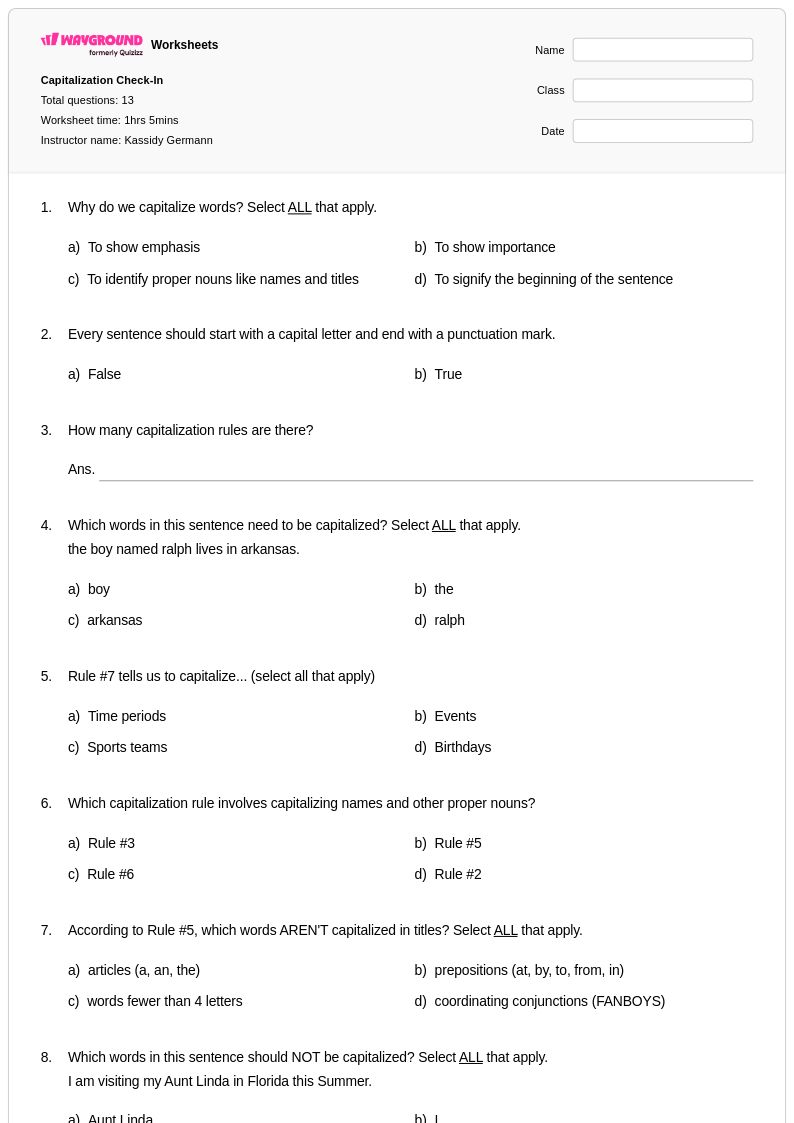
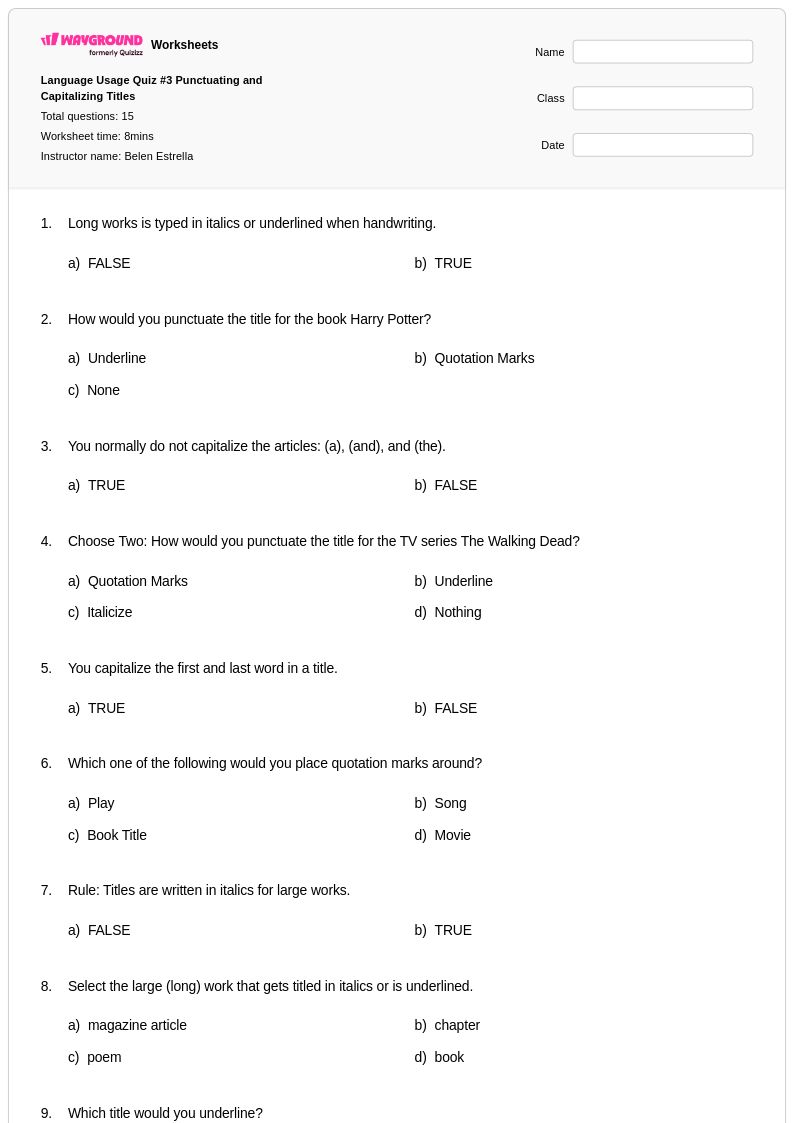
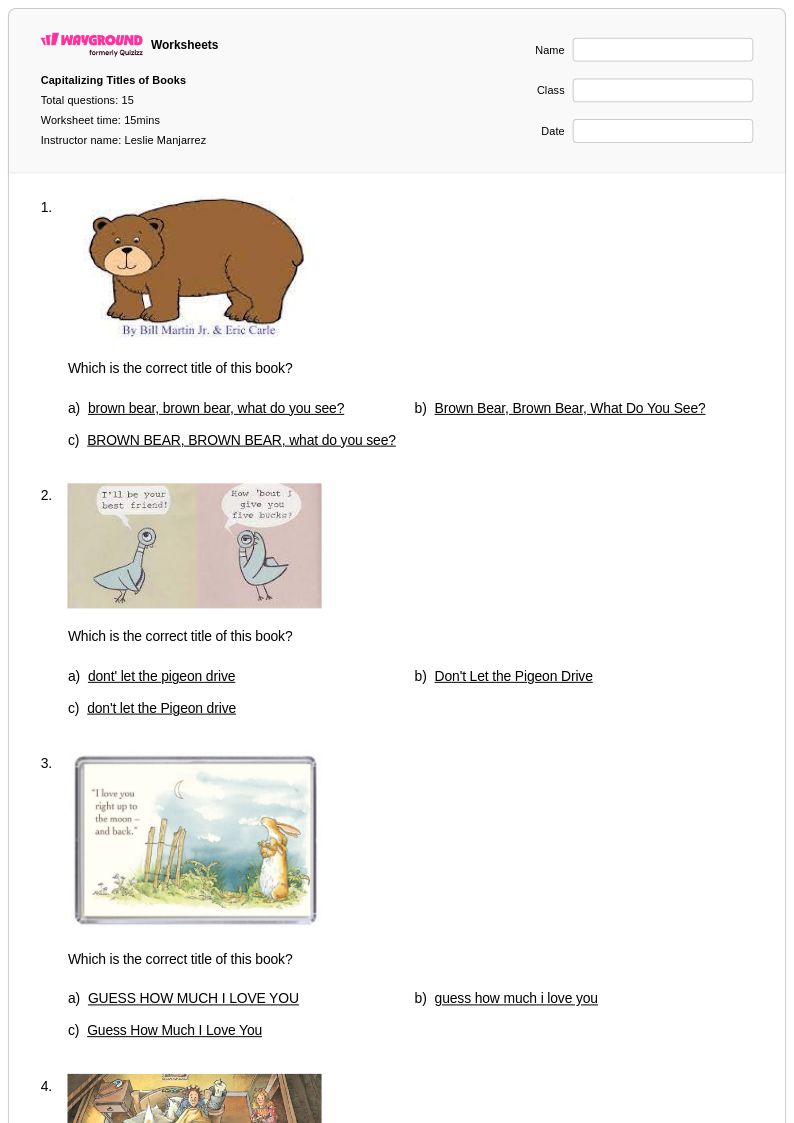
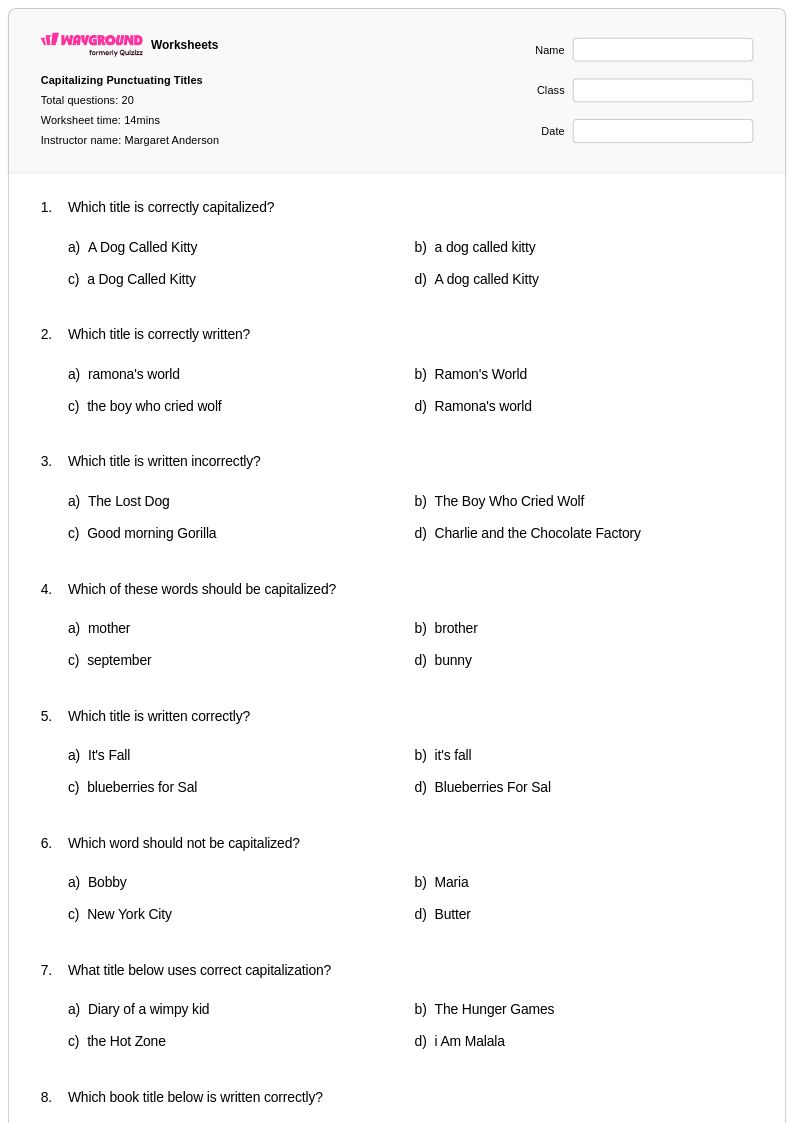
Master capitalizing titles with Wayground's free worksheets and printables that help students practice proper capitalization rules through engaging exercises, complete with answer keys and downloadable PDFs.
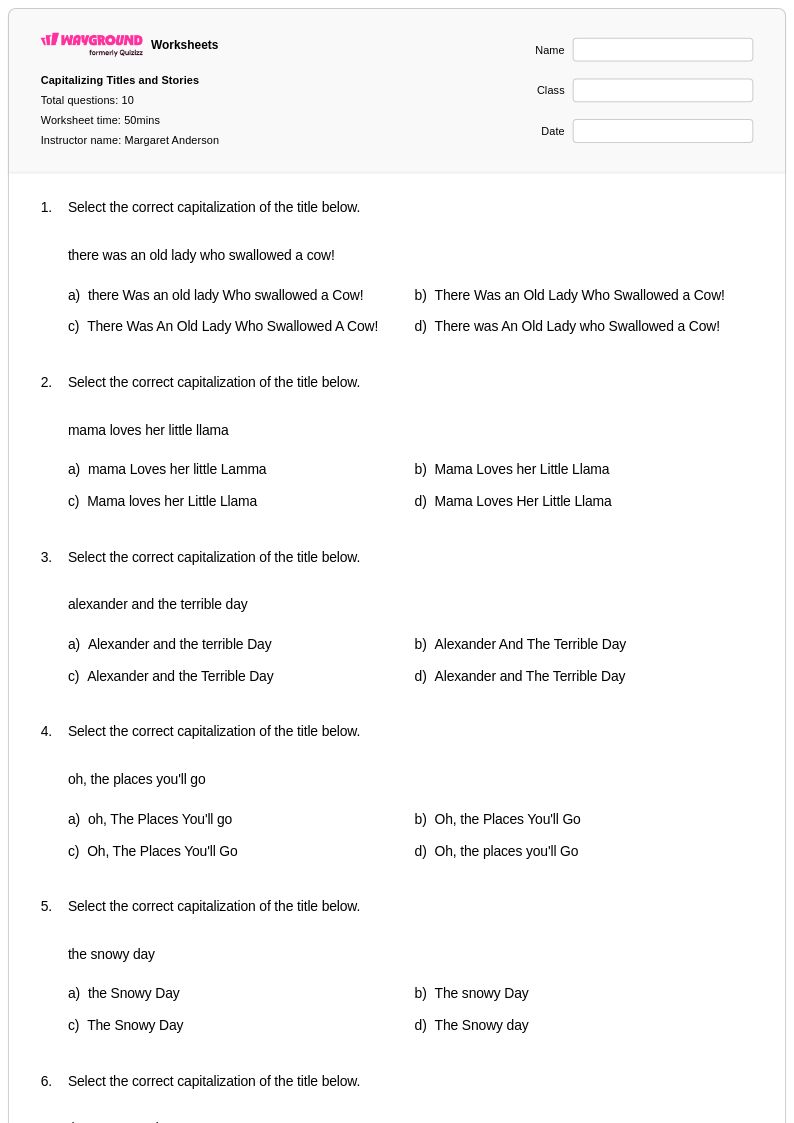
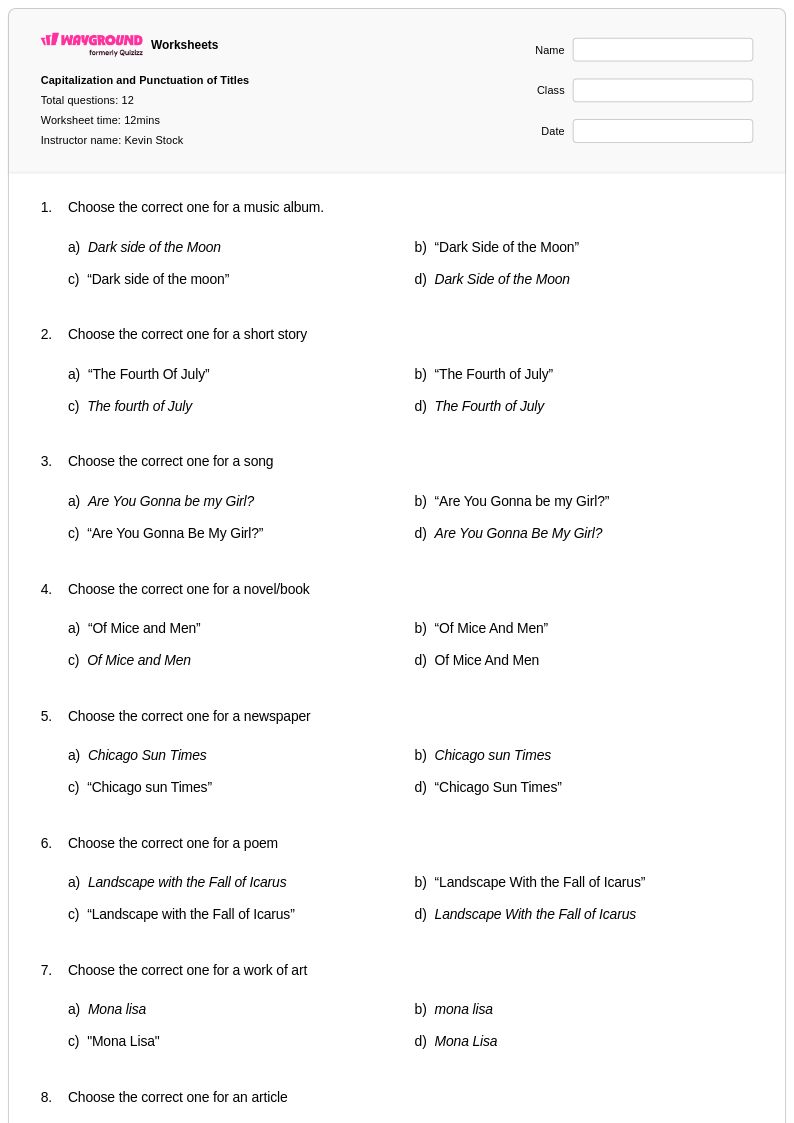
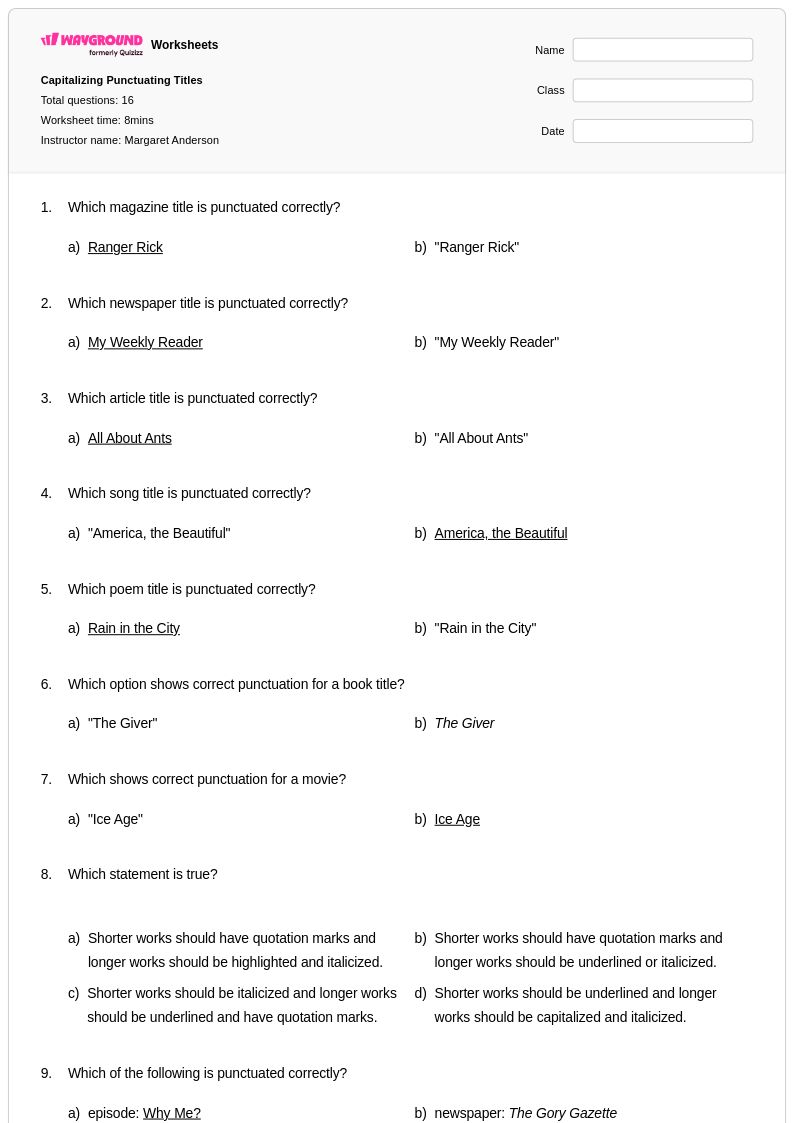
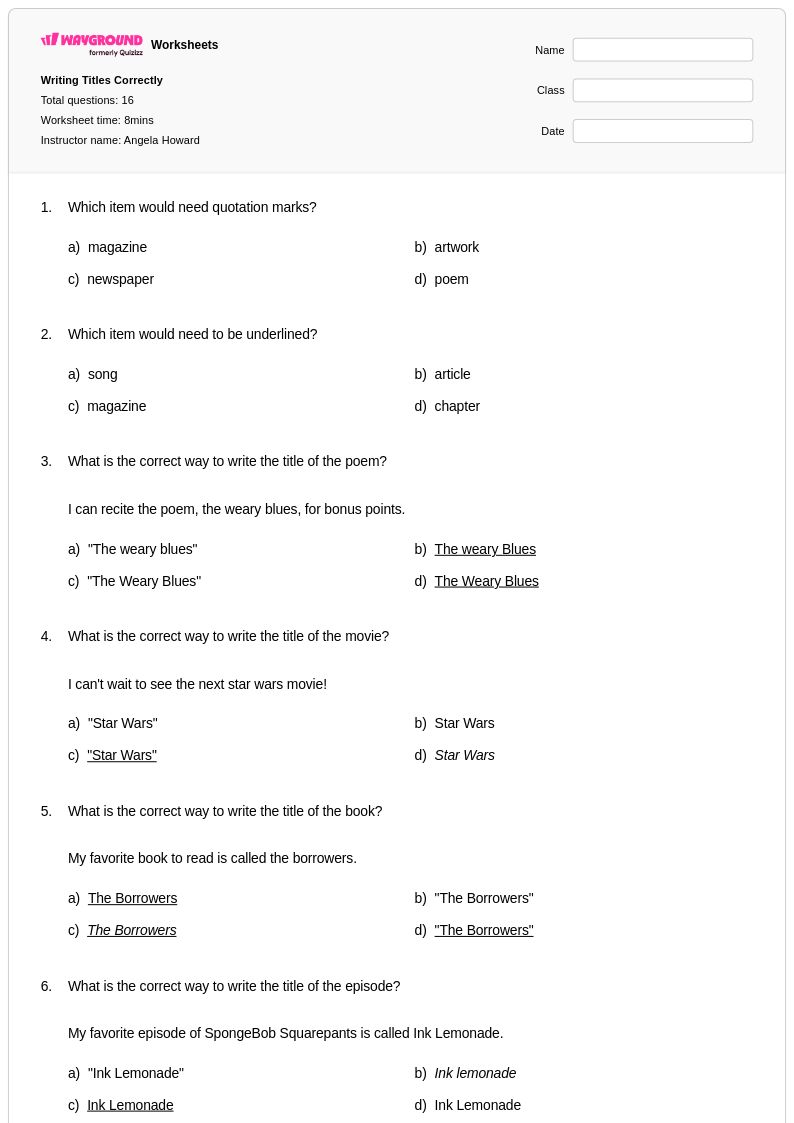
Capitalizing titles represents a fundamental writing skill that students must master to communicate effectively in academic and professional contexts. Wayground's comprehensive collection of capitalizing titles worksheets provides students with systematic practice in applying the complex rules governing title capitalization across various formats, from book titles and movie names to article headlines and song titles. These carefully crafted worksheets strengthen students' understanding of when to capitalize major words while leaving articles, prepositions, and conjunctions in lowercase, helping them develop the precision needed for proper formatting in their written work. Each worksheet includes detailed answer keys and is available as free printable PDFs, making it simple for educators to incorporate targeted practice problems into their lesson plans while ensuring students receive immediate feedback on their capitalization decisions.
Wayground formerly Quizizz empowers teachers with an extensive library of millions of teacher-created resources specifically designed to support capitalizing titles instruction across diverse learning environments. The platform's robust search and filtering capabilities enable educators to quickly locate worksheets that align with curriculum standards and match their students' specific skill levels, while built-in differentiation tools allow for seamless customization to meet individual learning needs. Teachers can access these capitalizing titles worksheets in both printable and digital PDF formats, providing flexibility for classroom instruction, homework assignments, or remote learning scenarios. This comprehensive approach supports effective lesson planning by offering resources for initial skill introduction, targeted remediation for struggling students, and enrichment opportunities for advanced learners, ensuring that all students develop confidence in applying proper title capitalization conventions across various writing contexts.
FAQs
How do I teach capitalization rules for titles to my students?
Start by establishing the core rule: capitalize the first and last word of any title, plus all major words including nouns, verbs, adjectives, and adverbs. Then explicitly teach the exceptions — articles (a, an, the), coordinating conjunctions (and, but, or), and short prepositions (in, on, at) are lowercase unless they appear first or last. Using mentor texts like familiar book titles and movie names gives students concrete examples to analyze before they apply the rules independently.
What exercises help students practice capitalizing titles correctly?
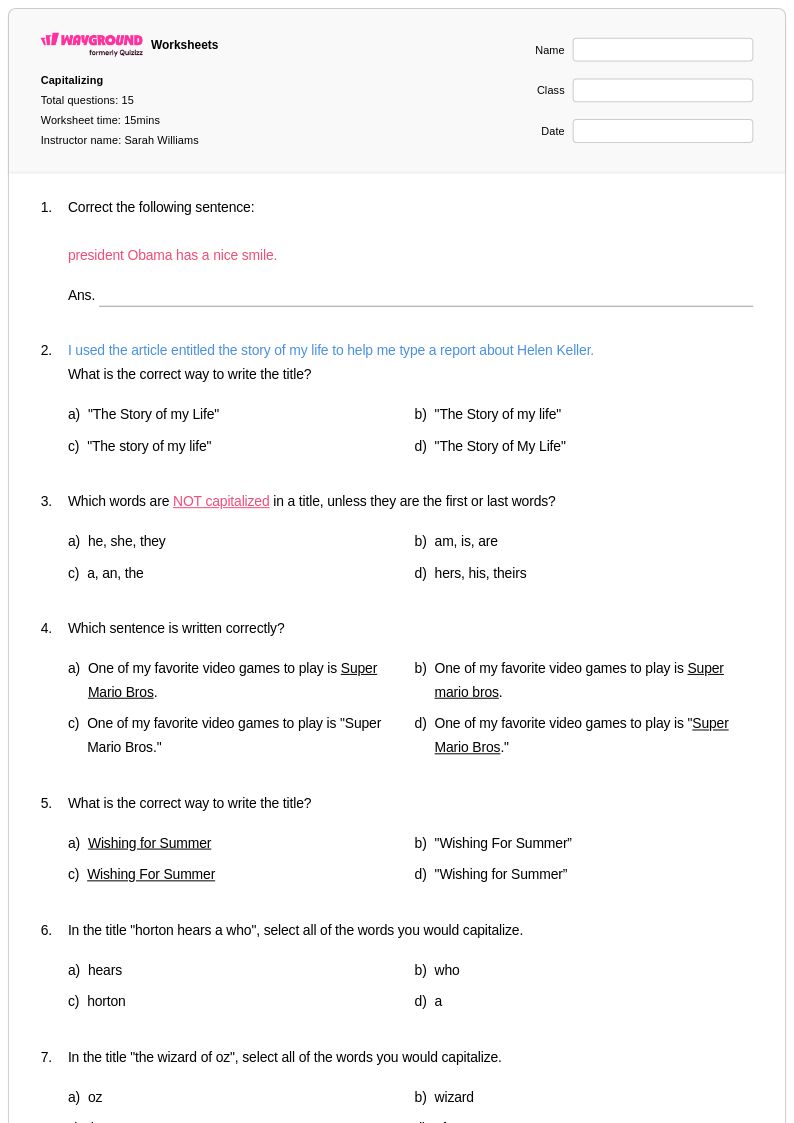
The most effective practice exercises present students with incorrectly capitalized titles and ask them to rewrite them correctly, since error-correction tasks force active rule application rather than passive recognition. Exercises that mix title formats — book titles, song names, article headlines, and movie titles — help students generalize the rules across contexts. Consistent repetition with immediate feedback, such as answer-key-supported worksheets, builds the automaticity students need to apply these rules in their own writing.
What mistakes do students commonly make when capitalizing titles?
The most frequent error is over-capitalizing: students often capitalize every word in a title, including articles, prepositions, and conjunctions, because it feels more formal or complete. A second common mistake is failing to capitalize short verbs like 'is' or 'are,' which students sometimes treat as minor words. Students also struggle with prepositions of five or more letters, such as 'between' or 'through,' which should be capitalized but are often left lowercase by analogy to shorter prepositions.
How do I use Wayground's capitalizing titles worksheets in my classroom?
Wayground's capitalizing titles worksheets are available as printable PDFs, making them easy to distribute as in-class practice, warm-up activities, or homework assignments. They are also available in digital formats, so teachers can assign them for remote learning or technology-integrated classrooms, and can even be hosted as a quiz directly on Wayground. Each worksheet includes a complete answer key, allowing students to self-check their work or enabling teachers to provide efficient, targeted feedback.
How do I differentiate capitalizing titles instruction for students at different skill levels?
For students who are still building foundational understanding, reduce cognitive load by starting with titles that have clear-cut cases and no ambiguous prepositions before introducing edge cases. On Wayground, teachers can apply accommodations such as reduced answer choices for students who need additional support, or enable read-aloud features for students who benefit from hearing the title read aloud before making capitalization decisions. Advanced learners can be challenged with titles from a wider range of formats and style guides, such as comparing AP style to Chicago style capitalization conventions.
At what grade level should students learn the rules for capitalizing titles?
Basic title capitalization — capitalizing the first word and proper nouns — is typically introduced in early elementary grades, around second or third grade. The full set of rules, including lowercase treatment of articles, short prepositions, and coordinating conjunctions, is generally taught and reinforced in upper elementary through middle school, where students are writing research reports, book reviews, and essays that require correctly formatted titles. Review and application continue through high school as writing expectations become more formal.