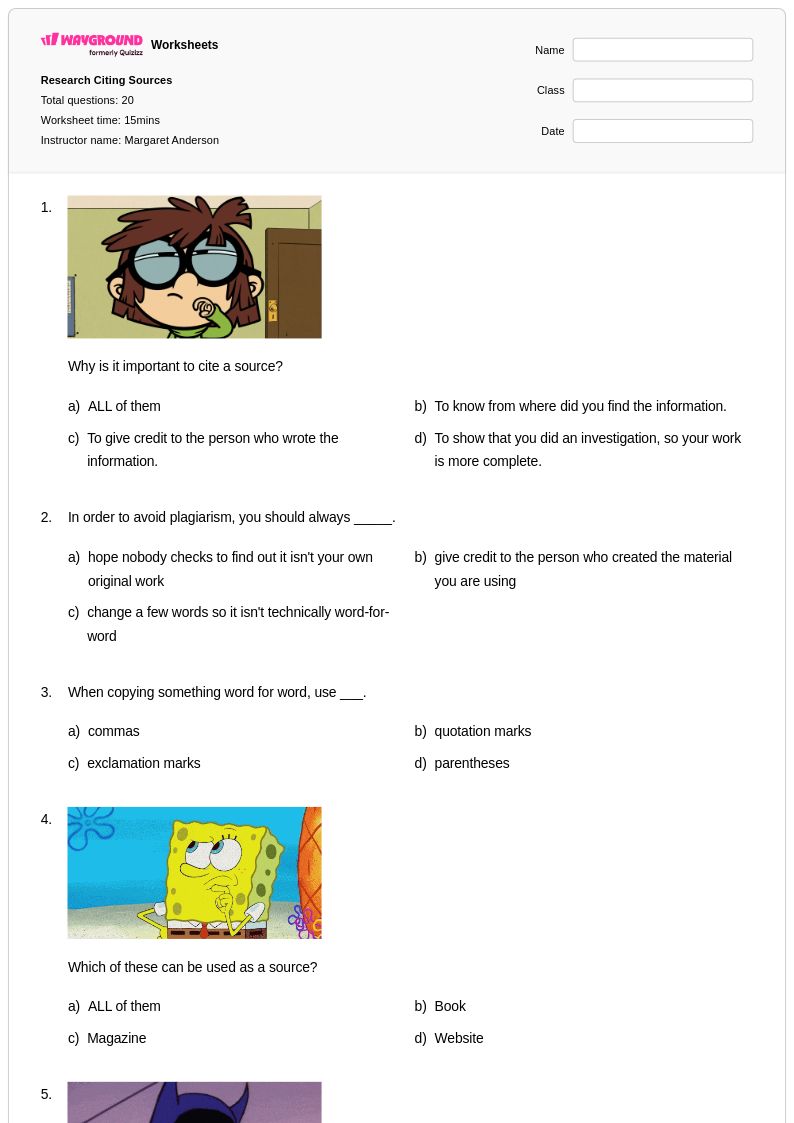
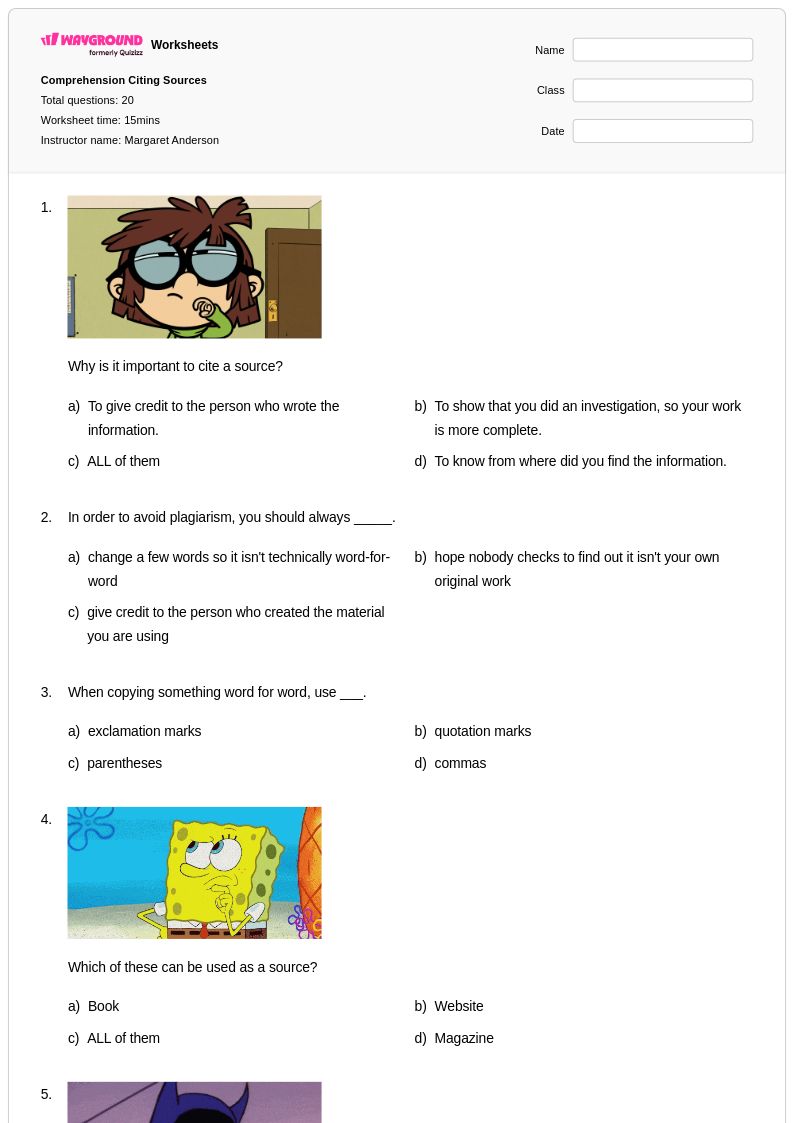
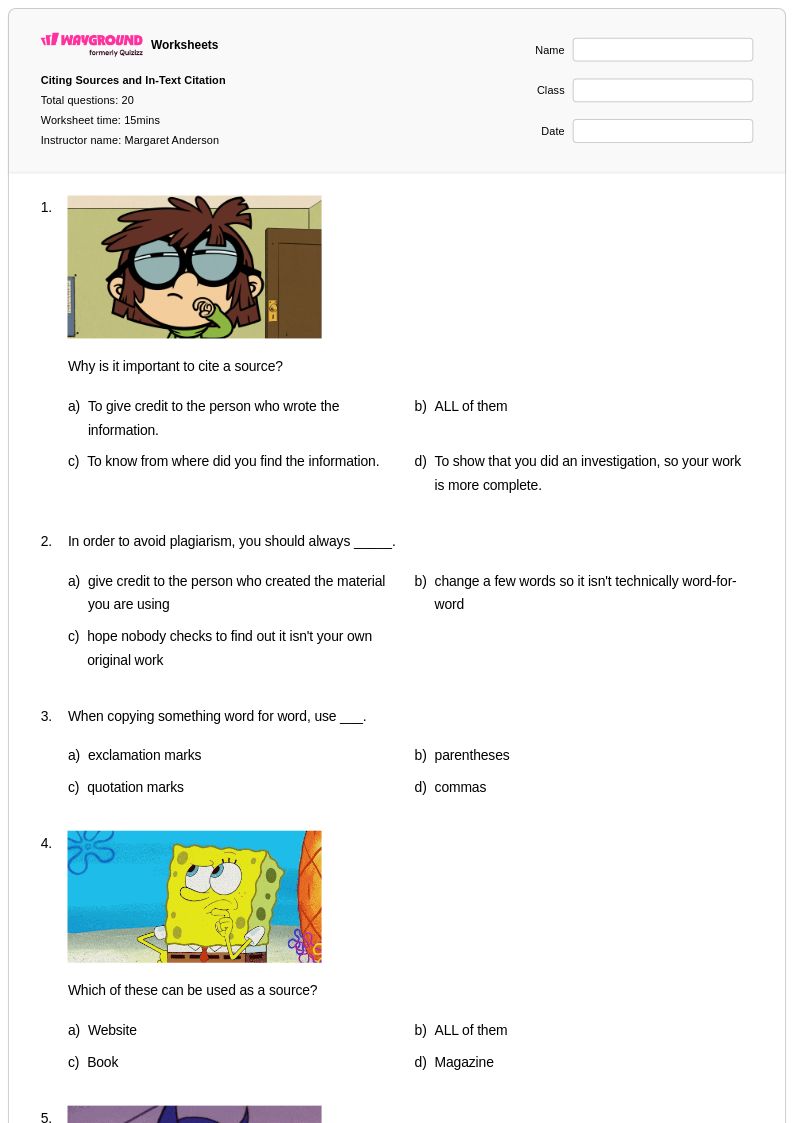
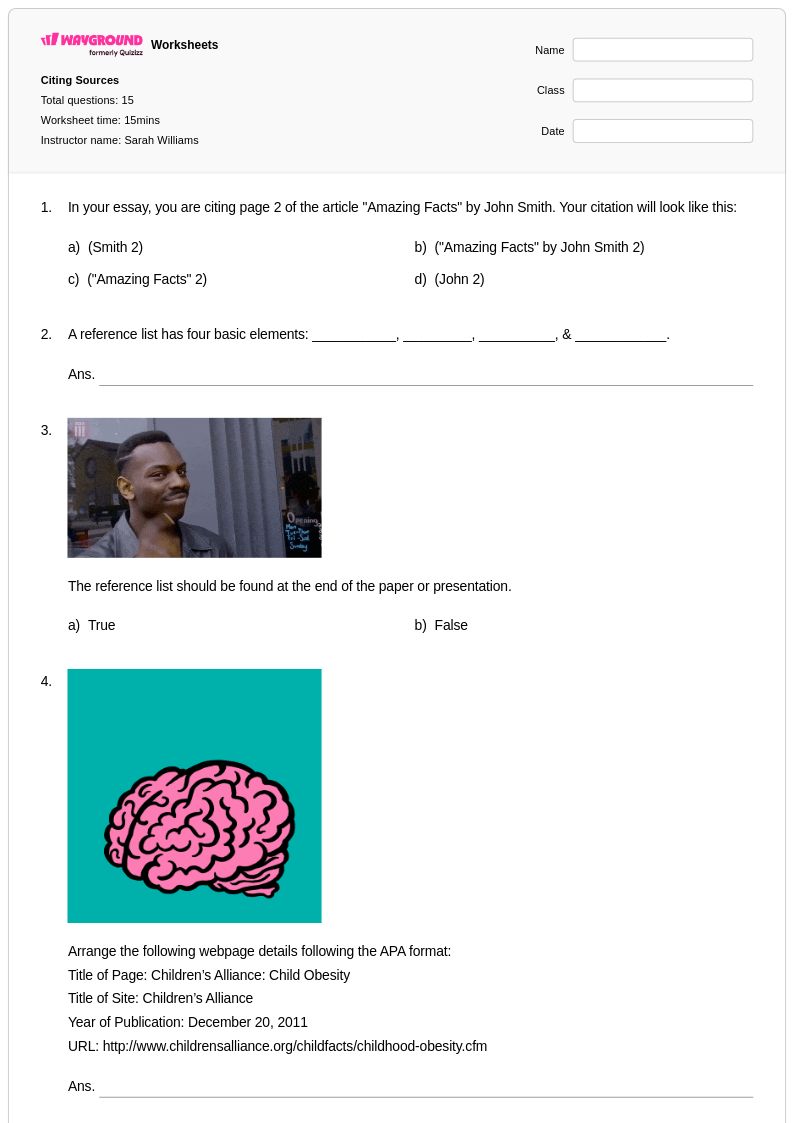
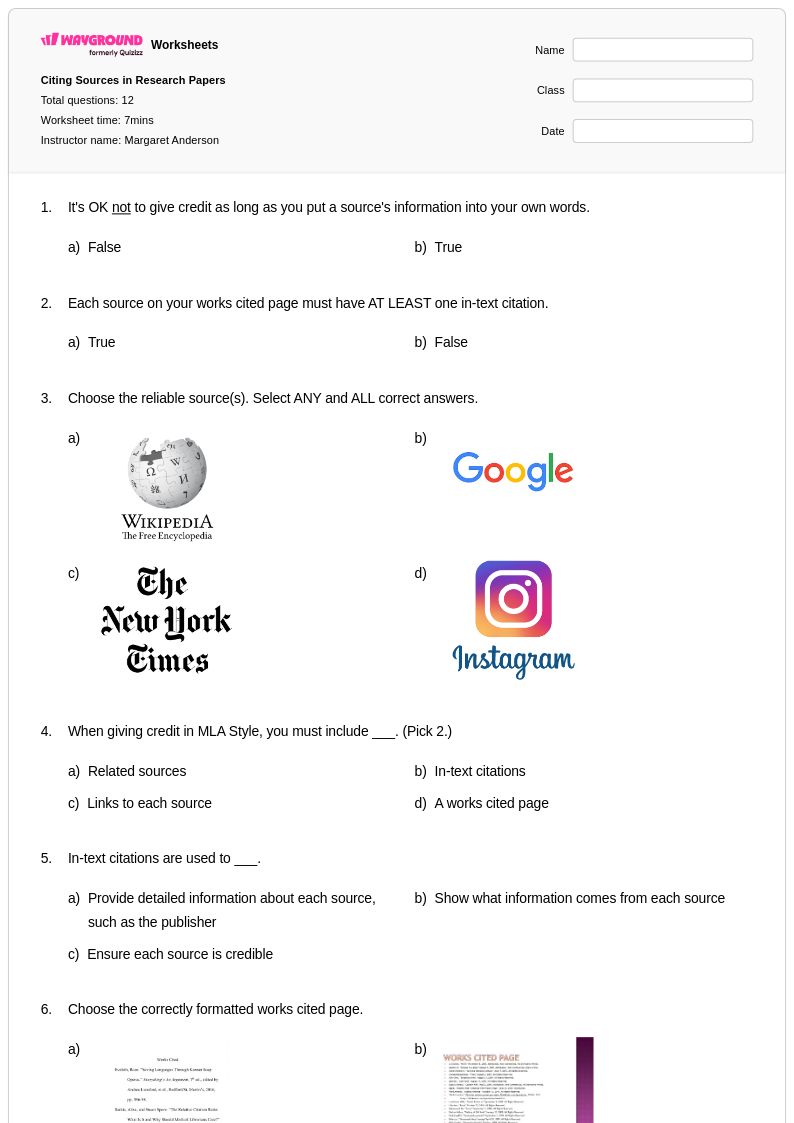
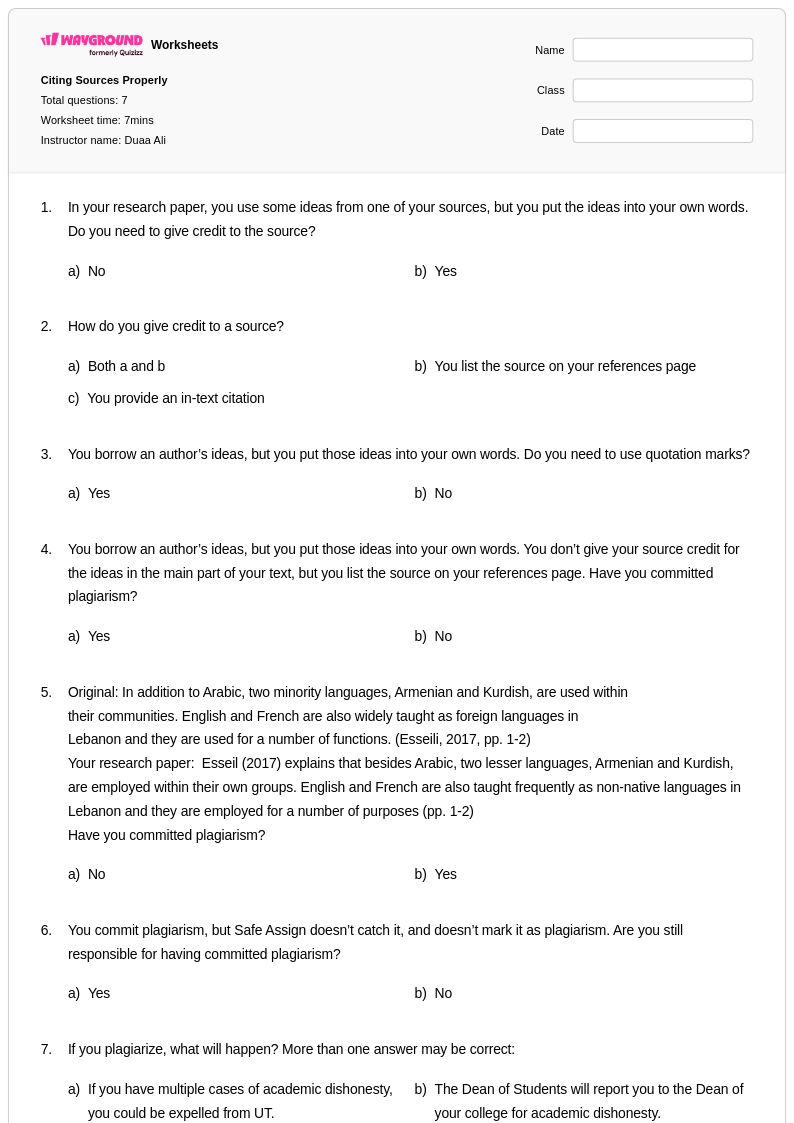
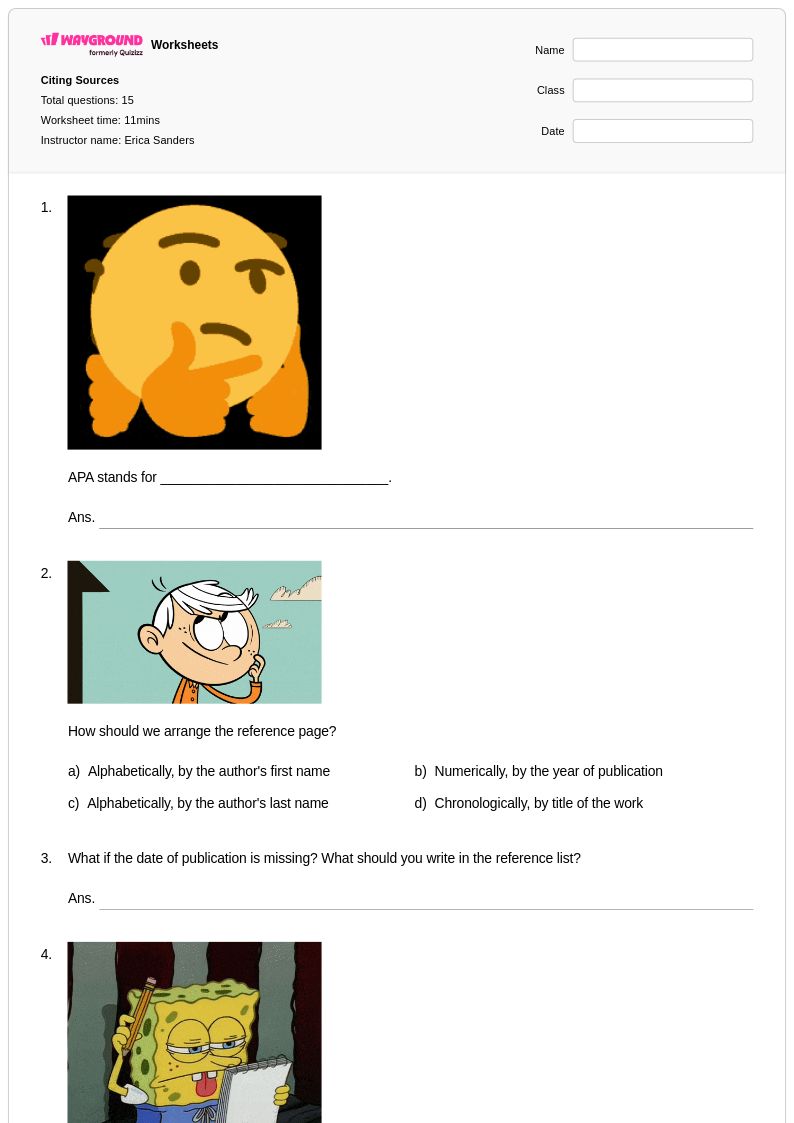
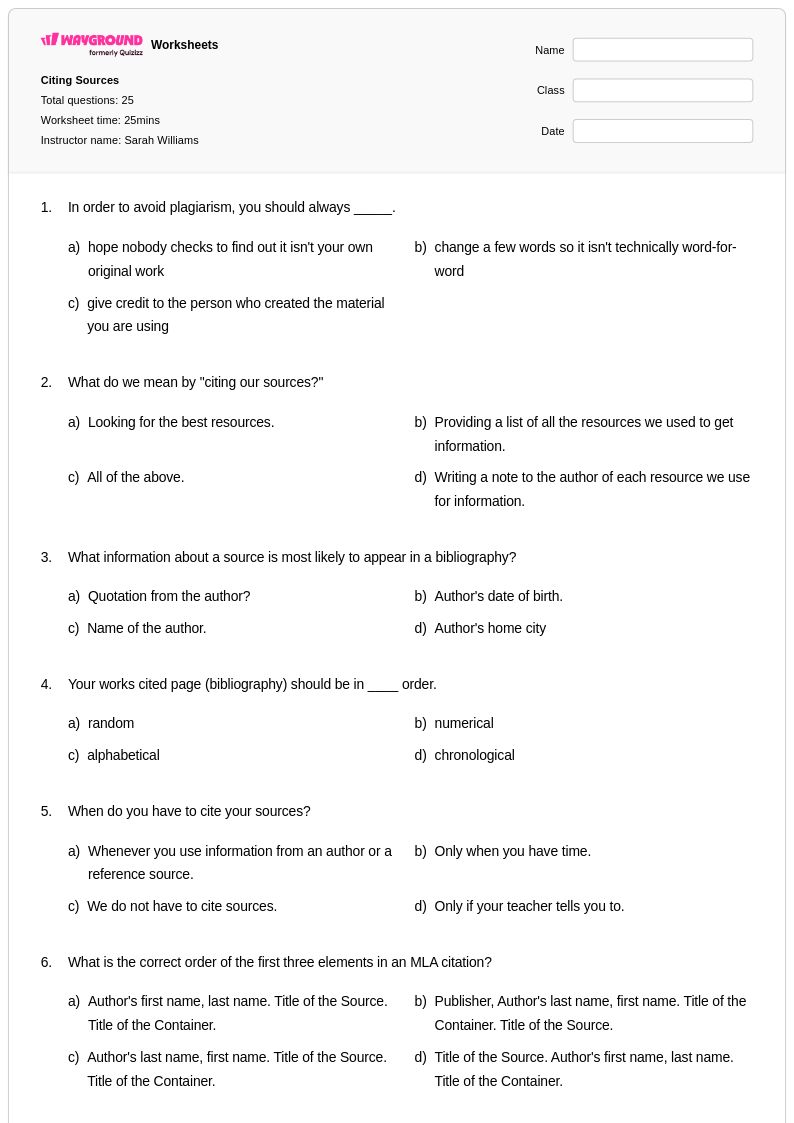
Master citing sources with Wayground's comprehensive collection of free worksheets and printables that help students learn proper citation formats, reference techniques, and academic integrity through engaging practice problems and detailed answer keys.
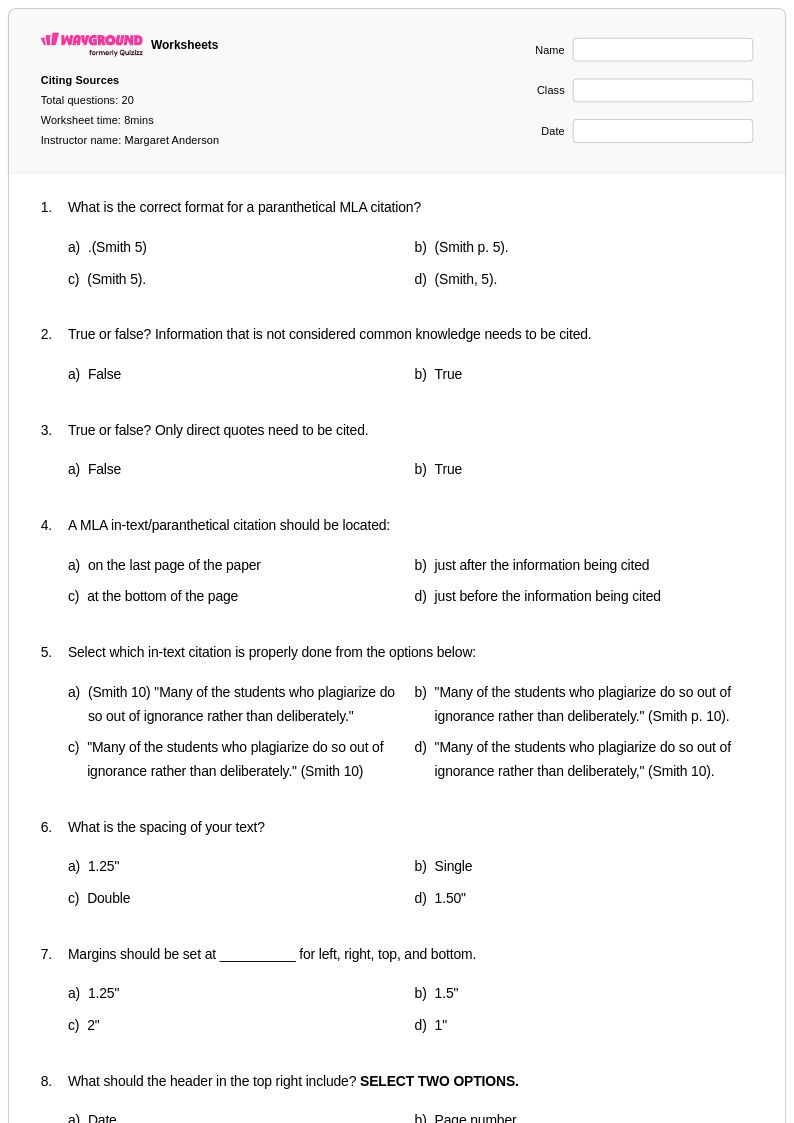
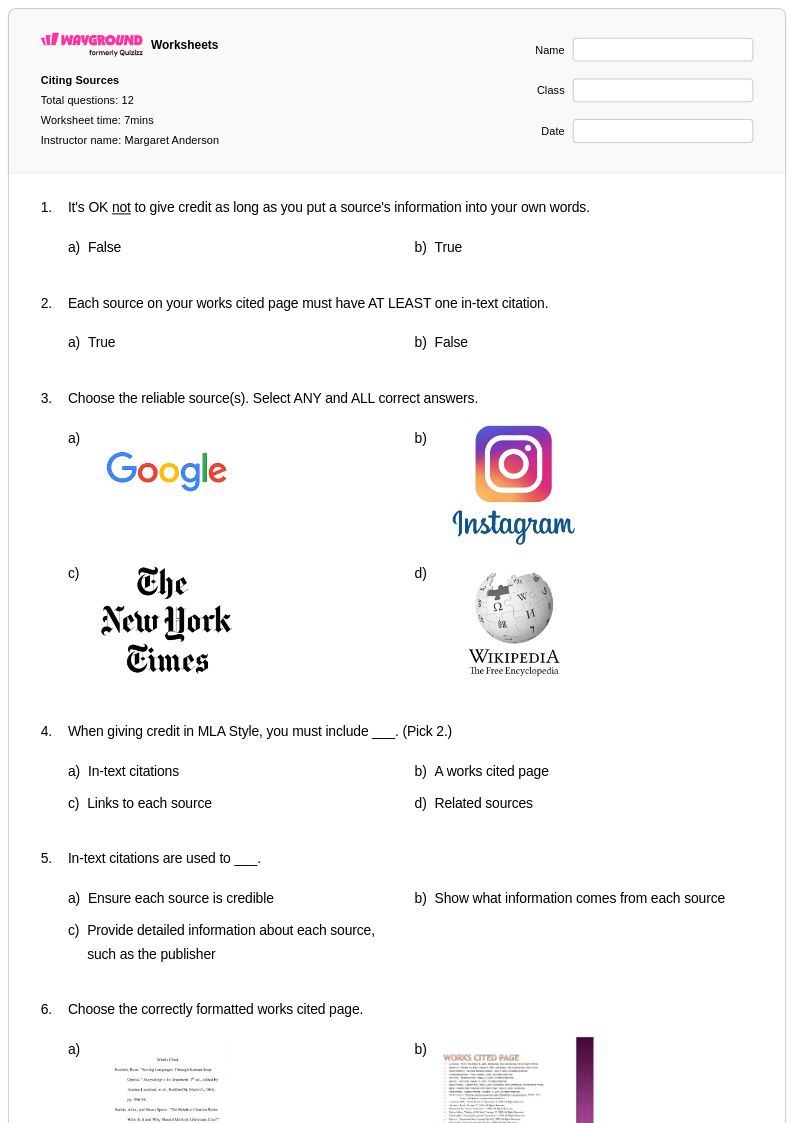
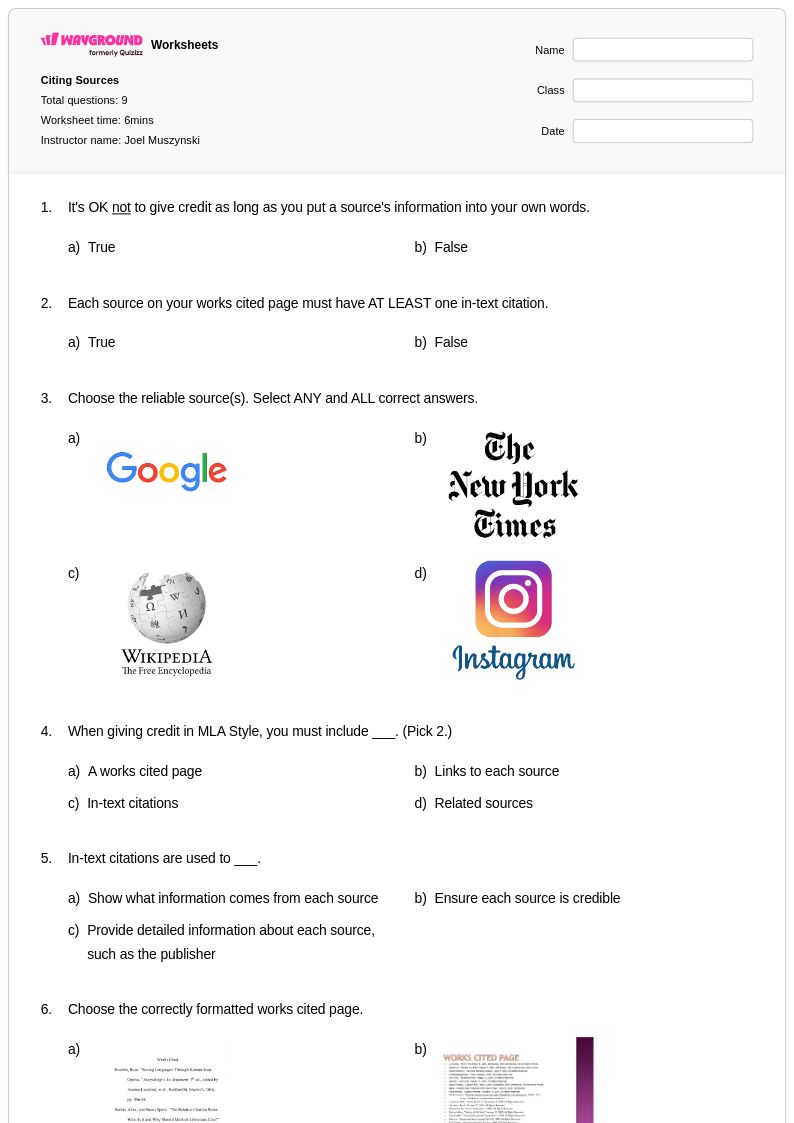
Citing sources worksheets available through Wayground (formerly Quizizz) provide students with essential practice in developing proper attribution skills that form the foundation of academic integrity and scholarly writing. These comprehensive worksheets guide learners through the intricacies of various citation formats including MLA, APA, and Chicago styles, helping them master the art of crediting original authors and avoiding plagiarism. Students engage with practice problems that cover citing books, journal articles, websites, and multimedia sources, while answer keys enable both independent learning and instructor-guided instruction. The free printables offer structured exercises in creating bibliographies, formatting in-text citations, and understanding when and why to cite sources, building critical research literacy skills that extend far beyond the classroom.
Wayground (formerly Quizizz) empowers educators with millions of teacher-created citing sources worksheets that streamline lesson planning and provide targeted skill practice for diverse learning needs. The platform's robust search and filtering capabilities allow teachers to quickly locate resources aligned with specific standards and curriculum requirements, while differentiation tools enable customization for various proficiency levels within the same classroom. These worksheets are available in both printable pdf format for traditional paper-based learning and digital formats that integrate seamlessly with modern classroom technology. Teachers utilize these resources for initial instruction, remediation for struggling students, enrichment activities for advanced learners, and ongoing practice to reinforce proper citation techniques, ensuring all students develop the critical thinking and ethical research practices necessary for academic success.
FAQs
How do I teach citing sources to students who have never used citations before?
Start by explaining why citations matter before introducing any format rules. Use a concrete example, such as showing students a research paper and asking them to imagine writing something original and having someone else take credit for it. Once students understand the ethical foundation, introduce one citation format at a time, beginning with the elements all formats share: author, title, date, and source. Scaffolded practice with real sources students already know, such as websites or books they have read, makes the format rules feel purposeful rather than arbitrary.
What are the most common mistakes students make when citing sources in MLA or APA format?
The most frequent errors include incorrect author name formatting, missing or misplaced punctuation such as periods and commas, and confusing in-text citation rules with bibliography formatting. Students also commonly forget to italicize titles of longer works while placing shorter works in quotation marks, and they frequently omit access dates for online sources. A targeted way to address these patterns is to have students compare a correctly formatted citation with a flawed one and identify the specific errors rather than memorizing rules in isolation.
What exercises help students practice MLA, APA, and Chicago citation formats?
Effective practice exercises include reformatting incorrectly cited sources, building citations from raw source information such as author names, publication dates, and URLs, and creating annotated bibliographies for a short research topic. Error-correction activities are particularly high-value because they require students to apply format rules actively rather than passively copy examples. Mixing citation types within a single exercise, such as citing a book, a journal article, and a website in the same worksheet, helps students internalize when and how format rules shift depending on source type.
How do I help students understand the difference between in-text citations and a bibliography or works cited page?
Students often conflate these two components because both involve the same source information, just formatted and used differently. Teach the distinction by framing in-text citations as a real-time signal to readers that information was borrowed and a pointer to the full source, while the bibliography is the complete directory at the end of the document. A paired practice activity, where students write a short paragraph with in-text citations and then construct the corresponding works cited entry for the same source, makes the relationship between the two concrete.
How do I use Wayground's citing sources worksheets in my classroom?
Wayground's citing sources worksheets are available as printable PDFs for traditional pen-and-paper practice and in digital formats that integrate with technology-based learning environments. Teachers can host worksheets directly as a quiz on Wayground, making them suitable for individual practice, group work, or assessment. All worksheets include complete answer keys, which support both independent student review and instructor-led correction. Wayground also offers accommodation settings such as extended time and read-aloud support, allowing teachers to customize the experience for students with diverse learning needs without disrupting the rest of the class.
How do I address plagiarism when teaching citing sources?
Plagiarism instruction is most effective when it is connected to citation practice rather than treated as a separate disciplinary topic. Teach students that proper citation is the practical solution to plagiarism, not just a rule to follow to avoid punishment. Use side-by-side examples showing an original source, an uncited paraphrase, and a correctly cited paraphrase so students can see the precise difference. Reinforcing that plagiarism includes unintentional cases, such as forgetting to add a citation mid-draft, helps students develop careful habits throughout the writing process rather than only at the end.
How do I differentiate citation practice for students at different skill levels?
For students who are newer to citations, provide partially completed citation templates where they fill in missing elements rather than building from scratch. More advanced students can work with complex or ambiguous source types, such as edited volumes, government reports, or social media posts, that require them to apply format logic rather than match a familiar pattern. Wayground supports differentiation through features such as reduced answer choices for students who need additional scaffolding and extended time settings for those who require more processing time, all configurable at the individual student level.