Free Printable Reflective Writing Worksheets for Class 6
Develop Class 6 students' reflective writing skills with Wayground's free printable worksheets and practice problems, complete with answer keys to guide thoughtful self-expression and critical thinking in nonfiction writing.
Explore printable Reflective Writing worksheets for Class 6
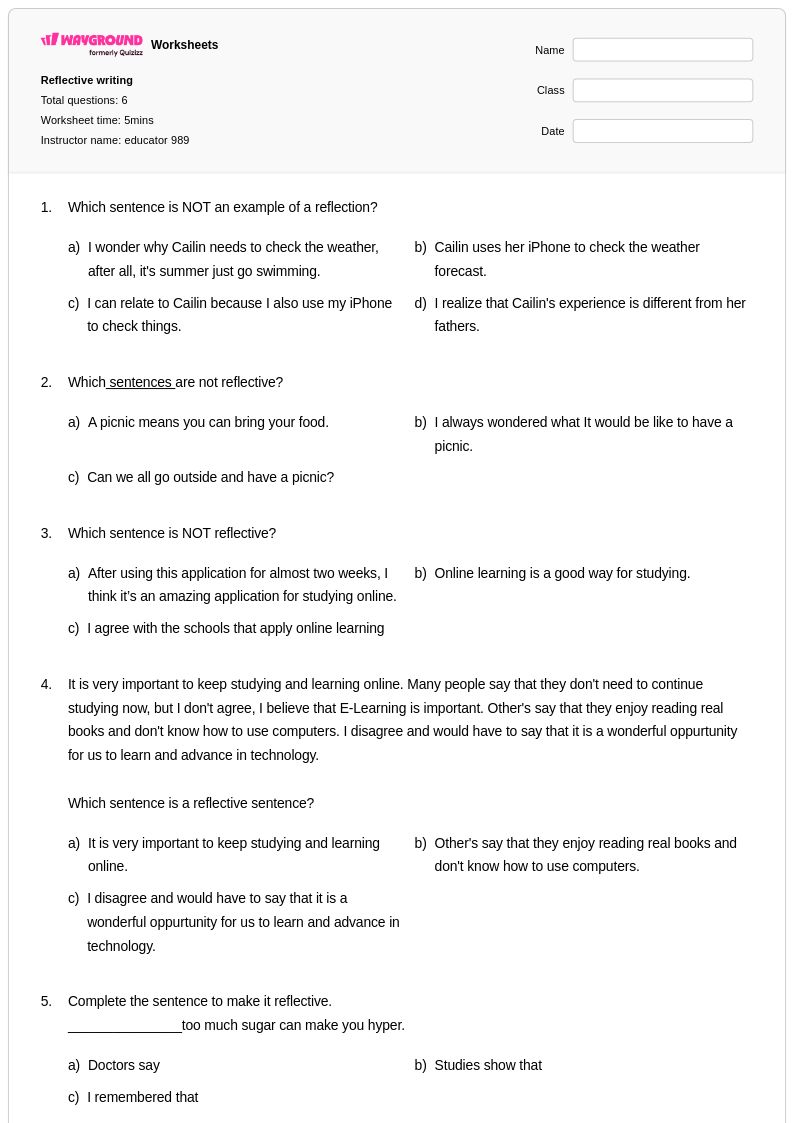
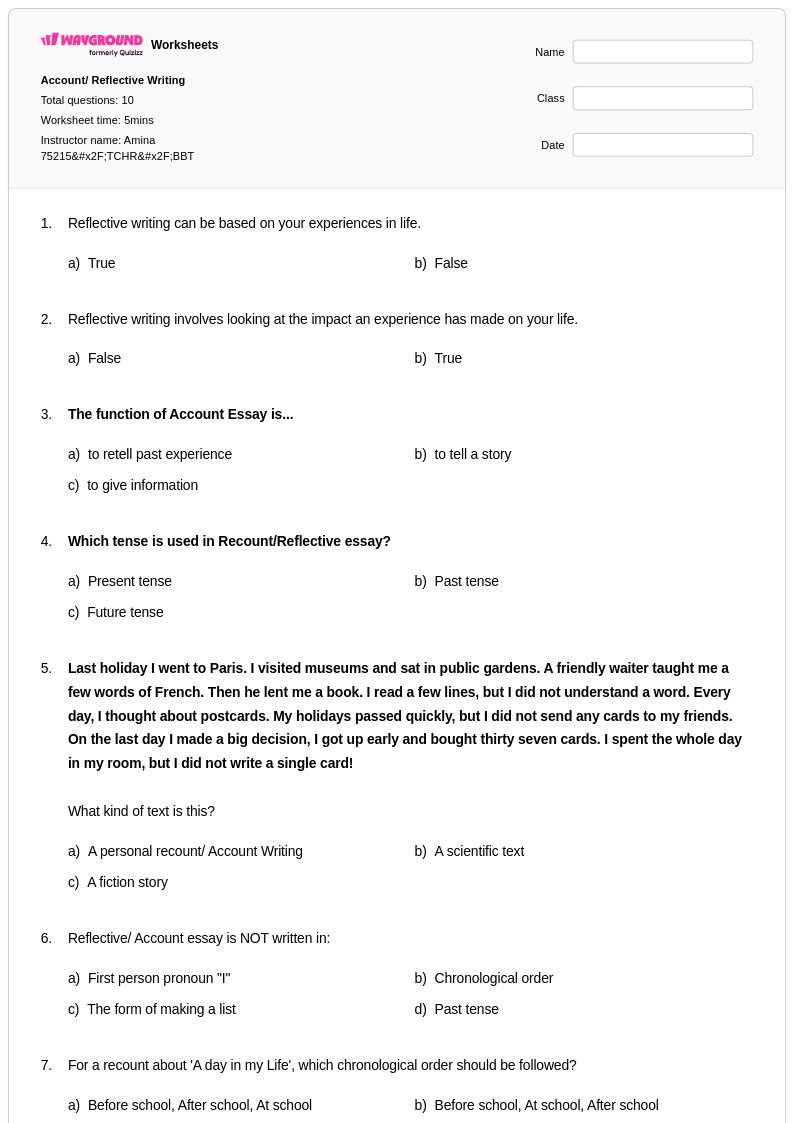
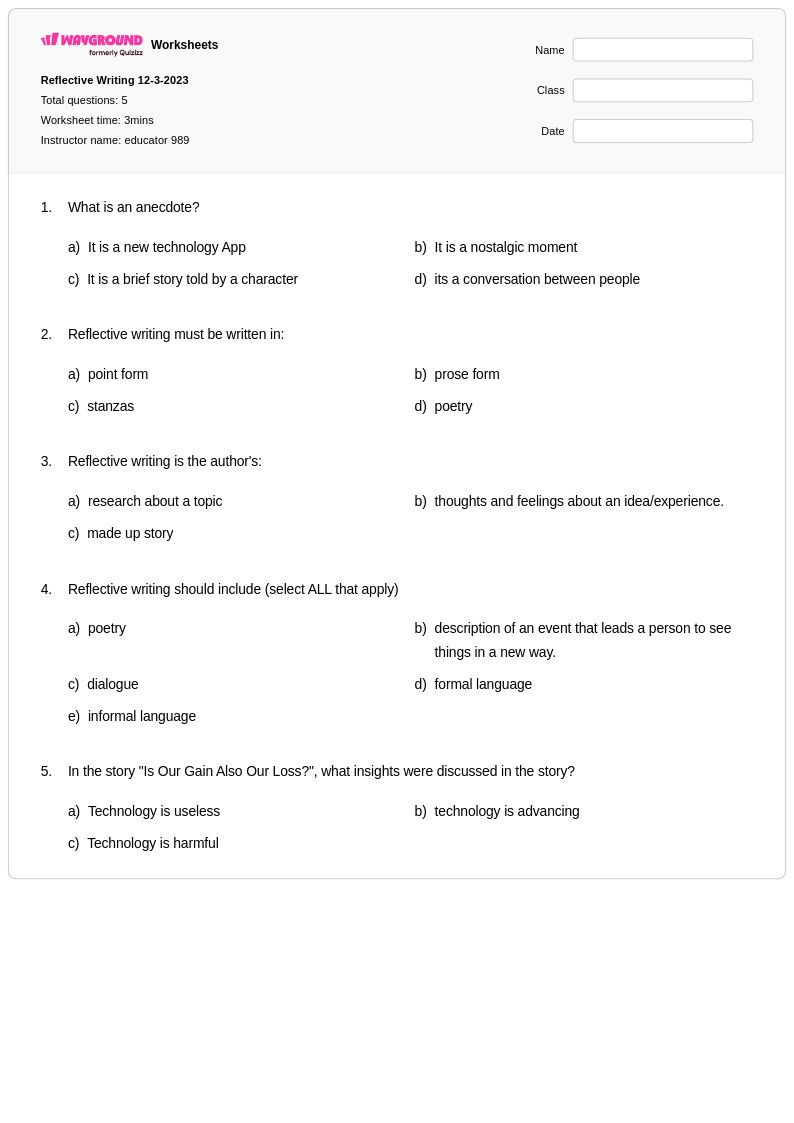
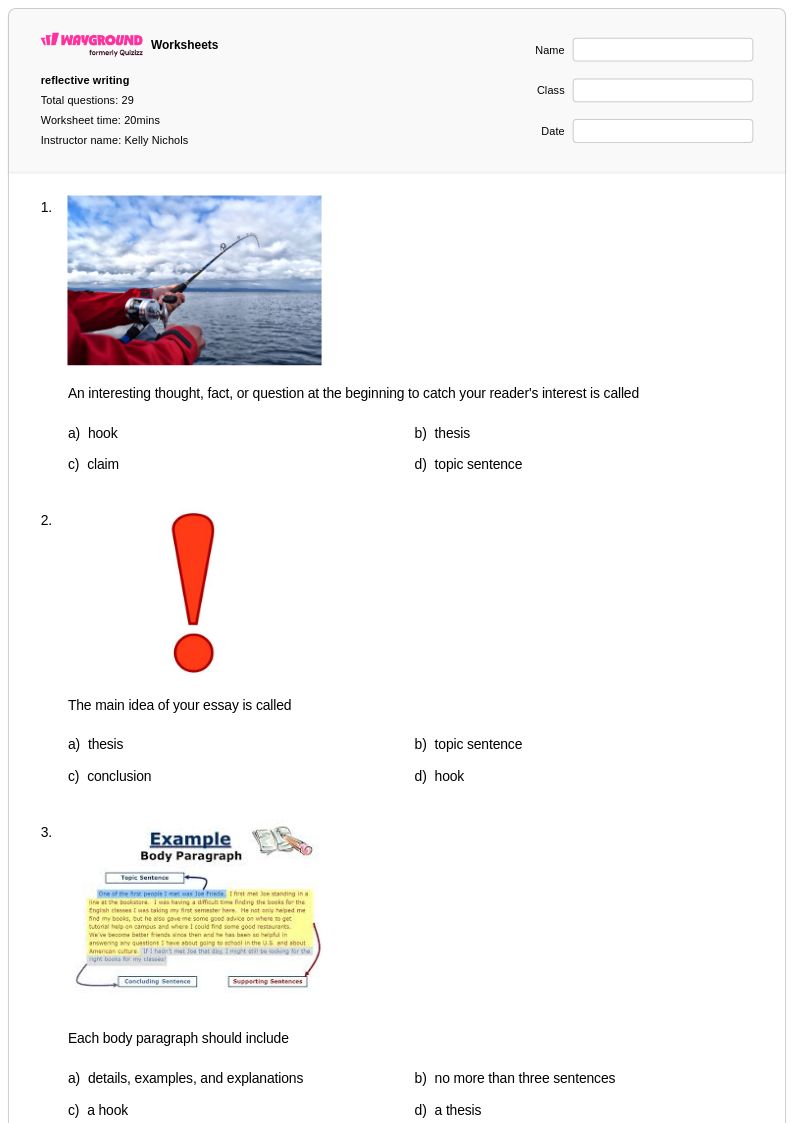
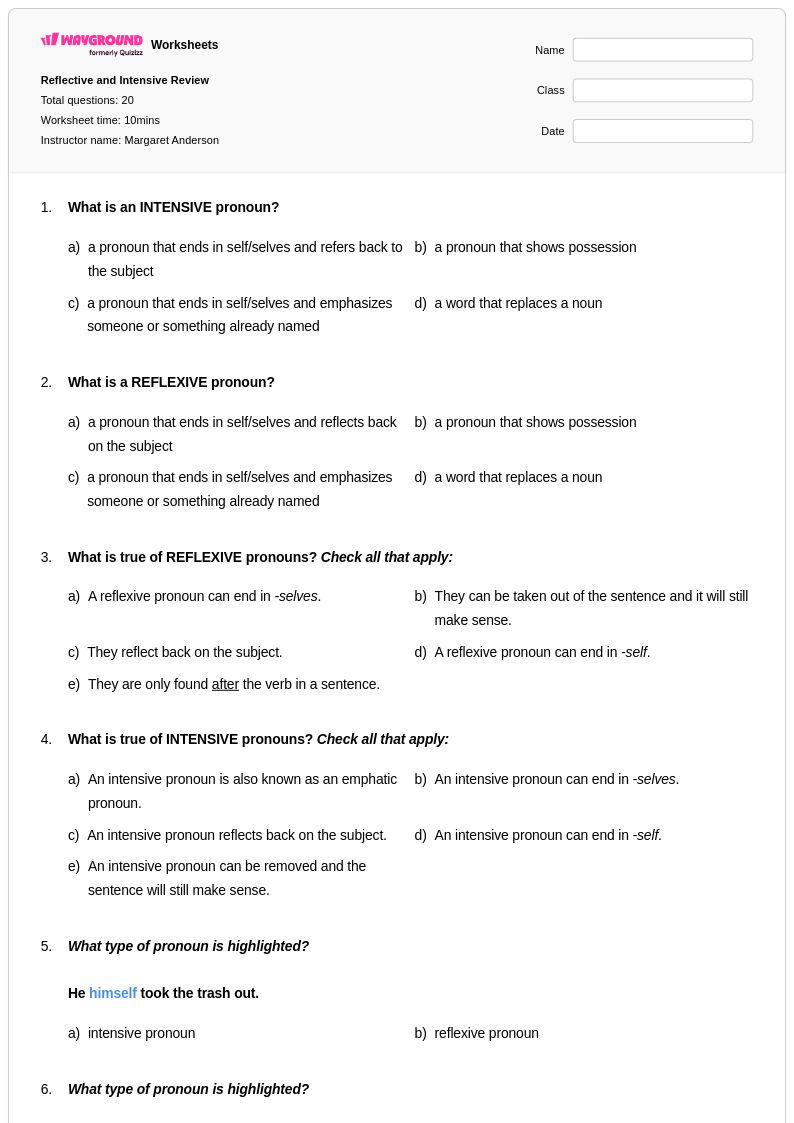
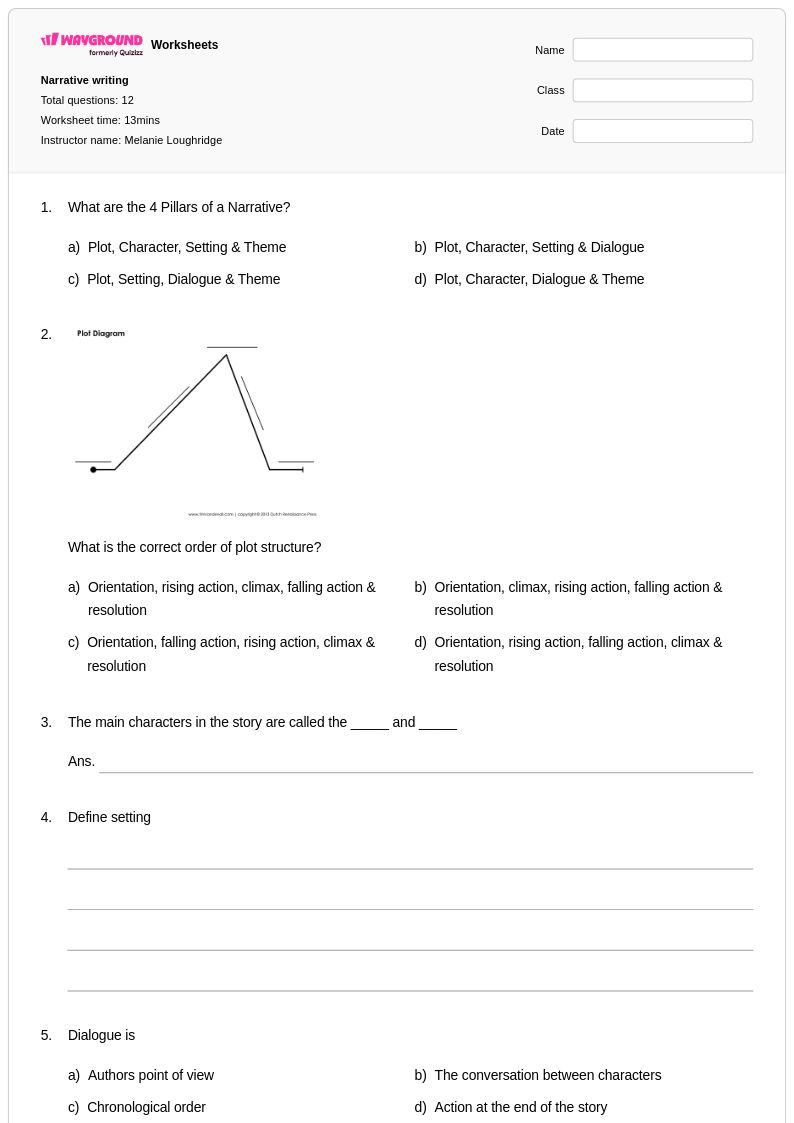
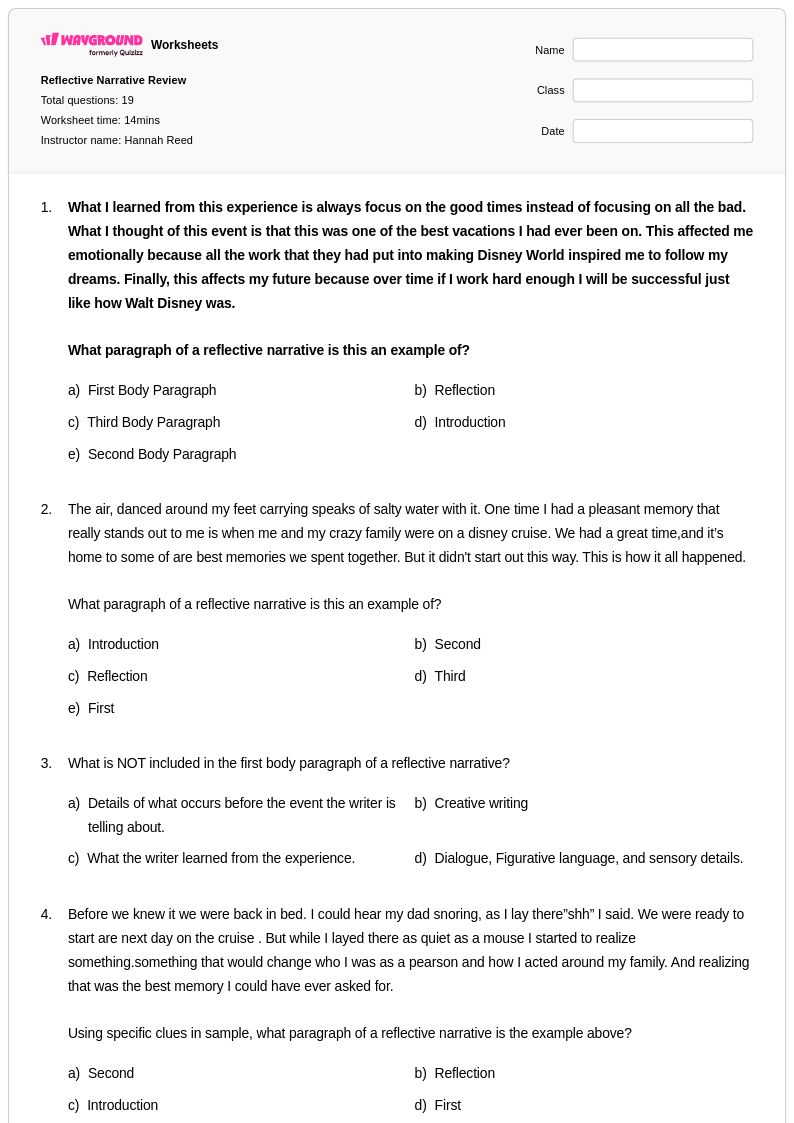
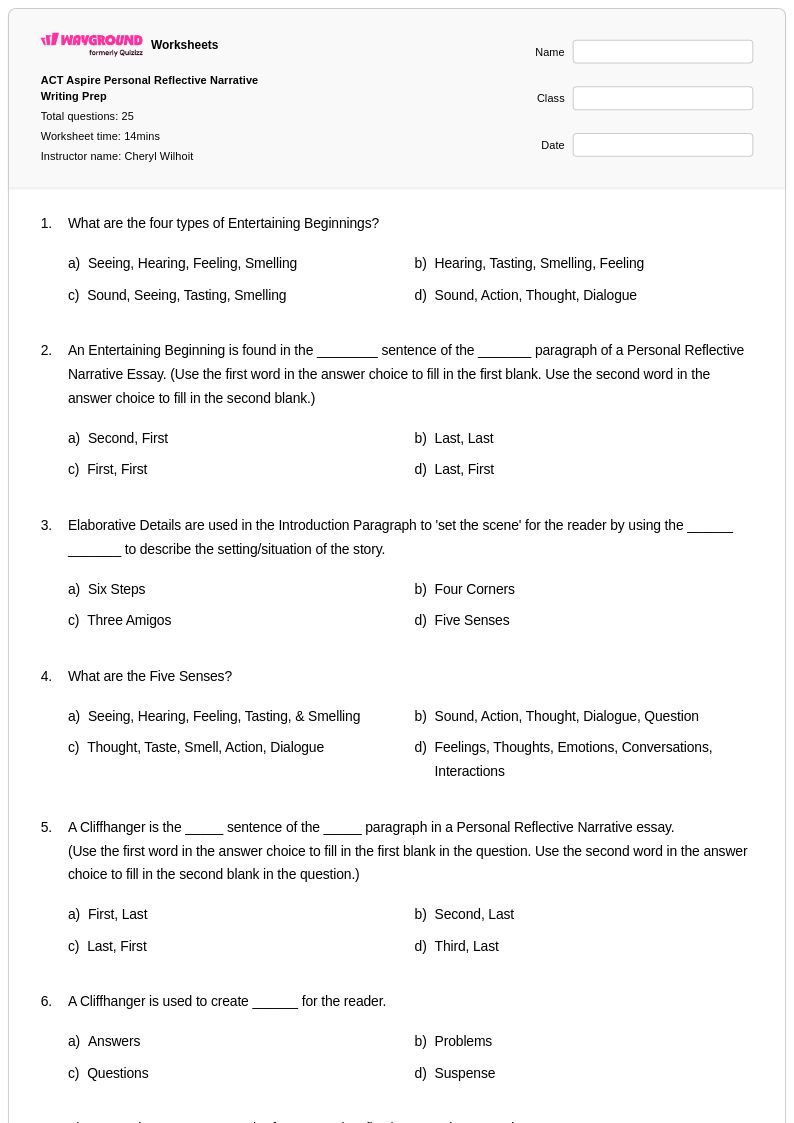
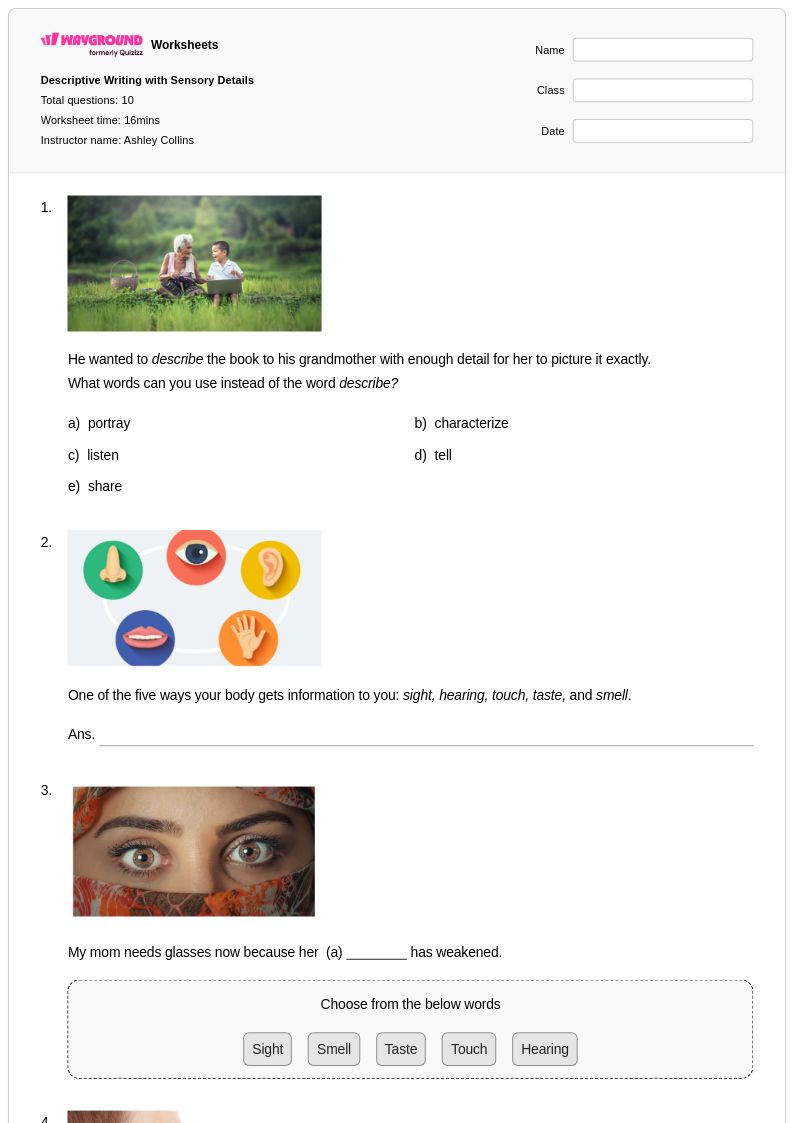
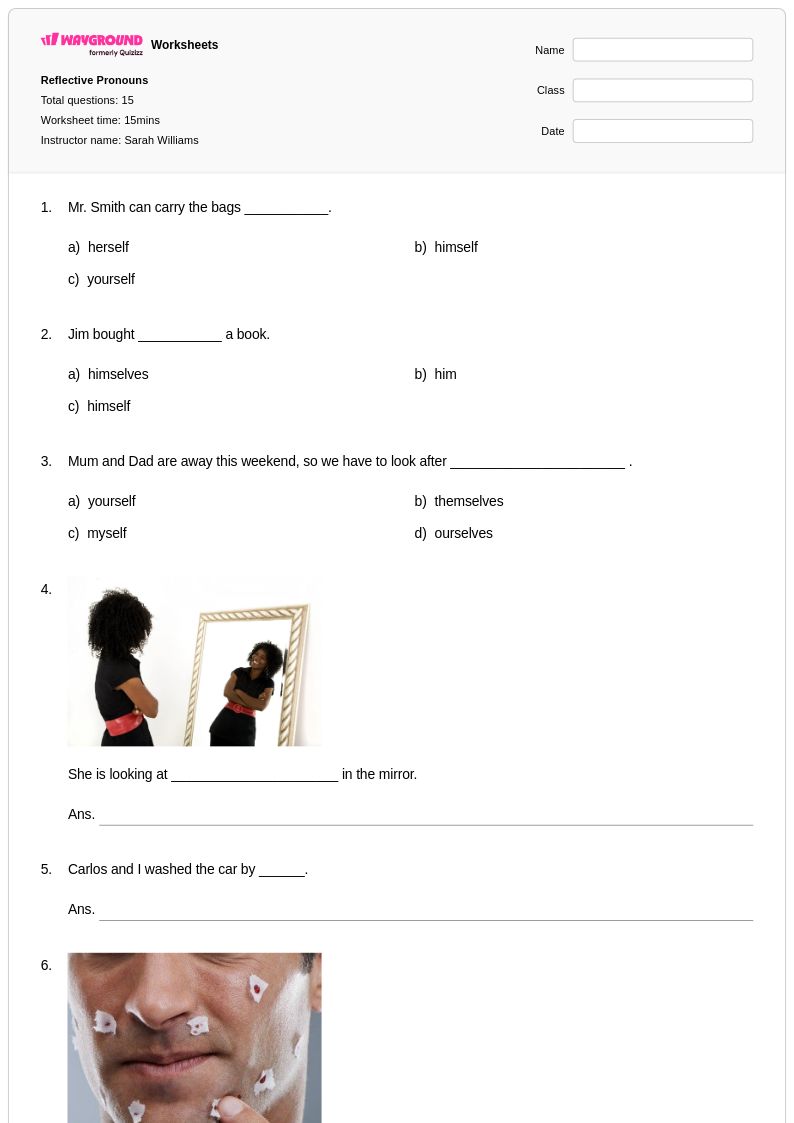
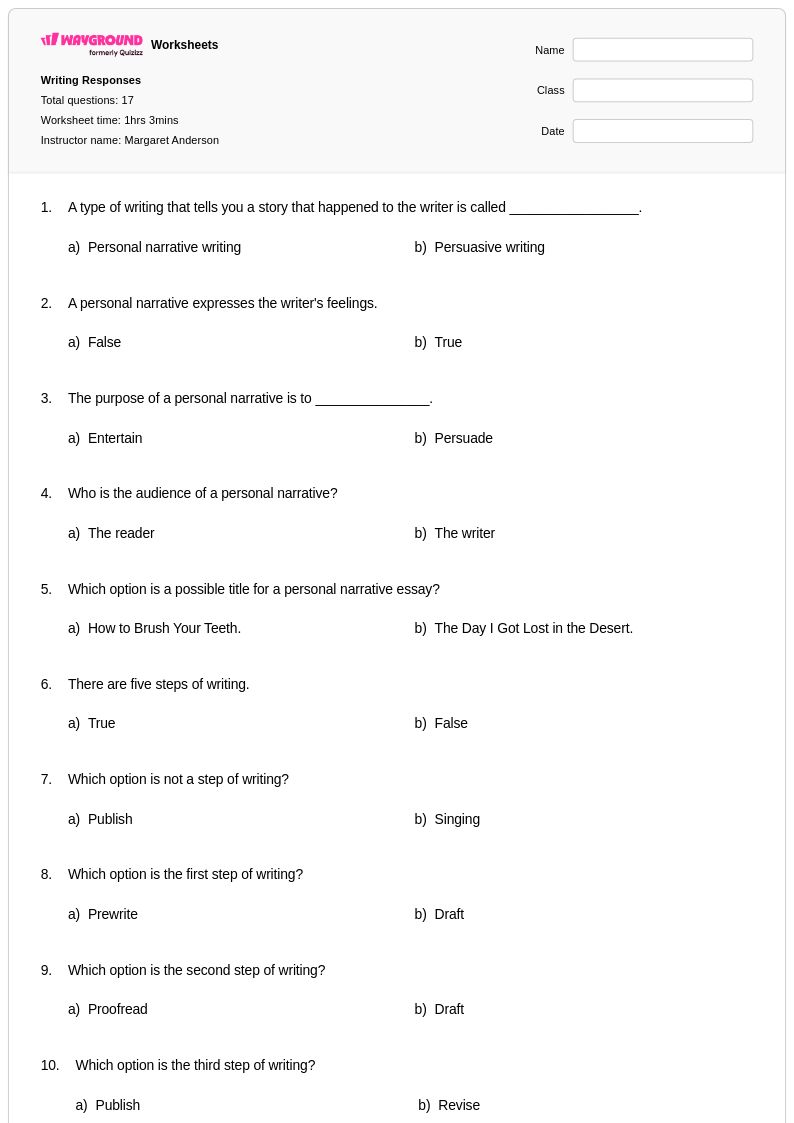
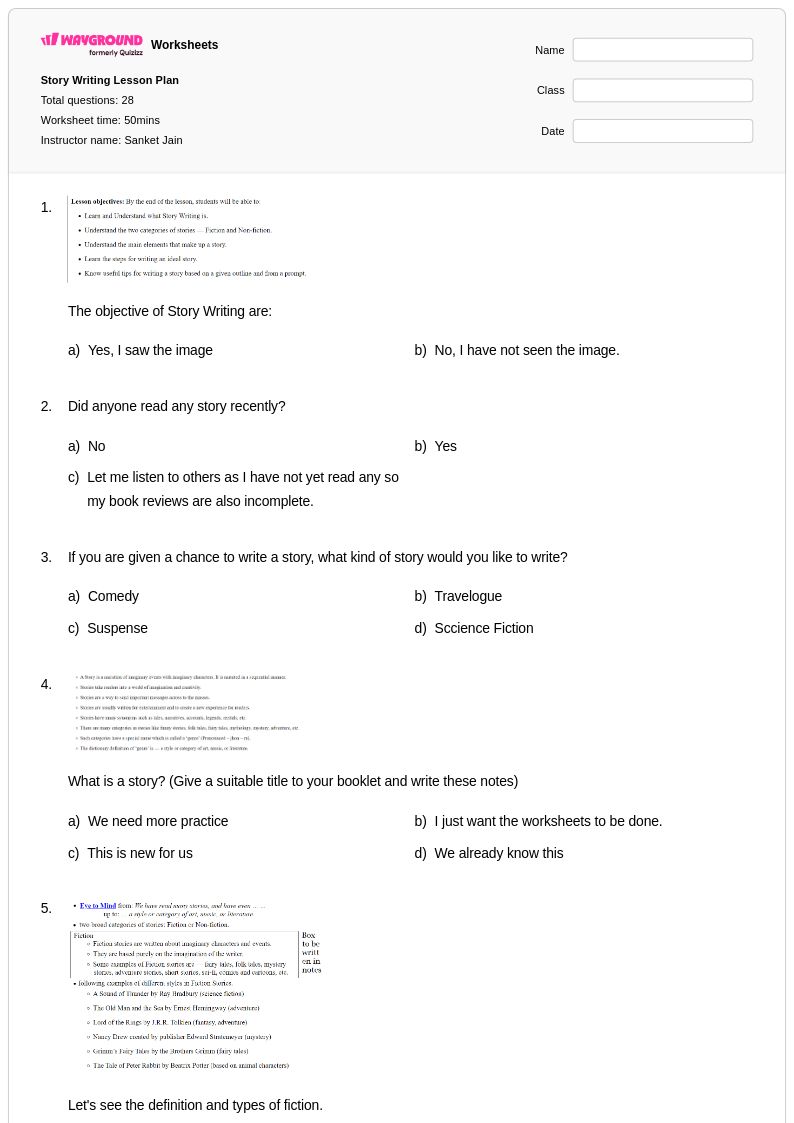
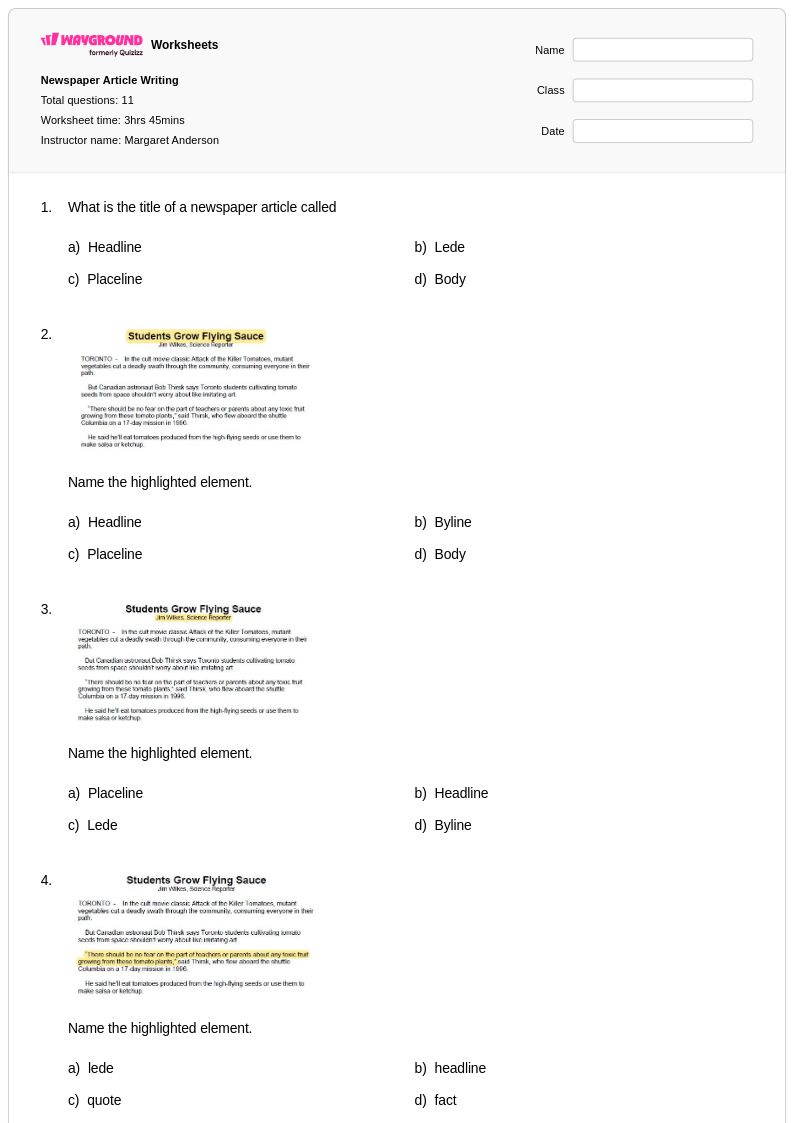
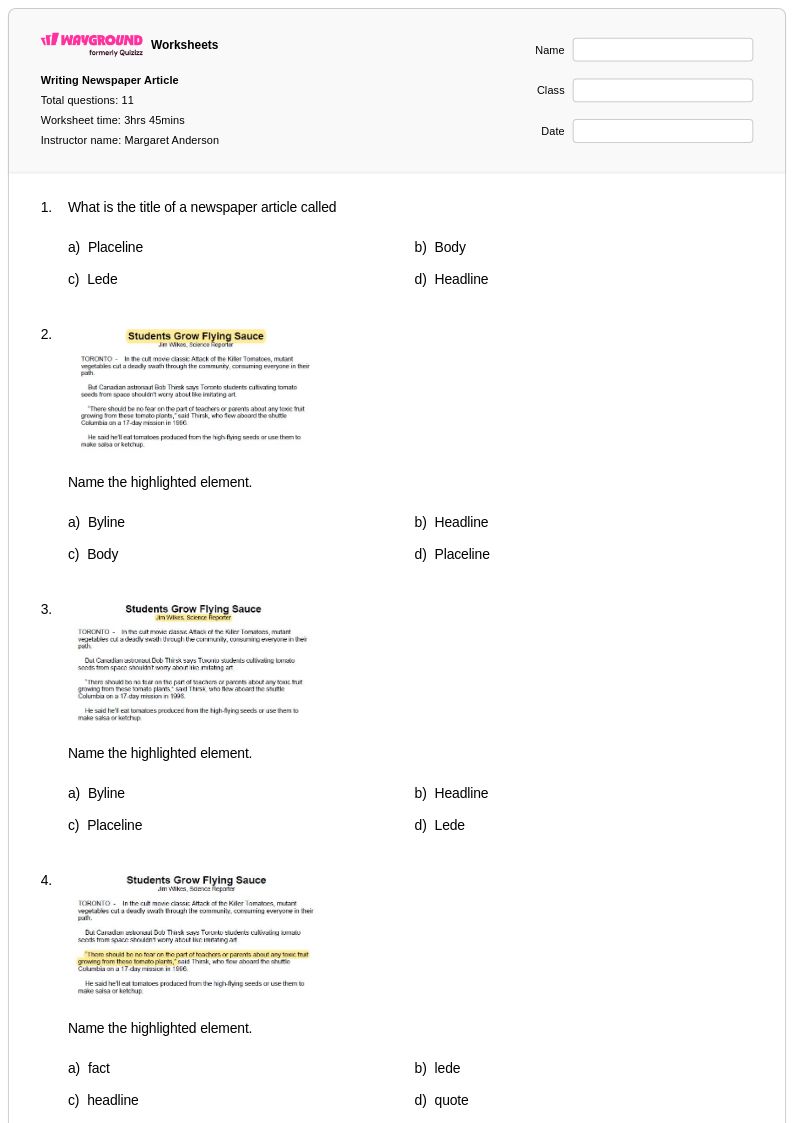
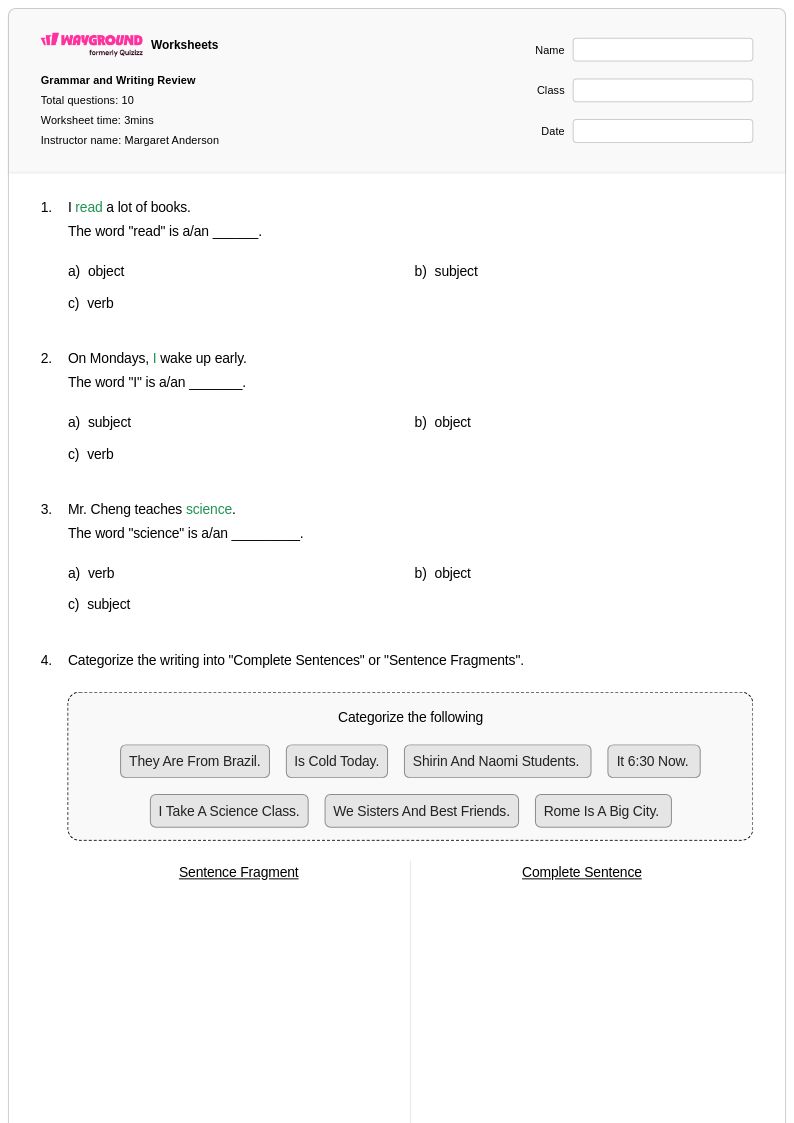
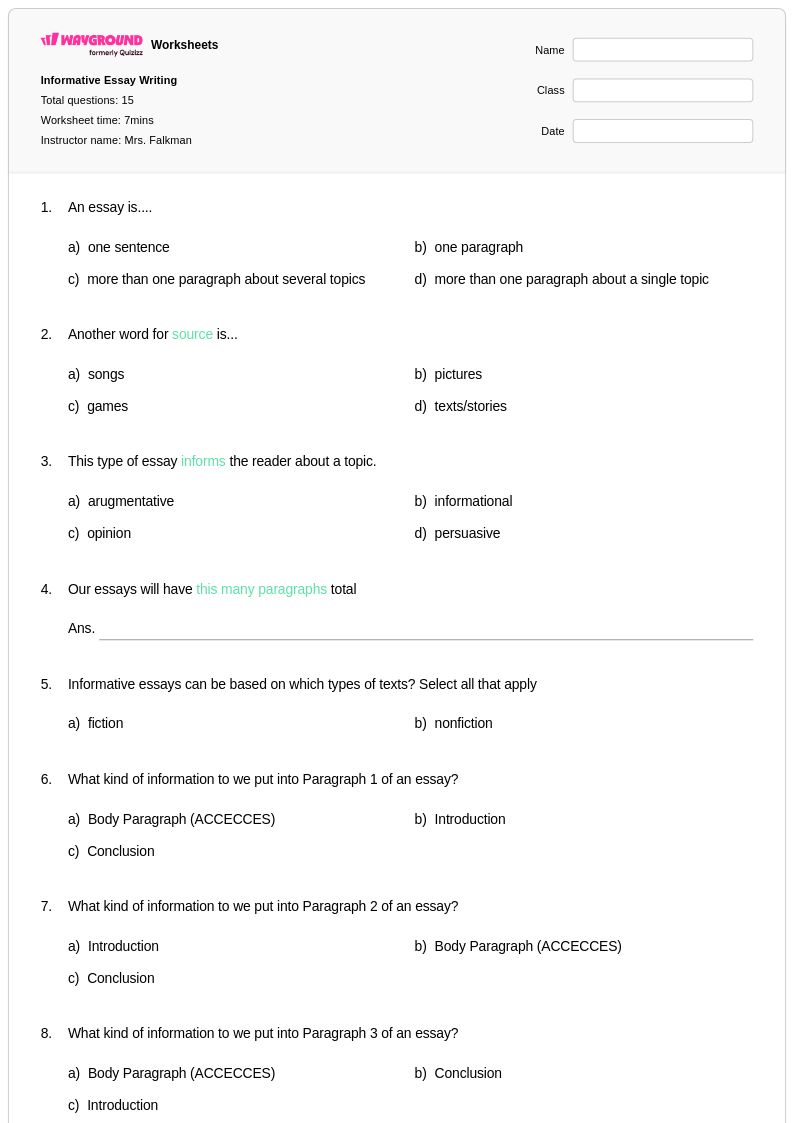
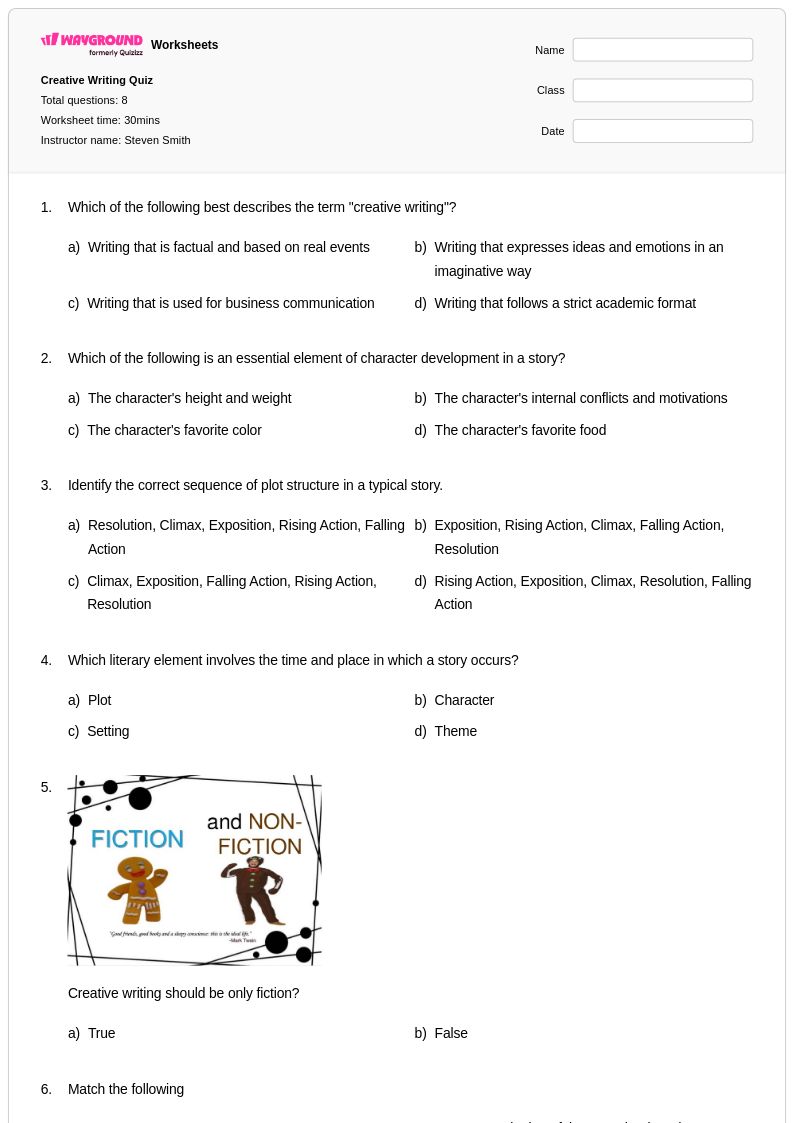
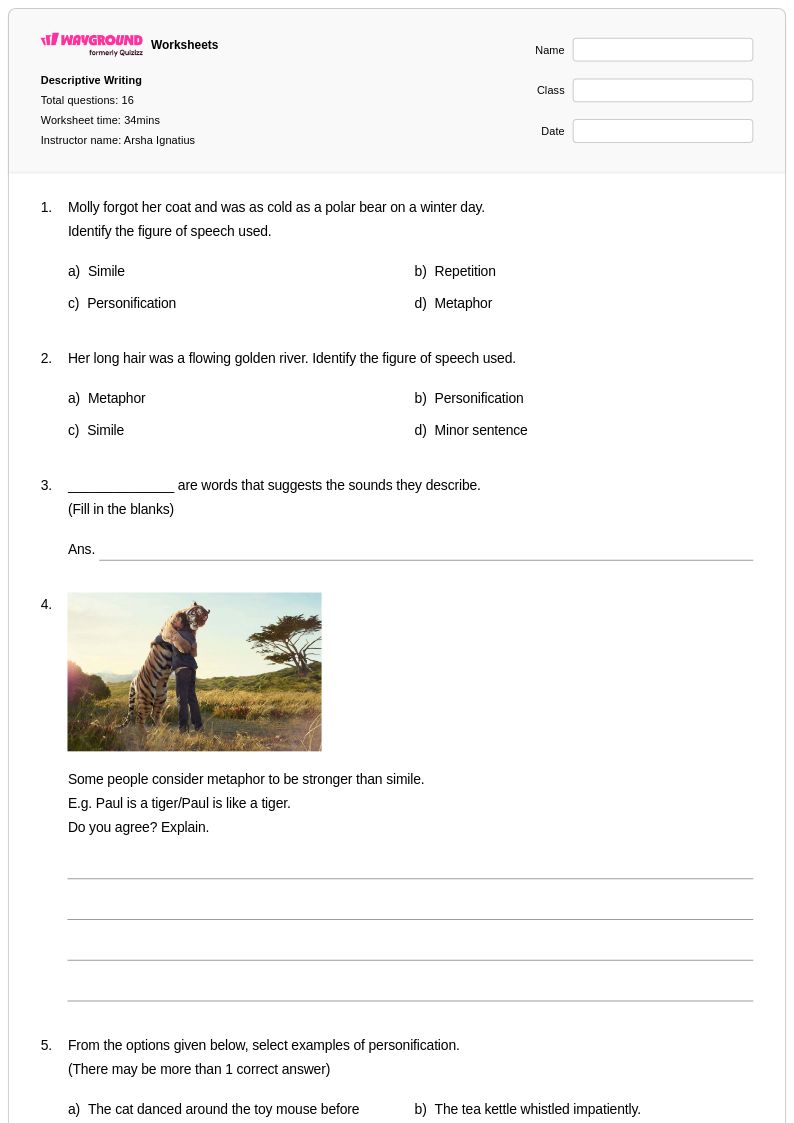
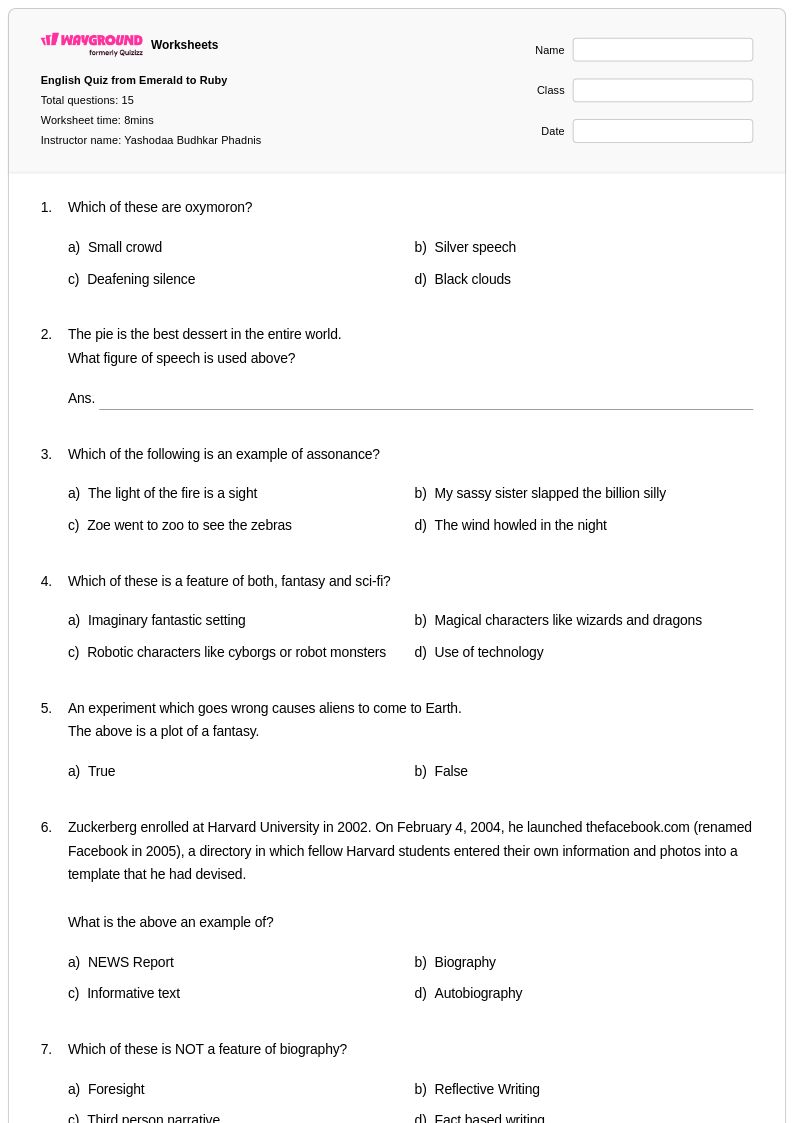
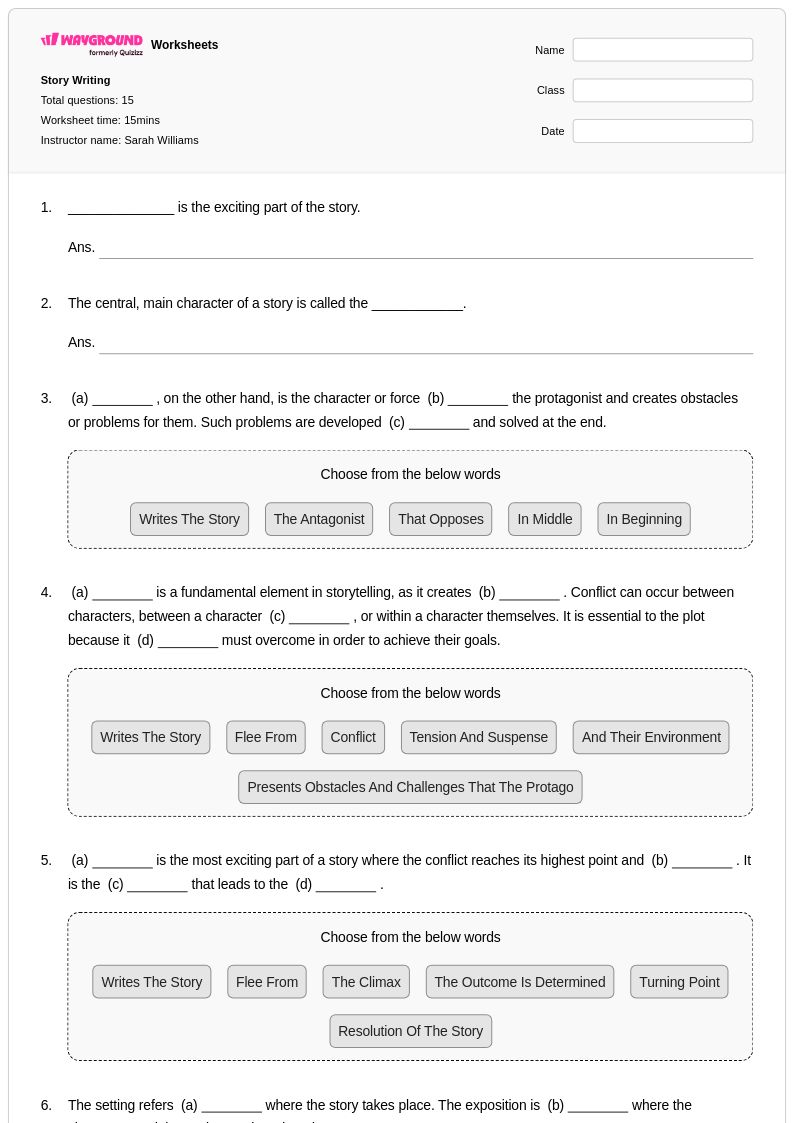
Reflective writing worksheets for Class 6 students through Wayground (formerly Quizizz) provide essential practice in personal narrative and introspective nonfiction composition. These comprehensive resources guide sixth-grade learners through the process of examining their experiences, thoughts, and growth while developing critical thinking and self-awareness skills. Students engage with structured prompts that encourage deep analysis of meaningful events, personal challenges, and learning moments, helping them master the art of thoughtful reflection through writing. The worksheets include answer keys for self-assessment, free printable pdf formats for classroom use, and varied practice problems that scaffold students from basic reflection techniques to more sophisticated analytical writing approaches.
Wayground (formerly Quizizz) empowers educators with an extensive collection of teacher-created reflective writing resources, drawing from millions of professionally developed materials specifically designed for Class 6 nonfiction instruction. The platform's robust search and filtering capabilities allow teachers to quickly locate worksheets aligned with specific learning standards and tailored to individual student needs. These differentiation tools support diverse learners through customizable difficulty levels and flexible formatting options, available in both printable pdf versions and interactive digital formats. Teachers can seamlessly integrate these resources into lesson planning for skill-building practice, targeted remediation for struggling writers, and enrichment opportunities for advanced students, ensuring every sixth-grader develops confidence and competency in reflective nonfiction writing.
FAQs
How do I teach reflective writing to students?
Effective reflective writing instruction begins with modeling the process: show students how to move from describing an experience to analyzing what it meant and why it matters. Use structured prompts that scaffold each stage, starting with identifying a significant moment, then examining personal responses, and finally connecting the experience to broader themes or lessons. Teaching metacognitive awareness alongside the writing process helps students internalize reflection as a habit, not just an assignment.
What exercises help students practice reflective writing?
Scaffolded exercises work best for building reflective writing skills, beginning with guided brainstorming activities and progressing toward structured drafts with clear criteria for depth and analysis. Sentence starters, graphic organizers, and staged drafting prompts give students a framework for examining their thinking without becoming overwhelmed. Regular low-stakes practice, such as short journal entries or exit reflections, builds fluency before students tackle longer, more polished pieces.
What mistakes do students commonly make in reflective writing?
The most common error is summarizing rather than reflecting: students describe what happened without analyzing why it mattered or what they learned. Many students also write in vague generalities, using phrases like 'I learned a lot' without articulating specific insights or changes in thinking. Encouraging students to ask 'so what?' after every descriptive statement can help them move from narration into genuine reflection.
How can I differentiate reflective writing instruction for diverse learners?
Differentiation in reflective writing can include offering tiered prompts at varying levels of complexity, providing sentence frames for emerging writers, and giving advanced students open-ended analytical tasks that require synthesis across multiple experiences. On Wayground, teachers can apply individual accommodations such as Read Aloud for students who process text better through audio, reduced answer choices to lower cognitive load, and extended time settings that carry over across sessions without disrupting other students.
How do I use Wayground's reflective writing worksheets in my classroom?
Wayground's reflective writing worksheets are available as printable PDFs for traditional classroom use and in digital formats for technology-integrated or blended learning environments. Teachers can also host them as a quiz directly on Wayground, making it easy to assign, track, and review student responses. Each worksheet includes an answer key, so teachers can use them for independent practice, guided instruction, or self-assessment without additional preparation.
How do I assess reflective writing effectively?
Strong reflective writing assessment looks beyond grammar and mechanics to evaluate depth of self-analysis, clarity of insight, and the student's ability to connect personal experience to broader concepts. Using a rubric that separates description from reflection from synthesis helps students and teachers see exactly where thinking needs to deepen. Wayground's reflective writing resources include assessment rubrics alongside answer keys, giving teachers a consistent framework to apply across assignments.