
Wayground
Chemistry - the study of Matter  - Printable Science Worksheets 7th Grade - Wayground

Chemistry - the study of Matter

Jenny Finnegan

Created by Jenny Finnegan

33 questions

7th Grade

Science

Updated Aug 2026

This Grade 7 science worksheet builds understanding of matter through 33 multiple-choice questions about particle motion, energy, and the properties of solids, liquids, and gases. Students identify states of matter, distinguish definite and indefinite shape or volume, define matter and volume, and connect temperature changes with particle speed and spacing. The questions also check understanding of changes of state, including evaporation and the change from gas to liquid when energy is removed. Students apply these ideas to situations such as water disappearing in sunlight and gases escaping from open containers. This free printable worksheet is designed for science instruction, review, or formative assessment and includes a complete answer key for efficient checking.

Worksheet settings

Font size

S
M
L
XL
WaygroundWorksheets

Chemistry - the study of Matter

Total questions: 33

Name
Class
Date
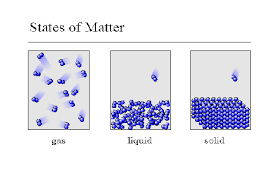
1.
At higher temperatures
a)
particles in an object have less energy
b)
particles in an object move faster
c)
a gas contracts
2.
What happens when my glass of water is sitting in the sun and disappears into a gas?
a)
evaporation
b)

condensation

c)
melting
d)
freezing
3.
Which form of matter does not take the shape of its container?
a)
liquid
b)
gas
c)
solid
d)
air
4.
How is a gas defined?
a)
Indefinite shape, indefinite volume
b)
Definite shape, definite volume
c)
Found in stars
d)
Definite volume, indefinite shape
5.
Particles (molecules) in a ______________________ have more energy than the other states of matter.
a)
gas
b)
solid
c)
liquid
6.
Particles of a liquid

Particles of a liquid

a)

are tightly packed together and stay in a fixed position.

b)

are free to move around one another but still touch.

7.
The slower the particles in a substance move,

The slower the particles in a substance move,

a)

the colder it is.

b)

the warmer it is.

c)

the more energy it has.

8.
What state of matter?

What state of matter?

a)

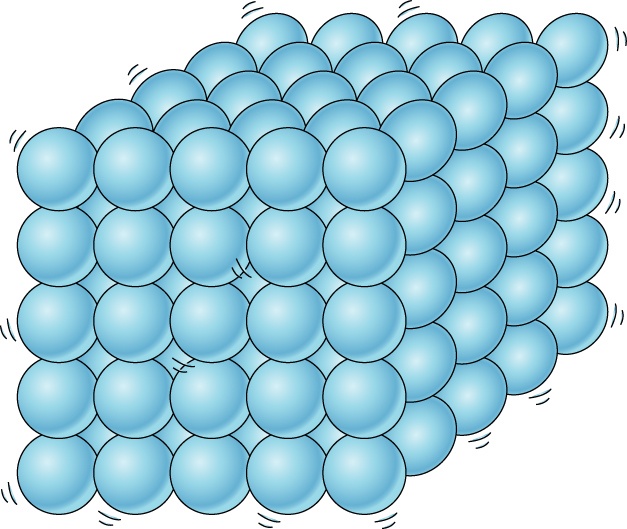
Solid

b)

Liquid

c)

Gas

d)

Plasma!!!

9.
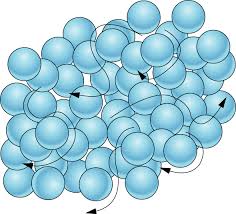
What state of matter?

What state of matter?

a)

Solid

b)

Liquid

c)

Gas

10.
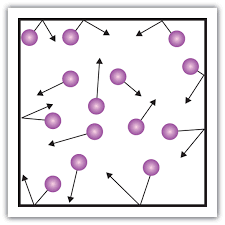
What state of matter?

What state of matter?

a)

Solid

b)

Liquid

c)

Gas

11.
Which process could cause a material to change state from gas to liquid?

Which process could cause a material to change state from gas to liquid?

a)

Adding heat

b)

Adding energy

c)

Removing particles

d)

Removing energy

12.
When the temperature of matter increases the particles...
a)
speed up and move closer
b)
speed up and move farther apart
c)
slow down and move closer together
d)
slow down and move farther apart
13.
If the tops were removed from the cylinders, the following would happen:
a)
The solid would fly out of the container
b)
The liquid would fly out of the container.
c)
The gas would fly out of the container.
d)
They ALL would fly out of the container.
14.
What Is Matter?

What Is Matter?

a)

Anything That has mass and takes up space.

b)

Anything that you can see or taste.

c)

What you can touch.

d)

you and go throught this.

15.
What Is Volume?
What Is Volume?
a)
How heavy something is.
b)
The amount of space taken up by and object.
c)
How a liquid flows.
d)
The international unit of measurement.
16.
Liquids and gases are similar because __________________________.
a)
they both take the shape of their container
b)
they both have their own shape
c)
liquids pour and gases don't
d)
liquids take the shape of the container but gases have their own shape
17.
Which state of matter?
a)

Solid

b)

Liquid

c)

Gas

d)

California

18.
What process takes place when a puddle of water dries up on a sidewalk?
a)
melting
b)
freezing
c)
condensation
d)
evaporation
19.
What must happen for molecules to move slower?

What must happen for molecules to move slower?

a)

Kinetic energy is not changing. Temperature decreases.

b)

Kinetic energy and temperature depend on the molecules.

c)

Kinetic energy is decreasing and temperature is decreasing.

d)

Kinetic energy is decreasing and temperature is increasing.

20.
What happens to molecules when their kinetic energy increases?

What happens to molecules when their kinetic energy increases?

a)

They move slower.

b)

They move faster.

c)

They get heavier

d)

It depends on the type of molecules

21.
Molecules are always moving no matter what phase they are in: solid, liquid, gas.

Molecules are always moving no matter what phase they are in: solid, liquid, gas.

a)

True

b)

False

22.
What would be a reason for a phase change to occur in one substance and not another substance even if both substances began…

What would be a reason for a phase change to occur in one substance and not another substance even if both substances began at the same phase and were transferred the same amount of energy?

a)

The molecular attraction of one of the substances was weaker than the other substance causing phase change to occur.

b)

The molecular attraction of both substances were the same causing phase change to occur in one of them.

c)

The molecular attraction of one of the substances was stronger than the other substance causing phase change to occur.

d)

Phase change can not occur in one substance and not the other because they both started in the same phase.

23.
A phase change can be observed at the molecular scale and can be explained at the macro-scale.

A phase change can be observed at the molecular scale and can be explained at the macro-scale.

a)

True

b)

False

24.
What do we call the energy that an object has because it is moving?
a)
kinetic energy
b)
electrical energy
c)
potential energy
d)
temperature
25.
In which state do the particles have the weakest attractive force amongst them.

In which state do the particles have the weakest attractive force amongst them.

a)

Solid

b)

Liquid

c)

Gas

26.
Which element has the strongest molecular attraction in its molecules?

Which element has the strongest molecular attraction in its molecules?

a)

Iridium

b)

Iron

c)

Nickel

d)

Silver

e)

Titanium

27.
What is the definition of sublimation?
a)
a chemical process where a solid turns into a gas without going through a liquid stage
b)
the process of a liquid changing into a gas
28.
Why does ice float?
a)
Liquid water is less dense than solid water.
b)
Solid water is less dense than liquid water.
c)
Gaseous water is less dense than solid water.
d)
Liquid water is less dense than gaseous water.
29.
Frank has an eraser. It has a mass of 4g, and a volume of 2cm3. What is its density?
a)
8 g/cm3
b)
2 g/cm3
c)
1/2 g/cm3
d)
24 g/cm3
30.
What is this tool to get volume?
a)
triple beam balance
b)
ruler
c)
thermometer
d)
graduate cylinder
31.
Density, melting point, boiling point:These may all be classified as
a)
chemical properties
b)
physcial properties
32.
A physical property can be observed with your
a)
Eyes
b)
Ears
c)
Tastes
d)
All of the above
33.
What is the formula for density?
a)
density = mass x volume
b)
density = mass / volume
c)
density = mass + volume
d)
density = mass - volume
WaygroundAnswer Key

Chemistry - the study of Matter

Total questions: 33

1.
b) particles in an object move faster
2.
a) evaporation
3.
c) solid
4.
a) Indefinite shape, indefinite volume
5.
a) gas
6.
b)

are free to move around one another but still touch.

7.
a)

the colder it is.

8.
a)

Solid

9.
b)

Liquid

10.
c)

Gas

11.
d)

Removing energy

12.
b) speed up and move farther apart
13.
c) The gas would fly out of the container.
14.
a)

Anything That has mass and takes up space.

15.
b) The amount of space taken up by and object.
16.
a) they both take the shape of their container
17.
b)

Liquid

18.
d) evaporation
19.
c)

Kinetic energy is decreasing and temperature is decreasing.

20.
b)

They move faster.

21.
a)

True

22.
a)

The molecular attraction of one of the substances was weaker than the other substance causing phase change to occur.

23.
b)

False

24.
a) kinetic energy
25.
c)

Gas

26.
a)

Iridium

27.
a) a chemical process where a solid turns into a gas without going through a liquid stage
28.
b) Solid water is less dense than liquid water.
29.
b) 2 g/cm3
30.
d) graduate cylinder
31.
b) physcial properties
32.
d) All of the above
33.
b) density = mass / volume

FAQs

What does this Grade 7 worksheet cover about matter?

This worksheet uses 33 multiple-choice questions to assess how particle energy and motion explain the properties of solids, liquids, and gases. Students identify states of matter, compare shape and volume, define matter and volume, and connect heating or cooling with changes such as evaporation and condensation.

How can I use this worksheet to teach particle motion and states of matter?

Introduce the worksheet by having students compare how particles move in a solid, liquid, and gas, then discuss how temperature changes affect their speed and spacing. As students answer the multiple-choice items, ask them to justify choices using evidence such as a solid retaining its shape, a liquid flowing while its particles remain in contact, or a gas escaping from an open container.

What mistakes should I watch for when students complete this matter worksheet?

Students may confuse a gas's indefinite shape and volume with a liquid's indefinite shape but definite volume, or assume that all particles have the same energy. Watch for reversals in phase changes, such as choosing condensation when water changes into gas, and for the misconception that slower-moving particles indicate warmer rather than colder matter.

How do I assign and grade this matter worksheet?

The worksheet is available on Wayground as a printable PDF and as a digital quiz, with a complete answer key for all 33 multiple-choice questions. Printable submissions can be graded by scanning student work with the Wayground for Teachers app, while the digital quiz can be assigned for online responses and review.

How can I differentiate this worksheet for my students?

Use the worksheet's Advanced Settings to adjust font spacing or increase the font size so the 33 multiple-choice items are easier to read. You can also apply a dyslexia-friendly font or translate the worksheet into another language while keeping the questions about particle motion, states of matter, and changes of state.

Where can I find more free worksheets like this on Wayground?

Wayground offers a comprehensive collection of free printable worksheets and practice problems across subjects, with downloadable PDFs and answer keys to support mastery of essential skills and concepts. Browse more resources at https://wayground.com/en-us/worksheets.